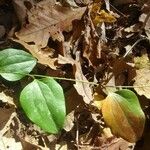
Smilax glauca
Sawbrier · Cat greenbrier · Catbrier · Wild sarsaparilla · Cat saw briar
Description
Source: leafsnapSmilax glauca, the cat greenbriar or catbriar is a woody vine in the family Smilacaceae. It is native to central and eastern portions of the United States, where it is a common and conspicuous part of the forest vegetation. It is also common across much of Mexico.Smilax glauca has prickly stems and climbs by means of tendrils. Leaves are notably gray-glaucous to whitish beneath. It commonly inhabits wooded areas and fences and is often found growing with other species of Smilax. The plants tend to be evergreen in the more southern United States.
🌳 Aside from its ecological function, cat greenbrier has traditionally been used by rural communities as a natural fencing material because its dense, thorny growth effectively deters animals and marks territory boundaries.
🎭 Beauty
Care Guide
💧 Water
Cat greenbrier thrives in moist, understory environments and prefers soil that is evenly moist but not waterlogged. To keep it well-hydrated, water it weekly. When grown outdoors in temperate zones, applying mulch can help retain moisture and protect the roots during changing weather conditions.
How should I water my Cat greenbrier plant?
To properly water your Cat greenbrier, use filtered water at room temperature or slightly warmer. Tap water may have harmful particles for this plant. Since the Cat greenbrier comes from a warm environment, avoid using cold water as it can shock the plant. Also, refrain from overhead watering as it can cause foliage issues. Instead, water the soil directly with filtered room temperature water until it is completely soaked. This helps moisten the roots and allows them to spread and absorb the necessary nutrients.
What do I do if I give my Cat greenbrier too much water or too little water?
Both overwatering and underwatering can harm the health of your Cat greenbrier, but overwatering is more common. When the plant receives too much water, its stems and leaves may wilt and turn yellow. Overwatering over time can also result in diseases like root rot, mold, and mildew, which can be fatal. Underwatering is less common for Cat greenbrier because it tolerates drought well. However, it can still happen, and in these cases, the leaves may become brittle and brown. It's crucial to recognize the signs of overwatering early on. Some diseases caused by overwatering, like root rot, may not be reversible if left unaddressed for too long. If you notice early signs of overwatering, reduce your watering immediately. Check the quality of the soil as well. If it drains poorly, replace it with a loose, well-draining potting mix. Conversely, if your Cat greenbrier shows signs of insufficient water, increase your watering frequency until the signs improve.
How frequently should I water my Cat greenbrier?
If you have your Cat greenbrier plant in a pot, the most precise way to determine if it needs water is to stick your finger into the soil. If the top two to three inches of soil feel dry, it's time to water it. If you're growing your Cat greenbrier outdoors in the ground, you can use the same method to test the soil. Once again, if the top few inches of soil are dry, it needs watering. Typically, you may need to water this plant once a week during spring and early fall. However, during extremely hot weather, watering may need to be increased to twice or more per week. Nonetheless, mature and well-established Cat greenbrier plants have a good ability to withstand drought.
How much water does my Cat greenbrier need?
To water your Cat greenbrier effectively, don't hold back on the amount of water you give. Make sure the top two to three inches of soil are dry before watering. Give the plant a thorough watering, making sure to saturate the entire soil. The water should be enough to cause excess water to drain out of the pot's drainage holes. If you don't see excess water draining, you've likely underwatered the plant. However, avoid letting water accumulate in the soil as it can harm the plant. If you notice no water draining, it could indicate that the soil doesn't drain well, which can negatively affect the plant's health. For outdoor plants, 1 inch of rain per week is sufficient.
How should I water my Cat greenbrier when it's growing at different stages?
The water needs of the Cat greenbrier can vary depending on its growth stages. In the first few years of its life or after being transplanted, it requires more water. During these stages, the plant focuses on sprouting new roots for future growth, which need additional moisture. As the plant matures, it will require less water. Additionally, during the bloom period, when flowers are developing, the Cat greenbrier may also need more water to support this process.
☀️ Light Full sun
Cat greenbrier does best with full sun all day. Still, it can remain healthy if it only gets sunlight for part of the day. Reduced sunlight may cause it to grow more slowly. While sunlight is generally helpful, too much can eventually dry the plant out.
What sunlight requirements does cat greenbrier need?
Cat greenbrier thrives best when it receives full exposure to sunlight throughout the day, needing above 6 hours of sunlight for optimal growth. It can, however, manage with partial sun exposure of about 3-6 hours daily. The right amount of sunlight is critical for the plant's health, but too much sun could dehydrate it. It's essential to observe how sunlight moves through your garden to find a spot that offers a balance of light and shade, ensuring your cat greenbrier's happiness.
How does artificial lighting benefit indoor cat greenbrier plants?
For indoor cat greenbrier plants, artificial lighting can be crucial, especially when natural sunlight is limited. Adequate lighting is key for optimal growth. If a plant doesn't receive enough natural light, artificial lights such as LED, which can be customized to provide specific wavelengths needed by your plant, act as an excellent substitute. Appropriately chosen artificial lighting ensures your plant receives 30-50W/sq ft for full sun plants, 20-30W/sq ft for partial sun plants, and 10-20W/sq ft for full shade plants. The correct distance (12-36 inches above the plant) and duration (8-12 hours per day) of light exposure mimic natural sunlight conditions, promoting healthier and faster growth.
What are the symptoms of inadequate lighting in cat greenbrier?
Inadequate lighting can lead to several detectable symptoms in cat greenbrier. These include smaller new leaves, a leggy or sparse growth appearance as the spaces between stems or leaves lengthen, faster leaf drop as the plant tries to conserve resources, slower or halted growth as the plant enters survival mode, and lighter-colored or yellow leaves (chlorosis) indicating a lack of chlorophyll. Other symptoms like sunscald, leaf curling, wilting, and leaf scorching can occur due to excessive sunlight exposure, highlighting the importance of balancing sunlight for your cat greenbrier.
How do you address light deficiency or excess in cat greenbrier?
To address light deficiency in cat greenbrier, gradually move the plant to a sunnier location, ensuring it receives at least 6 hours of direct sunlight daily. Indoor plants can benefit from keeping curtains open during the day or utilizing artificial light sources such as desk or ceiling lamps for 8 hours daily, or investing in professional grow lights. For outdoor plants, a gradual adjustment to sunnier spots is recommended to prevent sunburn. If sunlight obstructions are a problem, consider pruning or relocating the plant to a brighter location. Note that parts of the plant affected by inadequate sunlight may not recover fully, but new growth will be healthy once light exposure is improved.
🌡️ Temperature 5–35°C
The cat greenbrier prefers temperatures ranging from 41 to 95℉ (5 to 35℃) and is native to habitats with temperate climates. In hotter weather the plant can be watered more often to compensate for the extra heat, while in colder weather it requires less water to prevent over-saturation.
What are the essential care requirements for Cat Greenbrier?
Cat Greenbrier, known botanically as Smilax glauca, thrives in temperate climates with temperatures ranging from 41 to 95°F (5 to 35°C). It has strong cold resistance, making it unnecessary to take special frost protection measures in most cases. However, if temperatures are expected to drop below -30°C, it's important to wrap the plant's trunk and branches with non-woven fabric or cloth. To prepare for winter, watering the plant abundantly before the first freeze is recommended, ensuring the soil is moist as it enters a frozen state. This helps in preventing drought and water scarcity during the colder months.
How should I care for Cat Greenbrier in low temperature conditions?
Cat Greenbrier is remarkably cold-tolerant and prefers temperatures to be kept above 5°C. Despite its tolerance, in conditions where the temperature falls below -30°C, the plant can experience issues such as brittle and dry branches come spring, with no new shoots emerging. If this occurs, it's advised to prune away any dead branches that have failed to produce new leaves in the spring.
What steps should I take to protect Cat Greenbrier in high temperature conditions?
During the summer months, it's crucial to ensure that the Cat Greenbrier's environment remains below 35°C. Exposure to temperatures exceeding 41°C can result in lighter leaf coloration, dry and withered tips, and an increased susceptibility to sunburn. To mitigate these effects, remove sunburned and dried-up parts, relocate the plant to a shaded area or use a shade cloth to protect it from midday and afternoon sun. Additionally, maintaining soil moisture through morning and evening watering can help the plant cope with high temperatures.
💨 Humidity
🪴 Soil 6-7
🌱 Fertilizer
A single fertilizer application in spring is typically adequate for Cat greenbrier, although repeated feedings can maximize growth. Feed every month to a month and a half. Fertilization improves leaf appearance and function, helping maintain uniform color and a healthy texture. It also promotes root growth and nutrient uptake for long-term plant health.
🪴 Pot & Repot
✂️ Pruning
Cat greenbrier is a woody climbing vine that benefits from proper pruning. To promote healthy growth, trim back any overgrown or damaged stems in early spring. This not only enhances the plant's structure but also reduces the risk of it spreading too much. Be sure to use clean, sharp tools to prevent the plant from getting infected.
🌿 Propagating
🐛 Diseases & pets
☠️ Toxicity
Characteristics
- Plant Type
- Vine, Herb
- Life Cycle
- Perennial
- Genus
- Smilax
- Family
- Smilacaceae
- Hardiness Zone
- 4-10
- Mature Height
- 2.44 m to 3.66 m
- Mature Spread
- 0.91 m to 2.13 m
- Leaf Color
- Green, White, Variegated, Red
- Leaf Type
- Evergreen, Deciduous
- Flower Color
- Yellow, Green, Gold
- Flower Size
- 2.54 cm
- Bloom Time
- Late spring, Early summer
- Planting Time
- Spring, Summer
- Harvest Time
- Mid summer, Late summer, Early fall
- Native Area
- Mexico