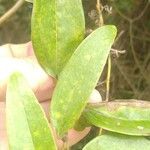
Smilax laurifolia
Bamboovine · Laurel greenbrier · Blasphemevine · Laurel green briar
Description
Source: leafsnapSmilax laurifolia, commonly known as laurel greenbrier or bamboo vine, is a perennial climbing vine belonging to the Smilacaceae family. Native to the southeastern United States, this plant thrives in various habitats, including forests, swamps, and wetlands. Its woody stem can extend up to 10 meters in length and uses tendrils to climb on other plants or structures. The evergreen and glossy leaves of Smilax laurifolia have an oval shape and are alternately arranged on the stem. They typically measure between 5-15 cm in length and 2-8 cm in width. The plant produces small, greenish-white flowers in clusters during late spring or early summer, which are followed by small black berries. For centuries, Native Americans have utilized Smilax laurifolia for its medicinal properties, particularly its anti-inflammatory effects. It has been a traditional remedy for various ailments, including arthritis, skin infections, respiratory issues, and digestive problems. Beyond its medicinal applications, Smilax laurifolia is also valued ornamentally for its attractive foliage, making it a popular choice for trellises or arbors in gardens and landscapes. Overall, Smilax laurifolia is an intriguing plant that combines both medicinal benefits and ornamental appeal, making it a favorite among gardeners who seek both beauty and health benefits from their plants.
Care Guide
💧 Water Every 7 days
Laurel Greenbrier thrives in moist, high-humidity environments like swampy areas. Although it can tolerate moderate drought, it prefers consistent moisture and should be watered weekly. As an evergreen, Laurel Greenbrier keeps its foliage year-round, so it's important to water it carefully during the growing season to preserve its lush appearance.
☀️ Light Full sun
Laurel Greenbrier grows best when it receives ample sunlight throughout the day. It can, however, tolerate sites where it only gets partial sun. Insufficient light may hinder its growth, while excessive exposure can cause damage. Native to regions with abundant sunshine, its various growth stages depend on similar light conditions.
What are the sunlight requirements for Laurel Greenbrier?
Laurel Greenbrier requires full sun, defined as over 6 hours of sunlight daily, to thrive optimally but can also grow in partial sun, which entails about 3-6 hours of sunlight. The plant originates from areas with ample sunshine, and its growth stages depend on a similar light condition. When the plant does not receive enough light, its growth can be hindered, whereas too much direct sunlight might cause damage. It’s important to monitor how sunlight moves through your garden to identify spots that offer a balance of light and shade, ensuring the plant's well-being.
How can artificial lighting support Laurel Greenbrier's growth indoors?
Indoor plants like Laurel Greenbrier require adequate lighting for optimal growth, especially when natural sunlight is insufficient, such as in winter or less sunny spaces. Artificial lighting serves as a vital solution, with LED lights being a popular choice because they can be customized to provide specific wavelengths needed by plants. Full sun plants should receive 30-50W/sq ft of artificial light, partial sun plants 20-30W/sq ft, and full shade plants 10-20W/sq ft. Place the light source 12-36 inches above the plant to mimic natural sunlight and adjust the duration to mimic natural daylight hours, typically 8-12 hours per day, for your plant species.
What are the signs of insufficient or excessive sunlight in Laurel Greenbrier?
Symptoms of inadequate lighting include smaller new leaves, leggy or sparse growth, faster leaf drop, slowed or ceased new growth, and lighter-colored or irregularly patterned new leaves. Conversely, too much sunlight can lead to chlorosis, where leaves lose their green color and turn yellow, sunscald with pale, bleached areas on plant tissues, leaf curling as a defense mechanism against water loss, wilting from excessive transpiration, and leaf scorching indicated by brown, dry edges. Observing these signs can help diagnose whether Laurel Greenbrier is receiving too little or too much sunlight.
How can I ensure my Laurel Greenbrier receives the right amount of sunlight?
To guarantee optimal sun exposure for Laurel Greenbrier, gradually move plants to sunnier positions to receive at least 6 hours of direct sunlight daily. Indoor plants can use a south-facing window or artificial light sources like desk or ceiling lamps, or professional grow lights for at least 8 hours daily. Outdoor plants should be relocated to brighter spots gradually to avoid sunburn. Removing obstructions and transplanting smaller plants to sunnier locations with good drainage can also help. However, note that parts of the plant damaged by insufficient light may not recover, but new growth will be healthier with improved light conditions.
🌡️ Temperature 15–35°C
Laurel Greenbrier originates from temperate regions with temperatures ranging from 59 to 95 °F (15 to 35 °C). It favors warmer conditions, so managing heat is important, especially during cooler seasons. Steps should be taken to ensure warmth at those times.
What are the ideal temperature conditions for Laurel Greenbrier?
Laurel Greenbrier, or Smilax laurifolia, thrives in temperate areas with temperature ranges from 59 to 95 °F (15 to 35 °C). This plant prefers warmer conditions for optimal growth. Therefore, managing heat is crucial, especially during cooler seasons to ensure the plant receives enough warmth. Despite its strong cold resistance, if winter temperatures are forecasted to drop below -15°C, it is important to provide cold protection. This can include covering the plant with soil or straw and watering it abundantly before the first freeze in autumn to keep the soil moist and prevent drought during winter and early spring.
How does Laurel Greenbrier respond to low temperatures?
Laurel Greenbrier is cold-tolerant and prefers temperatures above 15°C for optimal growth. In winter, it's important to keep the plant above -10°C to prevent damage. If temperatures fall below -15°C, you might not notice immediate changes during the winter, but there could be a decrease in sprouting or no sprouting at all come springtime. To address this, in spring, remove any parts of the plant that have failed to sprout to encourage new growth.
How does Laurel Greenbrier respond to high temperatures?
During the summer, it is crucial to keep Laurel Greenbrier's temperature below 35°C. Exposure to temperatures exceeding 41°C can cause the leaves to lighten in color, curl, become prone to sunburn, and in severe cases, lead the entire plant to wilt and dry out. To mitigate these effects, trim away sunburned and dried-up parts of the plant. Relocating the plant to a shaded area during the midday and afternoon sun, or using a shade cloth, can offer significant protection. Also, watering the plant in the morning and evening helps maintain soil moisture and prevent heat stress.
💨 Humidity
🪴 Soil 5-7
🌱 Fertilizer
One fertilizer application in spring is typically enough for Laurel Greenbrier, though several feedings can maximize growth. Apply fertilizer every month to six weeks. Fertilizing improves the leaves' appearance and function, supporting even color and a healthy texture. It also encourages root development and nutrient uptake for long-term plant health.
🪴 Pot & Repot
✂️ Pruning
Laurel Greenbrier benefits from pruning between early and late spring. Focus on removing dead or damaged stems to encourage healthier growth and improve air circulation. This practice helps manage the plant’s size and shape, promotes blooming, and reduces the risk of disease. Be sure to wear gloves to protect yourself from the thorns, and conduct regular maintenance for the best results.
🌿 Propagating
🐛 Diseases & pets
☠️ Toxicity
Characteristics
- Plant Type
- Herb
- Life Cycle
- Perennial
- Genus
- Smilax
- Family
- Smilacaceae
- Hardiness Zone
- 7-10
- Mature Height
- 3.66 m to 6.1 m
- Mature Spread
- 1 cm
- Leaf Color
- Dark Green
- Leaf Type
- Semi-evergreen
- Flower Color
- Yellow, Green
- Flower Size
- 2.54 cm
- Bloom Time
- Late spring, Early summer
- Planting Time
- Spring, Summer, Autumn
- Harvest Time
- Mid summer, Late summer
- Native Area
- Bahamas, Mexico, Cuba