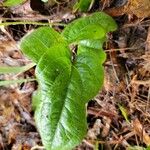
Smilax pumila
Sarsaparilla-vine · Sarsparilla-Vine
Description
Source: leafsnapSmilax pumila, commonly known as the dwarf greenbrier, is a perennial vine belonging to the Smilacaceae family. Native to eastern North America, it thrives in various environments, including forests, thickets, and swamps. The plant features a woody stem that can grow up to 2 meters in length and has tendrils that assist its climbing on other plants or structures. The leaves of Smilax pumila are alternate, simple, and oval-shaped. They are dark green with a glossy surface and exhibit prominent veins. The plant produces small, greenish-yellow flowers that bloom from May to July. Smilax pumila serves as a crucial food source for wildlife such as deer, rabbits, squirrels, and birds, which feed on its leaves or fruits. Additionally, the plant has medicinal properties; its roots have traditionally been used by Native Americans to treat various ailments, including arthritis pain. Overall, Smilax pumila is a fascinating plant species with ecological importance, providing sustenance for wildlife and offering medicinal benefits that have been utilized by humans throughout history.
🎭 Affection, Wealth
Care Guide
💧 Water Every 7 days
The sarsaparilla vine flourishes in shaded, moderately humid environments that resemble its natural forest understory habitat. It needs consistent moisture, so aim to water it weekly. As an evergreen, the sarsaparilla vine particularly requires regular watering, especially indoors, where humidity levels can be inconsistent.
☀️ Light Full sun
Sarsparilla vine grows best with plentiful sunlight and can also tolerate occasional sun. It comes from a habitat that gets abundant daily sun. Too much light can harm its health, while too little light restricts its proper growth and development.
What are the sun requirements for Sarsparilla vine?
The Sarsparilla vine, also known by its botanical name Smilax pumila, thrives best under full sun conditions, which is defined as receiving over 6 hours of sunlight daily. However, it can also tolerate partial sun, needing about 3-6 hours of sunlight a day. It's important to observe the movement of sunlight through your garden, aiming to place your plants in locations that offer an optimal blend of light and shade. This careful observation ensures the best growth and health of your Sarsparilla vine.
What are the essential care tips for Sarsparilla vine?
Sarsparilla vine flourishes in abundant sunlight and can also manage with intermittent light. Originating from regions with significant daily sun exposure, it's crucial to note that too much light can affect the plant's health negatively, while insufficient light hampers its growth and development. For indoor plants that can't access enough natural light, artificial lighting serves as an excellent alternative, especially during less sunny seasons or in darker spaces. Optimal growth is achieved by using LED lights for their ability to mimic specific light wavelengths needed by plants. Full sun plants require 30-50W/sq ft of artificial light, partial sun plants 20-30W/sq ft, and full shade plants 10-20W/sq ft. Properly positioning the light source 12-36 inches above the plant and ensuring it receives 8-12 hours of light a day can mimic natural daylight conditions and promote healthy growth.
What are the symptoms of light deficiency or overexposure in Sarsparilla vine?
When Sarsparilla vine does not receive adequate lighting, it may display several symptoms indicating light deficiency. These include smaller new leaves, leggy or sparse growth, faster leaf drop, slower or stopped growth, lighter-colored new leaves, chlorosis leading to yellow leaves, sunscald, leaf curling, wilting, and leaf scorching. Each of these symptoms suggest either too little or too much exposure to light. Adjusting light exposure, whether by increasing sunlight or using artificial lights, can help address these symptoms. Affected parts might not recover, but new growth can be healthy with proper light conditions.
How can I address light deficiency or overexposure for Sarsparilla vine?
To combat light deficiency or overexposure in Sarsparilla vine, consider gradually moving the plant to a location with at least 6 hours of direct sunlight daily, if outdoors. Use a south-facing window for indoor plants and keep curtains open during daylight for maximum sun exposure. For large or immovable plants, artificial grow lights left on for at least 8 hours daily can supplement their light needs. If the plant is outdoors, avoid sudden changes in light intensity by gradually transitioning it to sunnier spots to prevent sunburn. For ground-planted vines, reducing obstructions like overhanging branches can increase sunlight access. If necessary, transplant smaller plants to more sun-appropriate locations during their dormant period for better growth results.
🌡️ Temperature 15–35°C
Sarsparilla vine is suited to grow in areas where temperatures range from 59 to 95 °F (15 to 35 ℃). Its natural habitat experiences these temperature conditions. For optimal growth across seasons, keep temperatures within this range.
What is the ideal temperature range for the growth of Sarsparilla vine?
The Sarsparilla vine, botanically known as Smilax pumila, is adapted to thrive in a temperature range between 59 to 95 °F (15 to 35 °C). Its natural habitat usually experiences these temperature conditions, which are necessary for its best growth throughout different seasons. To maintain optimal health and development of the vine, it's crucial to ensure the environment stays within this temperature range.
Does the Sarsparilla vine need frost protection in winter?
Sarsparilla vine exhibits strong cold resistance, meaning it typically does not require special frost protection measures during winter. Even though it can withstand cold, precautions are needed if winter temperatures are forecasted to drop below -15°C. Cold protection can be provided by covering the vine with insulating materials like soil or straw. It's also advisable to water the plant abundantly before the first freeze in autumn, keeping the soil moist to enter a frozen state, which helps in preventing drought and water scarcity for the plant during the winter and early spring months.
What are the symptoms and solutions for Sarsparilla vine exposed to low temperatures?
The Sarsparilla vine has a noteworthy tolerance to cold and performs best when temperatures remain above 15°C. In winter, it's important to ensure temperatures do not fall below -10°C. Exposure to temperatures below -15°C won’t typically show immediate visible damage during winter; however, it may lead to a decreased sprouting or complete absence of sprouting in the spring. If this occurs, the solution is to remove any parts of the vine that have failed to sprout as spring arrives, to encourage new growth and recovery.
How should Sarsparilla vine be cared for in high temperatures?
During the hotter months, it's critical to ensure that the Sarsparilla vine’s environment does not exceed 35°C. Temperatures above 38°C may cause the vine's leaves to lighten in color, curl up, and become susceptible to sunburn; in severe cases, the entire plant may wilt and dry out. To mitigate these effects, sunburned and dried parts should be trimmed away promptly. Moving the plant to a shaded area or using shade cloths can protect it from the harsh midday and afternoon sun. Additionally, watering the plant in the mornings and evenings will help keep the soil moist and reduce stress.
💨 Humidity
🪴 Soil 6-7
🌱 Fertilizer
Typically one fertilizer application in spring suffices for the Sarsparilla vine, but multiple feedings can boost growth to its fullest. If feeding more than once, do so every month to a month and a half. Fertilization improves leaf look and function, encouraging uniform color and a healthy texture. It also promotes root development and enhances nutrient uptake for the plant’s long-term health.
🪴 Pot & Repot
✂️ Pruning
The sarsaparilla vine has a climbing growth habit and dense foliage, and it benefits from regular pruning between early and late spring. Use sterilized shears to trim away dead or weak stems, as well as to cut healthy branches to your desired length. This pruning practice helps maintain the vine's shape, encourages new growth, and enhances its vigor and decorative appeal.
🌿 Propagating
🐛 Diseases & pets
☠️ Toxicity
Characteristics
- Plant Type
- Herb, Vine
- Life Cycle
- Perennial
- Genus
- Smilax
- Family
- Smilacaceae
- Hardiness Zone
- 7-9
- Mature Height
- 30 cm to 46 cm
- Mature Spread
- 2.44 m to 3.05 m
- Leaf Color
- Dark Green, Forest Green
- Leaf Type
- Evergreen
- Flower Color
- Green
- Flower Size
- 2.54 cm
- Bloom Time
- Late summer, Early fall, Mid fall
- Planting Time
- Spring, Summer, Autumn
- Harvest Time
- Mid fall, Late fall, Early winter