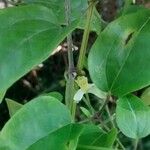
Smilax rotundifolia
Common Greenbrier · Catbrier · Greenbrier · Bullbrier · Bullbriar
Description
Source: leafsnapSmilax rotundifolia, also known as roundleaf greenbrier or common greenbrier, is a woody vine native to the southeastern and eastern United States and eastern Canada. It is a common and conspicuous part of the natural forest ecosystems in much of its native range. The leaves are glossy green, petioled, alternate, and circular to heart-shaped. They are generally 5–13 cm long. Common greenbrier climbs other plants using green tendrils growing out of the petioles.The stems are rounded and green and are armed with sharp thorns. The flowers are greenish white, and are produced from April to August. The fruit is a bluish black berry that ripens in September.
🎭 Beauty & Constancy
Care Guide
💧 Water
Roundleaf greenbrier thrives in woodland environments and prefers drier conditions, needing water only about once every three weeks. It effectively adjusts its water requirements according to the season and is usually cultivated outdoors. This allows it to benefit from natural rainfall without the need for additional irrigation.
How should I water my Roundleaf greenbrier plant?
Here are some tips for watering your plants effectively: - To promote excellent root development, place a garden hose at the base of the plant. Avoid spraying water directly on the leaves. If the plants are outdoors and exposed to direct sunlight, keep in mind that the leaves will need more water. - Consider using bubblers or soaker hoses to moisten the roots of each plant. Soaker hoses can also be useful when adding or removing plants, as they cover the entire garden or bed and help push the roots deep into the soil. - After watering, make sure to drain any excess water and allow the soil to dry before watering again. Watering at ground level can help prevent diseases. - On a sunny day, you may want to spray the entire bush with water. - Whether your plants are potted or in the ground, it's important to remember that Roundleaf greenbrier prefers deep watering rather than light sprinkling.
What should I do if I give Roundleaf greenbrier too much or too little water?
If you overwater your Roundleaf greenbrier, its leaves may turn yellow, drop off, and wilt. The plant may also look dull and unhealthy, with mushy stems. When you notice these signs, try to adjust your watering schedule. Wilting can also indicate under watering, which causes crispy and dry leaves. If the soil is dry and simply watering is not enough, give it a thorough watering. This will help the plant recover, but it may still have dry, yellow leaves for a few days due to damaged roots. Once the plant returns to normal, the yellowing will stop. Indoors, check the moisture levels of the pot and avoid overwatering. Look for signs of black spots, and if present, let the soil dry out for a few days. Overwatering can lead to root rot, so if you see discolored and slimy roots, consider transferring the plant to a different pot. Always prevent root rot by avoiding overly soggy soil. When planting a Roundleaf greenbrier outdoors, check the soil moisture by digging a little deeper. If it feels too dry, the plant may be underwatered and requires sufficient watering to recover.
How frequently should I water my Roundleaf greenbrier?
The Roundleaf greenbrier prefers deep and infrequent watering, especially when grown in pots. In pots, the storage capacity for water is limited and the soil dries out quickly. In colder regions, watering is needed every 3 to 5 days. It's best to water the plant early in the morning when the soil is dry, whether it's kept indoors or outdoors. You can also check the soil moisture by examining the top 2-3 inches. If the soil is dry, it's time for a thorough watering. On hot days, monitor the moisture daily as the soil can dry out rapidly. In addition, if you have a garden, irrigation is necessary. In hot climates, watering once a week is sufficient. Only water when you observe that about 2 to 3 inches of soil has become overly dry, both indoors and outdoors. Take into consideration rainfall and avoid overwatering to prevent root rot. If there is ample rainfall, additional watering may not be necessary. Roundleaf greenbrier typically grows during spring and fall. When grown outdoors, adding a layer of mulch 3 to 4 inches deep helps conserve water. Sandy soil requires more frequent watering due to its fast drainage, while clay soil needs less frequent watering to avoid root rot. It can be helpful to mark the watering dates on a calendar and look for drooping leaves as an indication of delayed watering.
How much water does my Roundleaf greenbrier plant need?
The Roundleaf greenbrier plant requires about a gallon of water on a regular schedule. For potted plants, water them deeply until the water is dripping from the bottom of the pot, and then wait for the soil to dry before watering again. You can use a water calculator or moisture meter to determine how much water you've given the plant in a week. During the flowering period, provide plenty of water but allow the moisture to evaporate afterwards to prevent root rot. If the Roundleaf greenbrier is planted outside and receives adequate rainfall, it may not need additional watering. When the plant is young or newly planted, ensure it gets 1-2 inches of rain per week. As the plant continues to grow, it can rely solely on rainfall. Only during very hot weather or if there is no rainfall for 2-3 weeks, should you consider giving the plant a full watering during cooler parts of the day to prevent damage from high heat. Additional watering will be necessary during prolonged dry periods.
Should I change how often I water my Roundleaf greenbrier depending on the time of year or the specific weather conditions?
The Roundleaf greenbrier needs to be outdoors and typically relies on rain for watering. During spring and fall, the soil should be kept moist but not overly wet, with alternating dry and moist conditions being beneficial for growth. In the summer, hot weather may cause water to evaporate quickly, so additional watering may be necessary if there is a lack of rainfall. Generally, less water is needed during winter when the plant goes dormant. It is important to use well-draining soil and a moisture-retaining mixture like terracotta during this period. Once the plant begins to leaf out and go dormant, watering can be skipped as it can rely on fall and winter rains. When the temperature becomes warmer in spring, cultivating and encouraging growth and blooming is recommended. Good drainage is crucial, especially during winter, to avoid ponding or drought. When the plant is in a pot, it has limited root growth and should be well-watered, especially in summer. Deep soaking the entire root system once or twice a week is preferable to shallow sprinkling as it promotes root health and discourages fungi growth. In the fall and winter, even during dormancy, the plant should not be allowed to dry out completely. However, overwatering and poor soil drainage should be avoided to prevent damage. Using mulch can help reduce stress, conserve water, and promote healthy blooms.
☀️ Light Partial sun
Common greenbrier generally prefers spots where sunlight is partly blocked, such as beneath a tree canopy. It can, however, tolerate conditions where light is either fully available or completely absent. These variations in light do not prevent its growth and it can still thrive, although its foliage may look less vibrant when light is insufficient.
What are the sunlight requirements for Roundleaf Greenbrier (Smilax rotundifolia)?
Roundleaf Greenbrier thrives in various lighting conditions. It prefers partial sun, requiring about 3-6 hours of sunlight daily, but it can also grow in full sun or full shade environments, where it receives more than 6 hours of sunlight. The plant's versatility allows it to prosper even under the canopy of trees, where light is partially blocked. Despite its adaptability, Roundleaf Greenbrier's foliage may showcase less vibrancy if the light is inadequate. Artificial lighting can be a beneficial supplement for indoor plants, with LED lights recommended for their customizable wavelengths. The appropriate artificial light wattage varies based on the plant's sunlight needs: 30-50W/sq ft for full sun plants, 20-30W/sq ft for partial sun plants, and 10-20W/sq ft for full shade plants. Positioning artificial lights 12-36 inches above the plant and providing 8-12 hours of light per day mimics natural sunlight conditions, supporting healthy growth.
What are the signs of inadequate light for Roundleaf Greenbrier, and how can it be addressed?
When Roundleaf Greenbrier does not receive sufficient light, it might display several symptoms indicating light deficiency. Such symptoms include smaller new leaves, leggy or sparse growth, early leaf drop to conserve resources, slowed or halted growth, paler new leaves due to insufficient chlorophyll, conditions of chlorosis where leaves turn yellow, sunscald marked by damaged leaves or stems, curling leaves as a defense against excessive sun, wilting from water loss, and leaf scorching. To address these symptoms, for indoor plants, consider moving them to sunnier spots progressively each week until achieving 3-6 hours of sunlight or use artificial light sources such as desk lamps or professional grow lights for at least 8 hours daily. For outdoor plants, gradually relocating them to better sunlight conditions while avoiding drastic changes in light intensity is crucial. Additionally, reducing obstructions like pruning tree branches or transplanting smaller plants during their dormant period to a location with more sunlight and better drainage can also help.
What special considerations should be taken into account for Roundleaf Greenbrier concerning sunlight?
Special consideration for Roundleaf Greenbrier involves monitoring the sunlight patterns in your garden to ensure optimal growth. It's essential to choose locations that offer a balanced mix of light and shade matching the plant's requirements, aiming for 3-6 hours of sunlight for partial sun conditions. For artificial lighting, especially during less sunny seasons, selecting the right type of light such as LED and ensuring sufficient wattage based on the plant's needs can make a significant difference in indoor plant health. Adjusting the light source's distance and duration to mimic natural conditions helps in promoting healthy growth. Gradual adaptation to sunlight by moving the plants progressively each week avoids shock and potential sunburn, ensuring a smooth transition to optimal lighting conditions.
🌡️ Temperature 5–35°C
The common greenbrier is a woody plant from temperate regions that prefers temperatures between 41 and 95 ℉ (5 and 35 ℃). It does well in its native habitat, which requires moderate temperatures. In colder months, it is advisable to grow it indoors or protect it from frost. In hot summers, providing shade or using misters is recommended to help cool the plant.
What is the preferred temperature range for Roundleaf greenbrier?
Roundleaf greenbrier thrives in a temperature range of 41 to 95°F (5 to 35°C), indicating its preference for moderate climates. During colder seasons, it is beneficial to grow it indoors or safeguard it from frost to ensure its healthy growth. Conversely, in the midst of hot summers, providing shade or employing misters can help in keeping the plant cool, thus aiding its development and maintaining its health.
How does Roundleaf greenbrier cope with low temperatures?
Despite its strong cold resistance, Roundleaf greenbrier best flourishes when the temperature remains above 5°C. If winter temperatures are foreseen to plummet below -30°C, it becomes imperative to protect the plant against the cold. Wrapping the trunk and branches with non-woven fabric or cloth can offer substantial protection. Moreover, watering the plant copiously before the first freeze of autumn to ensure the soil remains moist can help the plant to combat drought and water scarcity throughout the winter into early spring. However, when the temperature falls below -25°C, and especially below -30°C, the plant's branches may become brittle and dry by spring, preventing the emergence of new shoots. Pruning dead branches in spring can rejuvenate the plant for the new season.
How should Roundleaf greenbrier be cared for during high temperatures?
When facing high temperatures, particularly above 35°C, the care for Roundleaf greenbrier involves measures to prevent overheating and sun damage. Symptoms such as lighter leaf color, dry and withered leaf tips, and increased susceptibility to sunburn may appear when temperatures exceed 38°C. To mitigate these issues, the sunburned and dried parts of the plant should be trimmed away. Relocating the plant to a shaded area or using a shade cloth can offer relief from the intense midday and afternoon sun. Additionally, watering the plant during cooler times such as the morning and evening helps keep the soil adequately moist, ensuring the plant's health during hot periods.
💨 Humidity
🪴 Soil 6-7
🌱 Fertilizer
Apply fertilizer to your Common greenbrier in early spring to encourage healthy growth. Consistent feeding improves overall health, promoting vigorous growth, greater tolerance of challenging conditions, and enhanced resistance to diseases and pests. Keep to a regular fertilization schedule for your Common greenbrier to maintain deep-colored, vibrant, and lush foliage.
🪴 Pot & Repot Every 12 months
✂️ Pruning
Roundleaf greenbrier is famous for its thorny vines and heart-shaped leaves. It thrives best with pruning in early spring. By trimming dead stems and managing its growth, you can improve air circulation around the plant. Regular pruning helps shape the plant, controls its spread, and encourages healthier growth. It also helps reduce pests. For specific pruning techniques, refer to horticultural guidelines.
🌿 Propagating
🐛 Diseases & pets
☠️ Toxicity
Characteristics
- Plant Type
- Vine
- Life Cycle
- Perennial
- Genus
- Smilax
- Family
- Smilacaceae
- Hardiness Zone
- 4-9
- Mature Height
- 61 cm to 91 cm
- Mature Spread
- 3.66 m to 6.1 m
- Leaf Color
- Green
- Leaf Type
- Deciduous
- Flower Color
- Yellow, Green, White, Gold
- Flower Size
- 2.54 cm
- Bloom Time
- Late spring, Early summer, Mid summer
- Planting Time
- Spring
- Harvest Time
- Mid summer, Late summer