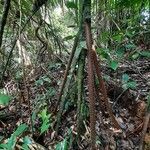
Socratea exorrhiza
Description
Source: leafsnapSocratea exorrhiza, the walking palm or cashapona, is a palm native to rainforests in tropical Central and South America. It can grow to 25 metres in height, with a stem diameter of up to 16 cm, but is more typically 15–20 m tall and 12 cm in diameter. It has unusual stilt roots, the function of which has been debated. Many species of epiphyte have been found growing on the palms. The palm is pollinated by beetles, and various organisms eat its seeds or seedlings.
Care Guide
💧 Water
☀️ Light Partial sun
Walking palm is indigenous to habitats like forest understories and rocky sites, where it grows under natural shade. It favors partial sun but can also adapt to full sun or full shade, showing its hardy and adaptable character.
🌡️ Temperature 20–37.8°C
The walking palm comes from tropical areas, where the climate is usually warm and humid. As a result, it is adapted to high temperatures and humidity. It does not tolerate sudden temperature changes and prefers a steady temperature environment, so avoiding temperature fluctuations indoors is important. It typically cannot withstand cold and needs warmer conditions to grow. If the surrounding temperature falls too low, the plant may stop growing or even die.
💨 Humidity
🪴 Soil 5-6
🌱 Fertilizer
Fertilization is essential for the care of Walking palm. Regular feeding during the growing season preserves the energy needed for its showy leaves and aids overall growth. Ignoring fertilization can cause unhealthy leaves, reduced ornamental appeal, and stunted or weak growth that is likely to break.
🪴 Pot & Repot
✂️ Pruning
The walking palm is known for its aerial roots and unique mobility, and it requires minimal pruning. Pruning should be done in early spring to remove dead fronds and maintain its shape. By using proper pruning techniques, you can enhance the plant's growth and appearance. This helps prevent overcrowding and ensures better access to light and air.
🌿 Propagating
🐛 Diseases & pets
☠️ Toxicity
Characteristics
- Plant Type
- Tree
- Life Cycle
- Perennial
- Genus
- Socratea
- Family
- Arecaceae
- Hardiness Zone
- 10-12
- Mature Height
- 20.12 m to 24.99 m
- Mature Spread
- 6.1 m to 7.92 m
- Leaf Color
- Dark Green
- Leaf Type
- Evergreen
- Flower Color
- Yellow
- Flower Size
- 1.02 cm to 2.03 cm
- Bloom Time
- All year round
- Planting Time
- Spring, Summer, Autumn
- Harvest Time
- All year round
- Native Area
- Colombia, Bolivia, Venezuela, Peru, Guyana, Brazil, Nicaragua, Ecuador, Costa Rica, Panama