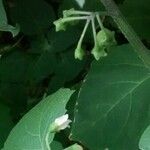
Solanum americanum
بادنجان تاجریزی · Common Nightshade · American black nightshade · Glossy nightshade · American nightshade
Description
Source: leafsnapSolanum americanum, commonly known as American nightshade or glossy nightshade, is a species of flowering plant in the Solanaceae family. Native to the Americas, it thrives in tropical and subtropical regions worldwide. This plant typically grows as a small shrub or herbaceous perennial, featuring dark green leaves and small white flowers that bloom from summer to fall. The fruit of Solanum americanum is a small, round berry that transitions from green to shiny black when ripe. Although some cultures utilize the fruit for food or medicinal purposes, it is important to note that all parts of the plant are toxic if ingested in large quantities due to high levels of solanine alkaloids. In traditional medicine, it has been used to treat ailments such as fever, coughs, and colds. Additionally, Solanum americanum has been researched for its potential use in pest control, thanks to its insecticidal properties against agricultural pests like aphids and whiteflies. In summary, while Solanum americanum may offer medicinal or agricultural benefits, proper precautions must be taken due to its toxicity. It should not be consumed without sufficient knowledge of the safe dosage to prevent harm.
💡 American black nightshade, or Solanum americanum, is often mistaken for other plants in its species. There is some debate about the edibility of American black nightshade, but the consensus among experts is that this plant is toxic and should not be consumed. It is particularly important to recognize that the unripe berries of this plant are highly poisonous and have been known to cause death.
🌳 Because American black nightshade grows well in nitrogen-rich soils, it can act as an unintended sign of soil fertility. Its presence can signal to farmers and gardeners the underlying soil conditions and help guide cultivation strategies for other crops. This frequently overlooked characteristic could be useful for sustainable agriculture.
🎭 Veracity, quiet, sorrow, demise, the netherworld
Care Guide
💧 Water Every 7 days
The American black nightshade thrives in environments that provide consistent moisture without waterlogging. It should be watered weekly and has a moderate tolerance for drought. This plant does best in areas that mimic its native moist habitats, making it ideal for regions with regular rainfall.
How should I water my American black nightshade plant?
To water American black nightshade, you have several options for watering tools like a garden hose with a spray nozzle or a watering can. This plant is not too particular about the type of water it receives, whether it's rainwater, tap water, or filtered water. However, it is best to avoid watering it from above as this can harm the leaves, flowers, and potentially cause disease. Instead, a drip irrigation system is often the most effective method for watering, as it delivers water evenly and directly to the soil. If you have a container-grown American black nightshade, you can use similar watering techniques by using a cup, watering can, or tap water to directly water the soil.
What should I do if I give my American black nightshade plant too much or too little water?
Underwatering the American black nightshade plant can be easily fixed by watering it more regularly. However, overwatering can be more dangerous and can lead to diseases and the death of the plant. To prevent overwatering, choose a suitable location with sufficient sunlight and good drainage to avoid waterlogged soil. If you overwater a potted American black nightshade, consider repotting it in a container with better drainage and loose soil.
How often should I give water to my American black nightshade plant?
To ensure the health of your American black nightshade, it is important to provide it with regular water throughout the growing season. In the spring, watering once a week should be sufficient. However, as the weather gets warmer, you may need to increase watering to two or three times a week. It is crucial not to exceed this frequency as it can harm the plant. Additionally, it is important to maintain moist soil for your American black nightshade, without letting it become too wet. When growing the plant in a container, the watering needs are slightly different. Container soil tends to dry out faster, so you will likely need to water your potted black nightshade a few times per week, compared to just once a week for a planted one.
How much water does my American black nightshade plant need?
Determining the appropriate water amount for your American black nightshade can be done in a few ways. Some gardeners rely on the feel of the soil to determine moisture levels. This method suggests watering until the first six inches of soil feel moist. Another option is to use a specific measurement. Generally, providing about two gallons of water per week is suitable, depending on temperature and soil dryness. However, strict adherence to this guideline can result in overwatering if your plant actually requires less water. When growing this plant in a container, a different approach is needed. Watering should be enough to moisten all dry layers of soil. You can test this by feeling the soil with your finger or watering until you see a slight trickle of excess water from the drainage holes.
How can I know if I'm watering my American black nightshade plant enough?
Maintaining the right amount of water for your American black nightshade can be a bit tricky. On one hand, these plants have deep roots that need to be watered weekly to keep the soil moist. However, they are also prone to root rot, which can cause browning of the plants. Underwatering is not a big concern for American black nightshade as they can endure some time without additional watering. However, if you wait too long to give them water, they will start to wilt and you might see dry leaves.
☀️ Light Full sun
American black nightshade prefers plentiful light but can also tolerate locations with moderate sunlight. Native to sun-rich regions, the plant fares best with full sun exposure. Conversely, both insufficient and excessive light can be limiting and negatively affect its healthy growth.
What are the sunlight requirements for American black nightshade?
American black nightshade requires full sun, meaning it thrives in locations that receive more than 6 hours of direct sunlight daily. It can also tolerate partial sun, which equates to about 3-6 hours of sunlight. It's essential to observe how sunlight moves through your garden to ensure plants are placed in spots that provide an ideal balance of light and shade, ensuring their health and growth.
How does American black nightshade respond to different light conditions?
Originating from regions with ample sunlight, American black nightshade shows a preference for abundant light exposure. It performs best under maximum sun exposure but can also endure in moderately sunny locations. However, improper light conditions, either too little or too much, can adversely affect its growth. For indoor plants, insufficient natural light can be supplemented with artificial lighting, where LED lights are a popular choice. The amount of artificial light needed varies with the type of plant, with full sun plants requiring 30-50W/sq ft, partial sun plants needing 20-30W/sq ft, and full shade plants requiring 10-20W/sq ft of artificial light.
What are the symptoms of inadequate light in American black nightshade?
When American black nightshade is cultivated in conditions with inadequate light, it may exhibit several symptoms, including smaller new leaves, leggy or sparse growth, faster leaf drop, slower or halted growth, and lighter-colored new leaves. Additionally, excessive sunlight can lead to chlorosis, sunscald, leaf curling, wilting, and leaf scorching. These symptoms reflect the plant's struggle with either too little or too much sunlight, impacting its health and growth.
How can I address light-related issues in American black nightshade?
To address light-related issues, for indoor American black nightshade, gradually increase exposure to natural sunlight or supplement with artificial light, aiming for at least 6 hours of direct sunlight daily. A south-facing window is ideal for maximum exposure. If moving the plant isn't feasible, consider using desk lamps or professional grow lights for at least 8 hours daily. For outdoor plants, transition them to sunnier spots gradually to prevent sunburn. If trees block sunlight, pruning may be necessary. For small plants, consider transplanting during the dormant period to a sunnier location. Note that while parts of the plant damaged by inadequate light may not recover, new growth should be healthy with improved light conditions.
🌡️ Temperature 15–37.8°C
American black nightshade originates from temperate areas where temperatures range from 68 to 100 °F (20 to 38 ℃). It favors comparable conditions, with temperatures within that span needed for healthy growth. Seasonal adjustments should be made to accommodate these requirements, particularly in colder months.
What are the essential growing conditions for American black nightshade?
American black nightshade, botanically known as Solanum americanum, is native to temperate regions and thrives in temperatures ranging from 68 to 100 °F (20 to 38 °C). It is adaptable to similar conditions, flourishing in environments where temperatures fall within this range. To ensure healthy growth, it's important to adjust care seasonally, especially in cooler months. Despite its strong resistance to cold, additional protection might be necessary if winter temperatures are expected to plummet. Protecting the plant can be as simple as covering it with soil or straw. Moreover, watering the plant abundantly before the first freeze in autumn is advised to keep the soil moist throughout winter and early spring, safeguarding against drought and water scarcity.
How does low temperature affect American black nightshade and what are the solutions?
American black nightshade is remarkably cold-tolerant and prefers temperatures above a certain minimum for its best growth. Keeping it above a specified minimum during winter is crucial. Should temperatures fall below a critical limit, there might not be immediate visible changes during winter, but a decrease in sprouting or a complete lack of sprouting can occur in spring. The solution for mitigating the impact of low temperatures in spring involves removing any parts of the plant that have failed to sprout, allowing for healthy growth.
What are the effects of high temperature on American black nightshade and the recommended solutions?
During the summer months, it's important to ensure that the American black nightshade's exposure to temperatures remains below a certain maximum to prevent stress. Exceeding this temperature threshold can cause the leaves to lighten in color, curl, suffer from sunburn, and, in severe cases, lead to the wilting and dryness of the entire plant. To counteract the effects of high temperatures, trimming away sunburned and dried parts of the plant is advisable. Moving the plant to a shaded location during midday and afternoon hours or using a shade cloth can provide protection from excessive sun exposure. Additionally, watering the plant in the morning and evening helps keep the soil adequately moist, supporting the plant's health in high temperatures.
💨 Humidity
🪴 Soil 5-7
🌱 Fertilizer
American black nightshade does well with regular, light applications of fertilizer to encourage healthy leaf development. Apply fertilizer to American black nightshade roughly once a month during the summer. Nitrogen is vital for foliage, and adding nitrogen-rich sources helps American black nightshade thrive.
🪴 Pot & Repot
✂️ Pruning
Plants that aren't pruned don't establish a good, squat, lush shape, and they lose their ornamental value soon, necessitating more frequent replacement with younger seedlings. There are two ways to prune nightshade. Spring pruning, done at the end of the dormant period, drastically shortens all shoots and promotes rejuvenation (normal pruning is 1/3 of the branch length).
🌿 Propagating
🐛 Diseases & pets
☠️ Toxicity
Characteristics
- Plant Type
- Herb
- Life Cycle
- Annual, Perennial
- Genus
- Solanum
- Family
- Solanaceae
- Hardiness Zone
- 7-11
- Mature Height
- 0.91 m to 1.52 m
- Mature Spread
- 0.61 m to 1.22 m
- Leaf Color
- Green, Blue
- Leaf Type
- Deciduous
- Flower Color
- White
- Flower Size
- 1.02 cm
- Bloom Time
- Late spring, Early summer, Mid summer
- Planting Time
- Spring
- Harvest Time
- Summer
- Native Area
- Belize, Honduras, Mexico, Peru, Panama, Jamaica, Colombia, Bahamas, Bolivia, Venezuela, Guyana, Nicaragua, Ecuador, Costa Rica