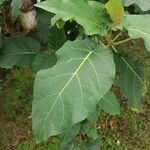
Solanum betaceum
Tamarillo · Tree-tomato
Description
Source: leafsnapSolanum betaceum, commonly known as tamarillo or tree tomato, is a small tree or shrub belonging to the Solanaceae family. Native to the Andes Mountains of South America, it is widely cultivated in many countries for its edible fruit. The plant can grow up to 5 meters tall and features large, heart-shaped leaves that are dark green in color. The fruit of Solanum betaceum is oval-shaped and varies in color from yellow-orange to deep red-purple. It has a tangy flavor reminiscent of a combination of tomato and passionfruit. The fruit can be eaten raw or cooked and is often used in jams, jellies, sauces, desserts, or drinks. For optimal growth, Solanum betaceum requires well-drained soil rich in organic matter. It prefers full sun but can tolerate partial shade. The plant needs regular watering but should not be overwatered, as this may lead to root rot. In addition to its culinary uses, Solanum betaceum has medicinal properties due to its high content of antioxidants, such as vitamin C and carotenoids. These antioxidants help boost the immune system and protect against chronic diseases, including cancer. Overall, Solanum betaceum offers both culinary delights with its delicious fruit and health benefits, making it an excellent addition for any garden enthusiast looking for an exotic yet useful plant species.
🌳 Aside from its culinary uses, tamarillo peels have been recognized as a potential source for extracting natural colorants. The vivid red and orange shades of tamarillo skin have drawn interest from researchers in the food and textile sectors who aim to replace synthetic dyes with sustainable, plant-derived alternatives.
Care Guide
💧 Water Every 7 days
Tamarillo, native to high-altitude tropical regions, flourishes in well-draining soil with consistent moisture and moderate humidity. For best results, water it every 1-2 weeks, ensuring that the soil remains moist but not soaked. Mulching can help retain moisture, making it a great choice for outdoor cultivation in warm climates.
How should I water my Tamarillo plant to keep it healthy?
Watering your Tamarillo is quite flexible, so you can use most common watering tools like watering cans, hoses, or even cups. Regardless of the tool, it's best to apply the water directly to the soil and make sure all areas are equally moistened to provide enough water for the entire root system. Filtering tap water can help avoid harmful particles for the plant. It's also recommended to use water at or slightly above room temperature as extremely cold or hot water can be shocking to the Tamarillo. However, generally, the Tamarillo is not too picky and responds well to different water types.
What should I do if I give too much or too little water to my Tamarillo plant?
Outdoor plants, especially newly planted ones or seedlings, are prone to lack of watering. To prevent this, make sure to water them consistently for the first few months, as small or recently planted trees rely heavily on rainfall once their roots are established. When it comes to Tamarillo plants in pots, overwatering is a more common issue. If you accidentally overwater your Tamarillo, take immediate action to minimize the damage. First, stop watering the plant right away. Then, remove the Tamarillo from its pot to check its roots. If there is no sign of root rot, you can return the plant to its container. However, if root rot is present, trim the affected roots and consider using a fungicide to prevent further damage. Finally, repot the Tamarillo in well-draining soil. On the other hand, underwatering is easier to fix. If you notice the plant's leaves drooping, drying out, or falling off, it means the Tamarillo is not receiving enough water. Simply increase the frequency of watering, and the leaves will regain their fullness quickly. Remember to adjust your watering schedule promptly when you see signs of underwatering.
How frequently should I water my Tamarillo?
Most plants can grow naturally with rainfall, but if your area lacks rainfall, you may need to water them every 2 weeks in the spring and fall, and more often in the summer. In the winter, when plants grow slower, you can water them less frequently or not at all. If your Tamarillo is young or newly planted, you should water it more often to help it establish and grow. For potted plants, there are two ways to determine how often to water your Tamarillo. One way is to set a watering schedule, but this may not account for the specific conditions of your plant's environment. Another option is to check the moisture of the soil. Wait until the top two to four inches of soil have dried out completely before watering again.
How much water does my Tamarillo plant need?
To water your Tamarillo plant effectively, you don't always need to give it a lot of water. Instead, if only a few inches of soil have dried since the last watering, you can give the plant around five to ten ounces of water each time. You can also determine the amount of water based on how dry the soil is. If more than half of the soil is dry, it's a good idea to give it more water than usual. Keep adding water until you see excess water draining from the pot's holes. If your Tamarillo is in an area that receives sufficient rain, you may not need to water it additionally. For young or newly established Tamarillo plants, make sure they get 1-2 inches of rain per week. As they grow and establish, they can rely on rainwater except during prolonged periods of hot weather with no rainfall for 2-3 weeks. In those cases, give your Tamarillo a thorough watering to prevent stress.
How can I know if I am giving enough water to my Tamarillo plant?
The Tamarillo is often overwatered, which can be identified by yellowing leaves, leaf drop, and a shriveling plant structure. Overwatering can also lead to root rot. On the other hand, an underwatered Tamarillo will wilt and have brown or brittle leaves. In both cases, it's important to take action to restore the Tamarillo's health.
☀️ Light Full sun
Tamarillo does best when it can fully receive the sun’s plentiful rays. It can also adjust to places with moderate sunlight. Poor light conditions can hinder the plant’s development. Too much sun may cause scorching, while too little can result in stunted growth and decreased fruit yield because it originates from a tropical environment.
What are the sunlight requirements for Tamarillo?
Tamarillo plants require different levels of sunlight depending on their specific needs. They thrive in conditions where they can fully absorb the sun's rays, which means they do well in full sun, defined as receiving more than 6 hours of sunlight a day. They can also adapt to partial sun, meaning about 3-6 hours of sunlight daily. However, it's important to watch how sunlight moves through your garden and choose spots that provide an ideal balance of light and shade for your plants. This ensures their growth and happiness.
What are the essentials for Tamarillo plant care?
The essential care for Tamarillo includes ensuring the plant receives adequate sunlight. While they prefer full sun exposure, Tamarillos can adapt to average sunlight conditions. Nevertheless, inadequate light might lead to stunted growth and lower fruit yield. On the other hand, too much sun exposure can cause leaf scorching. During the winter or in areas with insufficient natural light, artificial lighting can be a vital solution. Specifically, indoor plants require 30-50W/sq ft of light for full sun, 20-30W/sq ft for partial sun, and 10-20W/sq ft for full shade plants. Selecting the right type of light, such as LED, and adjusting its distance (12-36 inches above the plant) and duration (8-12 hours per day) can promote healthier growth.
What are the symptoms of improper light exposure in Tamarillo plants?
Improper light exposure can lead to several symptoms in Tamarillo plants. With insufficient light, you might notice smaller new leaves, leggy or sparse growth, and a general slowdown or cessation in new growth as the plant enters survival mode. Leaves may develop lighter colors, indicating a lack of chlorophyll. Excessive sunlight can cause chlorosis, sunscald, leaf curling, wilting, and leaf scorching. These symptoms affect the plant's overall health, indicating either a need for more light or protection from too intense sunlight exposure.
How can I address light exposure issues in Tamarillo plants?
To address light exposure issues in Tamarillo plants, apply the following solutions based on your setup: Indoor plants may require a gradual increase in exposure to sunlight or the use of artificial light, with a recommendation of keeping a light source on for at least 8 hours daily. For outdoor plants, it’s essential to move them gradually to sunnier spots to prevent shock from sudden changes. Pruning obstacles that block sunlight or transplanting to a more suitable location can also help. Remember, parts of the plant that have been severely affected might not recover, but new growth should be healthy once the light conditions are improved.
🌡️ Temperature 15–37.8°C
The tamarillo is native to regions where temperatures range from 59 to 100°F (15 to 38°C). The plant favors that temperature range for optimal growth and may need adjustments because of seasonal variations. During colder seasons, consider providing it with warmer surroundings.
What is the indigenous temperature range for Tamarillo?
Tamarillo is indigenous to areas where temperatures range from 59 to 100°F (15 to 38°C). The plant thrives best within this temperature bracket, which suggests that it may require adjustments based on seasonal variations to maintain its ideal growing conditions. During colder seasons, providing it with warmer surroundings is advisable to ensure its continued health and growth.
How does Tamarillo handle cold temperatures?
Tamarillo has some level of cold tolerance and generally does not require any additional protective measures when the temperature is above -5°C. However, if the temperature is anticipated to fall below -5°C, it is necessary to take some temporary measures to protect the plant from the cold. This can include wrapping the plant with materials such as plastic film, fabric, or other insulating materials to keep it warm. Once the temperature rises again, these protective measures should be removed promptly to prevent any potential damage to the plant.
What are some important symptoms of temperature distress in Tamarillo and their solutions?
For low temperatures, Tamarillo has moderate tolerance and thrives best when the temperature is above 15°C, requiring protection when temperatures fall below -5°C. If the temperature drops below -10°C, the leaves may droop; in mild cases, they can recover, but in severe cases, leaves wilt and fall off. The solution involves trimming off frost-damaged parts and using protective measures like wrapping the plant with non-woven fabric or constructing a wind barrier for future cold spells. For high temperatures, during summer, it is important to keep Tamarillo below 38°C as exceeding 43°C can cause the leaves to lighten in color, become dry and withered, and more susceptible to sunburn. Solutions include trimming sunburned parts, moving the plant to a shaded area during peak sun intensity, and ensuring the soil remains moist by watering in the morning and evening.
💨 Humidity
🪴 Soil 6-7
🌱 Fertilizer Every 30 days
Tamarillo plants need enough nutrients to achieve optimal fruit production. Fertilize in early spring to encourage new growth and flowering. Regular feeding keeps the plant healthy, yields more delicious fruit, and prevents nutrient-deficiency problems like yellowing leaves and poor fruit production.
Why should I use fertilizer on my Tamarillo plant?
Plants, especially fast-growing ones like Tamarillo, deplete the soil of nutrients as they continue to grow. Regular fertilization is important to provide Tamarillo with additional nutrients, which helps it maintain good health and produce more delicious fruit. Plants that are not fertilized for a long time may encounter various problems. One common issue is foliage problems, such as yellow leaves or leaves that turn reddish in color. Additionally, the plant may experience deformities in leaf shape, withered tips, or significant dieback in certain areas. Some nutrient deficiencies can also lead to bark disorders, slow growth, poor shoot development, and a lack of fruit production.
When should I fertilize my Tamarillo for the best results?
The best time to fertilize Tamarillo is in the early spring, before the buds appear. During this time, Tamarillo uses stored reserves to grow, and it requires a lot of energy to support blooming. To provide enough time for the nutrients to be absorbed and spread throughout the plant, fertilize about 2 to 4 weeks prior to the expected blooming. It is possible to continue fertilizing during the spring, but avoid fertilizing in autumn as it may cause excessive foliage growth late in the season, making the leaves vulnerable to winter damage.
When is it not a good idea to add fertilizer to my Tamarillo?
To ensure the healthy growth of Tamarillo, it is important to follow certain guidelines when it comes to fertilization. Firstly, it is advisable to avoid fertilizing Tamarillo during its first year of growth. Even after that, be cautious and only provide fertilizer if necessary. Furthermore, refrain from fertilizing if you pruned 20% or more of the plant the previous year. Fertilizing diseased or damaged plants can actually do more harm than good, so it is best to address the root cause of the issue before considering fertilization. Additionally, it is not recommended to fertilize Tamarillo after the peak of summer, as this can lead to excessive growth just before winter. Similarly, during hot and dry times of the year, when the soil is dry, fertilization is not as effective and can promote growth that requires more water, which may not be readily available. It is therefore preferable to fertilize Tamarillo earlier in the season when temperatures are cooler. Lastly, be cautious of inadvertently giving Tamarillo a double-dose of fertilizer, as these plants can absorb fertilizer that has been applied to nearby plants or lawns.
What kind of fertilizer should I use for my Tamarillo plant?
Using fertilizer that contains a balance of nitrogen, phosphorus, and potassium can bring many benefits to plants. Nitrogen is important for leaf growth and chlorophyll production. Phosphorus helps support the root system and promotes the development of blossoms, fruits, and seeds. Potassium plays a role in photosynthesis and the movement of water and nutrients throughout the plant. When choosing a fertilizer, you can opt for a commercial one that is specifically designed for a particular type of tree. Alternatively, you can use organic sources of nitrogen such as manure, feather meal, or blood meal. To ensure you apply fertilizer accurately, conducting a soil test can give you a better understanding of the condition of your soil. For commercial fertilizers, if your soil lacks sufficient phosphorus and potassium according to the soil test, you can use a balanced granular fertilizer with a ratio of 10-10-10 or similar. In most cases, nitrogen in the soil is continuously depleted with rainfall. If your soil already has enough phosphorus and potassium, it would be more appropriate to use a high-nitrogen fertilizer with a ratio of 6-2-1 or 10-2-2.
How can I give my Tamarillo plant the nutrients it needs to grow?
To properly fertilize your Tamarillo, it is important to follow the specific directions for the type of fertilizer you are using and conduct research on its application. Avoid over-fertilizing, especially for fruit trees like the Tamarillo. To determine the right amount, you can use the tree's age (if known) or the trunk's diameter. Typically, you would need about one-tenth of a pound of fertilizer per year or per inch of trunk, with a maximum limit of one pound. Remember not to fertilize young Tamarillo trees for the first few years. Both granular fertilizers and organic options such as blood meal should be applied by sprinkling around the base of the tree, extending to the drip line (where the branches reach the furthest). Make sure the fertilizer does not come into contact with the trunk. With time, the granules will break down and filter into the soil, allowing the roots to absorb the nutrients. After fertilizing, add a layer of compost about an inch deep around the base of the tree and water thoroughly.
🪴 Pot & Repot 2-3 years
Repot your tamarillo plant every 2-3 years while it is young, ideally in the spring, to promote vigorous growth. Select a larger pot to accommodate its expanding root system. After repotting, place the tamarillo in a warm, sunny location and keep the soil moist, being careful to avoid waterlogging to ensure optimal recovery.
✂️ Pruning
The tamarillo is a fast-growing shrub that produces vibrant fruit. To keep it healthy and productive, prune it from early to late spring. Start by removing any dead branches and thinning out crowded growth to improve air circulation. Shaping the plant encourages denser growth, and regular pruning helps maintain its size and boosts fruit production.
🌿 Propagating
🐛 Diseases & pets
☠️ Toxicity
Characteristics
- Plant Type
- Tree, Shrub
- Life Cycle
- Perennial
- Genus
- Solanum
- Family
- Solanaceae
- Hardiness Zone
- 8-11
- Mature Height
- 3.05 m to 4.57 m
- Mature Spread
- 2.13 m
- Leaf Color
- Green
- Leaf Type
- Evergreen
- Flower Color
- White, Pink
- Flower Size
- 2.54 cm
- Bloom Time
- Mid spring, Late spring, Early summer
- Planting Time
- Spring, Autumn
- Harvest Time
- Mid summer
- Native Area
- Colombia, Bolivia, Venezuela, Peru, Ecuador