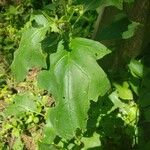
Solanum carolinense
منمنمه · Carolina horsenettle · Devil's tomato · Horsenettle · Carolina horse-nettle
Description
Source: leafsnapSolanum carolinense, commonly known as Carolina horsenettle, is a perennial plant belonging to the Solanaceae family. Native to North America, it thrives in diverse habitats such as fields, roadsides, and disturbed areas. The Carolina horsenettle can grow up to 3 feet tall and has a branching stem with spiny leaves that are green on top and pale underneath. Its flowers, which range from white to pale purple with yellow centers, bloom from June to September. The plant produces small yellow or green berries containing numerous seeds. While traditionally used for its anti-inflammatory properties, Carolina horsenettle contains toxic alkaloids like solanine, which can be harmful if ingested by humans or livestock. Despite being considered a weed in some regions due to its invasive nature and competition with native plants for resources, the Carolina horsenettle plays a significant role in its ecosystem. It serves as an important food source for various insects, including bees, butterflies, moths, and beetles, and provides habitat for some bird species. Overall, Solanum carolinense is a notable component of its natural environment, reflecting both beneficial and challenging aspects.
Care Guide
💧 Water
☀️ Light Full sun
🌡️ Temperature 0–35°C
💨 Humidity
🪴 Soil 6-7
🌱 Fertilizer
🪴 Pot & Repot
✂️ Pruning
🌿 Propagating
🐛 Diseases & pets
☠️ Toxicity
Characteristics
- Plant Type
- Herb
- Life Cycle
- Perennial
- Genus
- Solanum
- Family
- Solanaceae
- Hardiness Zone
- 3-10
- Mature Height
- 0.2 m to 1.22 m
- Mature Spread
- 30 cm
- Leaf Color
- Green
- Leaf Type
- Evergreen
- Flower Color
- White, Lavender
- Flower Size
- 2.03 cm to 3.05 cm
- Bloom Time
- Late spring, Early summer, Mid summer
- Planting Time
- Spring
- Harvest Time
- Summer
- Native Area
- Mexico