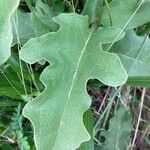
Solanum dimidiatum
Carolina horse-nettle · Torrey's nightshade · Torrey Nightshade · Horsenettle · Western horsenettle
Description
Source: leafsnapSolanum dimidiatum, commonly known as the Half-leaved Nightshade, is a species of flowering plant in the Solanaceae family. Native to South America, it can be found in countries such as Brazil, Argentina, and Paraguay. The plant typically grows up to 1 meter tall and features a woody stem with branches covered in small thorns. Its alternate, ovate-shaped leaves have a pointed tip and an uneven base that appears to be cut in half, giving the plant its common name. The Half-leaved Nightshade produces small white or pale purple flowers that bloom from late spring through summer. These flowers are followed by round berries that turn from green to yellow when ripe. Despite their tempting appearance, the berries should not be consumed as they can be toxic. Indigenous people of South America have long used Solanum dimidiatum for medicinal purposes, leveraging its anti-inflammatory properties to treat various ailments such as fever, inflammation, and pain relief. The plant prefers well-drained soil with full sun exposure but can also tolerate partial shade. It is drought-tolerant but requires regular watering during dry spells for optimal growth. Overall, Solanum dimidiatum is an interesting species of nightshade due to its unique leaf shape, which sets it apart from other members of the Solanaceae family. Its medicinal properties and long-standing use by indigenous people make it an important cultural symbol within South American communities today.
🎭 Expelling spirits, Safeguarding, Restoration
Care Guide
💧 Water Every 7 days
Western Horsenettle, native to moderate climates, thrives in slightly dry soil and requires weekly watering. It grows best outdoors, where seasonal changes in temperature and rainfall naturally support its growth cycles and hydration needs.
How should I water my Western Horsenettle plant?
To properly water the Western Horsenettle, it's best to use filtered water at room temperature. Tap water may contain particles that can harm the plant, so filtering it is recommended. It's important to use room temperature or slightly warm water because the plant is accustomed to warm environments and cold water could be a shock. Avoid watering from above as it can cause issues with the leaves. Instead, focus on watering the soil directly until it's fully soaked. This helps to moisten the roots and allow them to spread and collect necessary nutrients.
What should I do if I give my Western Horsenettle too much or too little water?
Overwatering is a common issue and more harmful to your Western Horsenettle than underwatering. When the plant receives too much water, the stems and leaves may wilt and turn yellow. Prolonged overwatering can lead to diseases like root rot, mold, and mildew, which can kill the plant. Underwatering is less common, as the Western Horsenettle is drought-tolerant, but it can still happen and cause the leaves to become brittle and brown. It's important to recognize the signs of overwatering and act quickly. Some diseases caused by overwatering, like root rot, may not be fixable if left too long. If you see early signs, reduce your watering schedule and check the soil drainage. If it's poor, replace it with well-draining potting mix. If you notice signs of underwatering, increase watering until the signs subside.
How frequently should I give water to my Western Horsenettle plant?
If your Western Horsenettle plant is in a pot, you can check if it needs water by sticking your finger in the soil. If the top two to three inches of soil feel dry, then it's time to water it. If you have your Western Horsenettle growing outside in the ground, you can use a similar method to test the soil. When you find that the first few inches of soil have dried out, it's a sign to add water. Using this method, you will typically need to water your plant once a week during spring and early fall. However, when it's really hot, you might need to increase watering to twice a week or even more. It's worth noting that mature, well-established Western Horsenettle plants can withstand drought quite well.
How much water should I give my Western Horsenettle plant?
To properly water your Western Horsenettle, you should not hesitate to give it a generous amount of water. Wait until the top two to three inches of soil are dry before watering, and then give it a good, thorough watering. Make sure the water completely saturates the soil, enough so that excess water drains out from the bottom of the pot. If you don't see water draining from the pot, it means you have not watered enough. However, be cautious not to let water accumulate inside the soil, as this can harm the plant. On the other hand, if water is not draining properly from the pot, it could mean that the soil doesn't drain well, which is bad for the plant's health. If the plant is outdoors, one inch of rain per week should be enough.
How do I water my Western Horsenettle as it grows?
The water needs of the Western Horsenettle can vary depending on its growth stages. During the early years and when it is newly transplanted, it requires more water. This is because the plant is focusing on developing new roots to support future growth, and these roots perform better with slightly more moisture. As the plant matures, its water requirements decrease. Additionally, during the blooming period, the Western Horsenettle may need more water due to the energy required for flower development.
☀️ Light Full sun
Western Horsenettle does well in strong sunlight yet can tolerate lower light conditions. Excessive light may stress the plant, but it induces protective responses that shield it from too much solar radiation. It originates from sunny habitats, showing its capacity to grow well in well-lit areas. When light is insufficient, its growth can be impeded.
What are the sunlight requirements for Western Horsenettle?
Western Horsenettle requires different levels of sunlight, with recommendations including full sun, defined as above 6 hours of sunlight, and partial sun, about 3-6 hours of sunlight. It's essential to observe the movement of sunlight through your garden to find spots that provide the right balance of light and shade, ensuring the plants' well-being and optimal growth.
How does Western Horsenettle respond to different lighting conditions?
Western Horsenettle thrives under intense solar exposure but also accommodates less light. It originates from areas with abundant sunlight, favoring its growth in well-lit areas. However, light deficiency can hinder its growth, leading to stress. Interestingly, overexposure to light activates mechanisms in the plant to protect it from excessive solar radiation. In environments with insufficient natural light, artificial lighting, such as LED lights, can provide a necessary boost, simulating natural light conditions for indoor plants.
What are some symptoms of inadequate lighting in Western Horsenettle, and how can they be addressed?
Symptoms of inadequate lighting in Western Horsenettle include small or lighter-colored new leaves, leggy or sparse growth, faster leaf drop, slower or no new growth, symptoms of excessive sunlight like chlorosis, sunscald, leaf curling, wilting, and leaf scorching. Addressing these issues involves gradually acclimatizing the plant to more sunlight, either by moving it outdoors progressively or by using artificial lighting indoors. It's crucial to avoid abrupt changes in light intensity to prevent sunburn while aiming for at least 6 hours of direct sunlight daily for optimal growth. Solutions might involve pruning, transplanting, or utilizing grow lights to improve light exposure.
🌡️ Temperature 15–37.8°C
Western Horsenettle grows best in its native habitat when temperatures are between 59 and 100.4 °F (15 to 38 ℃). If it is exposed to temperatures below or above that range, certain adjustments are recommended to help it survive through different seasons.
What is the native growth temperature range for Western Horsenettle?
Western Horsenettle thrives in its native growth environment where the temperatures range between 59 to 100.4 °F (15 to 38 °C). In this temperature range, the plant can grow optimally without needing special care related to temperature adjustments.
What should be done if temperatures drop below -5°C for Western Horsenettle?
When the temperature is expected to drop below -5°C, Western Horsenettle needs temporary measures for cold protection. Wrapping the plant with plastic film, fabric, or other protective materials can help. These protections should be removed once the temperature rises to prevent any potential harm to the plant.
How does Western Horsenettle react to temperatures below -10°C?
At temperatures below -10°C, the leaves of Western Horsenettle may start to droop. In mild conditions, it's possible for the plant to recover. However, in severe cases, the leaves will wilt and eventually fall off. To prevent further damage, it's advisable to trim off the frost-damaged parts and provide protection against future low temperatures.
What measures can be taken to protect Western Horsenettle from high temperatures?
During high temperature periods, especially above 43°C, it's essential to trim away sunburned and dried-up parts of Western Horsenettle. Moving the plant to a shaded location or using a shade cloth can help protect it from the harsh midday and afternoon sun. Additionally, ensuring the soil remains moist by watering the plant in the morning and evening is crucial.
💨 Humidity
🪴 Soil 6-7
🌱 Fertilizer
Usually a single fertilizer application in spring is enough for Western Horsenettle, though multiple feedings can maximize growth. Apply fertilizer every month to every month and a half. Fertilization improves leaf appearance and function, helping maintain uniform color and a healthy texture. It also promotes root development and nutrient uptake for lasting plant health.
🪴 Pot & Repot
✂️ Pruning
Western Horsenettle has distinctive spiny stems and striking purple flowers. To maintain its health, prune it between early and late spring. Start by cutting away any damaged stems and thinning out growth to improve air circulation. Regular pruning helps keep the plant healthy, controls its spread, and enhances flowering. Be sure to use clean, sharp tools to prevent infection.
🌿 Propagating
🐛 Diseases & pets
☠️ Toxicity
Characteristics
- Plant Type
- Herb
- Life Cycle
- Perennial
- Genus
- Solanum
- Family
- Solanaceae
- Hardiness Zone
- 8-11
- Mature Height
- 76 cm
- Mature Spread
- 0.49 m to 2.44 m
- Leaf Color
- Green, Blue
- Leaf Type
- Evergreen
- Flower Color
- White
- Flower Size
- 2.03 cm to 3.81 cm
- Bloom Time
- Late spring, Summer
- Planting Time
- Spring, Summer
- Harvest Time
- Mid summer, Late summer, Early fall, Mid fall
- Native Area
- Mexico