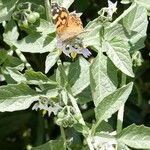
Solanum douglasii
Green-Spot Nightshade · Greenspot nightshade
Description
Source: leafsnapSolanum douglasii, commonly known as Douglas' nightshade, is a species of flowering plant in the Solanaceae family. It is indigenous to western North America, extending from British Columbia to California. This plant typically flourishes in open areas like meadows and grasslands, and it can grow up to 1 meter in height. The leaves of Solanum douglasii are either ovate or lanceolate with wavy margins and are covered in fine hairs. The flowers are small, white or pale blue, and feature yellow centers, blooming from May to August. The fruit is a small berry that changes color from green to yellow when ripe. Indigenous peoples have historically used Solanum douglasii for medicinal purposes, such as treating skin conditions and respiratory ailments. However, the plant also contains toxic alkaloids, making it harmful if ingested. The species has been listed as endangered due to habitat loss caused by urbanization and agricultural development. Conservation efforts include seed banking programs and habitat restoration projects aimed at preserving this important native species for future generations.
Care Guide
💧 Water Every 7 days
Greenspot nightshade thrives in moist conditions and requires weekly watering, but be careful not to overwater it. While it can tolerate moderate drought, it prefers a balanced moisture level. During its active growing season, efficient water use is crucial for promoting healthy foliage, particularly in temperate climates.
How should I water my Greenspot nightshade plant?
To properly water the Greenspot nightshade, it's best to use filtered water at room temperature. Tap water may have harmful particles that can affect the plant's health. Since the Greenspot nightshade thrives in warm environments, it's important to avoid using cold water as it can be a shock to its system. Another thing to keep in mind is to avoid overhead watering as it can cause problems with the foliage. Instead, you should simply apply the filtered room temperature water directly to the soil until it becomes completely soaked. This method helps the plant by moistening the roots and allowing them to spread through the soil to collect the necessary nutrients.
What should I do if I give too much or too little water to my Greenspot nightshade plant?
Overwatering is a common issue for Greenspot nightshade and can cause wilting, yellowing leaves, and diseases like root rot, mold, and mildew. Underwatering is less common but can cause brittle, brown leaves. It's important to notice signs of overwatering early and reduce watering immediately. If the soil drains poorly, replace it with a well-draining mix. If the plant is not receiving enough water, increase watering until the signs subside.
How frequently should I water my Greenspot nightshade?
If your Greenspot nightshade is in a pot, the most precise way to determine if it needs water is to check the soil moisture by sticking your finger into it. If the top two to three inches of soil are dry, it is time to water the plant. The same method can be used if you grow the Greenspot nightshade outside in the ground. When the first few inches of soil have dried out, it is time to add water. In the spring and early fall, watering once a week is often sufficient. However, during extremely hot weather, you may need to increase the frequency to two or more times a week. It's worth noting that mature, well-established Greenspot nightshade plants have shown a remarkable ability to tolerate drought.
How much water does my Greenspot nightshade plant need?
When watering your Greenspot nightshade, don't be afraid to give it a generous amount of water. Wait until the top two to three inches of soil are dry, then water the plant thoroughly, making sure the soil is completely soaked. The water should be enough to cause excess water to drain out of the pot through the drainage holes. If you don't see any excess water draining, you may not have given enough water. However, avoid letting water accumulate in the soil as it can harm the plant. If water doesn't drain properly, it might indicate poor soil drainage, which is not good for the plant's health. If the plant is growing outside, 1 inch of rain per week should be sufficient.
How do I water my Greenspot nightshade at different times when it is growing?
The water needs of the Greenspot nightshade can vary depending on its growth stages. In the early years or after transplanting, you will need to water it more than usual. During these stages, the plant focuses on developing new roots, which require more moisture for optimal growth. As the plant matures, it will require less water. Another stage that might require additional watering is during the bloom period, as flower development involves a significant amount of moisture.
☀️ Light Full sun
The greenspot nightshade grows best when situated in a spot that receives moderate sunlight. Excessive sun can cause it to wilt, while insufficient light may impede its normal growth cycle. In its native habitats the greenspot nightshade occurs in areas with filtered sunlight. It requires steady light exposure across all stages of growth.
What are the sunlight requirements for Greenspot nightshade?
Greenspot nightshade (Solanum douglasii) thrives in conditions where it receives moderate sunlight, akin to its natural habitats of filtered sun exposure. It's crucial for this plant to have consistent light exposure throughout its growth stages. It can endure about 3-6 hours of sunlight daily, known as partial sun. It's advised to observe how sunlight moves through your garden carefully, to pick spots that offer a balance of light and shade, ensuring the plant's well-being.
Can I use artificial lighting for Greenspot nightshade?
Yes, artificial lighting is a viable solution for Greenspot nightshade, especially when natural sunlight is insufficient, such as in winter or less sunny spaces. For optimal growth, indoor plants can benefit greatly from artificial lights, which promote faster, healthier growth. LED lights, customizable to provide specific wavelengths, are recommended. The amount of artificial light needed varies: full sun plants require 30-50W/sq ft, partial sun plants 20-30W/sq ft, and full shade plants 10-20W/sq ft. Lights should be placed 12-36 inches above the plant and turned on for 8-12 hours per day to mimic natural daylight hours effectively.
What symptoms indicate Greenspot nightshade is getting inadequate light?
When Greenspot nightshade receives insufficient light, it might display symptoms such as smaller new leaves, leggy or sparse growth, accelerated leaf drop, and halted or nonexistent new growth. New leaves may appear lighter or develop irregular color patterns, indicating a lack of chlorophyll and essential nutrients. Chlorosis (leaves turning yellow), sunscald (pale, bleached areas on plant tissue), leaf curling (leaves curl or twist to reduce surface area exposed to sunlight), wilting (loss of turgor pressure in leaves and stems), and leaf scorching (brown, dry edges on leaves due to excessive light) are other symptoms of poor lighting conditions.
How can I remedy the lighting conditions for my Greenspot nightshade?
To optimize growth for Greenspot nightshade under inadequate light conditions, undertake gradual adaptation techniques by moving plants to sunnier spots each week until they get 3-6 hours of direct sunlight daily. If a plant is large or impractical to move, supplement with artificial light by keeping a desk or ceiling lamp on for a minimum of 8 hours daily or use professional plant grow lights. For outdoor plants, it's crucial to transition them gently to better-lit spots to prevent sunburn. Reducing obstructions such as pruning tree branches can help increase sunlight penetration. Transplanting smaller plants during their dormant phase to locations with more sunlight and better drainage can also be beneficial. It's important to note that parts of the plant already affected by insufficient light may not recover, but new growth should be healthy following these adjustments.
🌡️ Temperature 15–32.2°C
Greenspot nightshade originates from temperate regions and thrives at temperatures of 68 to 95 °F (20 to 35 °C). Those temperatures are characteristic of its natural habitat. Depending on local conditions, seasonal adjustments may be needed to maintain this range.
What is the native climate for Greenspot nightshade?
Greenspot nightshade, scientifically known as Solanum douglasii, thrives in temperate climates. It flourishes within a temperature range of 68 to 95 °F (20 to 35 °C), which is typical of its natural habitat. To ensure the plant maintains this optimal temperature range, seasonal adjustments might be necessary depending on the local conditions. Greenspot nightshade exhibits strong resistance to cold, so it usually does not require special frost protection measures during winter. However, if temperatures are anticipated to drop below the plant's limiting growth temperature, it's crucial to protect it from the cold by covering it with soil or straw. Additionally, abundantly watering the plant before the first freeze in autumn helps the soil retain moisture and prevents water scarcity for the plant during winter and early spring.
How do Greenspot nightshade react to low temperatures?
Greenspot nightshade demonstrates a noteworthy tolerance to cold, thriving best when temperatures are above its minimum suitable growth temperature. During the winter, it is essential to keep the temperature above the plant's minimum tolerable growing temperature. If temperatures fall below the specified limit, Greenspot nightshade may not display noticeable changes during the winter, but come spring, there could be a decrease in sprouting or potentially no sprouting at all. To address this issue in spring, it's advisable to remove any parts of the plant that have failed to sprout.
What should be done if Greenspot nightshade experiences high temperatures?
In the summer, it's crucial to ensure that Greenspot nightshade's environment stays below its maximum suitable growth temperature. Exceeding the maximum tolerable growing temperature can lead to the plant's leaves becoming lighter in color, curling, becoming susceptible to sunburn, and in severe cases, wilting and drying out. To mitigate these issues, trim away the sunburned and dried-up parts of the plant. Relocate the plant to a shaded area, especially during the midday and afternoon sun, or use a shade cloth to protect it. Additionally, watering the plant in the morning and evening will help keep the soil adequately moist.
💨 Humidity
🪴 Soil 5-6
🌱 Fertilizer
Usually one fertilizer application in the spring is enough for Greenspot nightshade, though repeated feedings can maximize growth. Fertilize every month to month and a half. Feeding improves leaf appearance and function, encouraging consistent color and a healthy texture. It also promotes root development and nutrient absorption for long-term plant health.
🪴 Pot & Repot
✂️ Pruning
🌿 Propagating
🐛 Diseases & pets
☠️ Toxicity
Characteristics
- Plant Type
- Herb
- Life Cycle
- Perennial
- Genus
- Solanum
- Family
- Solanaceae
- Hardiness Zone
- 8
- Mature Height
- 2.13 m
- Mature Spread
- 49 cm
- Leaf Color
- Green, Dark Green
- Leaf Type
- Deciduous
- Flower Color
- White
- Flower Size
- 1.52 cm to 2.03 cm
- Bloom Time
- Late spring, Summer, Fall
- Planting Time
- Spring, Summer
- Harvest Time
- Mid summer, Late summer, Fall, Early winter
- Native Area
- Mexico