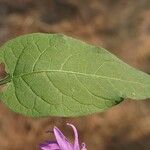
Solanum dulcamara
تاج ریزی تلخ، · تلخ و شیرین · Climbing nightshade · Bittersweet Nightshade · Deadly nightshade
Description
Source: leafsnapSolanum dulcamara, commonly known as bittersweet nightshade, is a perennial vine that belongs to the Solanaceae family. Native to Europe and Asia, it has spread to North America and other parts of the world. This plant features a woody stem that can grow up to 2 meters long, and it produces clusters of small purple flowers during the summer months. The leaves of Solanum dulcamara are alternate and ovate-shaped with pointed tips and a glossy surface. The plant also produces small, red berries that resemble cherry tomatoes but are toxic if ingested. Solanum dulcamara has been used for centuries in traditional medicine due to its anti-inflammatory properties and as an herbal remedy for skin conditions such as eczema and psoriasis. However, it is important to note that all parts of this plant are toxic if ingested in large quantities or over an extended period. Symptoms of poisoning may include vomiting, diarrhea, abdominal pain, confusion, and hallucinations. Overall, Solanum dulcamara is an intriguing plant with medicinal properties, but it also carries potential dangers if not handled properly or consumed with caution.
💡 According to legend, a shepherdess faced an unknown disease affecting her flock of sheep. Despite her efforts, she initially couldn't identify the cause. She noticed that sheep frequently collapsed and twitched. Determined to solve the mystery, she carefully observed what the sheep ate and discovered that they all exhibited these symptoms after consuming the fruit of the bittersweet nightshade. Once she identified the cause, she was able to restore the flock to health.
🌳 Beyond its other recognized uses, bittersweet nightshade has a new role in environmental science. Studies have shown it can act as a bioindicator of certain heavy metals in soil, such as zinc and cadmium. This trait helps researchers and environmentalists monitor and evaluate soil pollution and ecosystem health, thus functioning as a natural indicator of environmental quality.
🎭 faithfulness
Care Guide
💧 Water Every 3 days
Bittersweet plants prefer a schedule of regular, moderate watering, which suggests that while they can tolerate some drought, they require stable humidity levels to flourish. Watering them weekly is ideal for promoting optimal growth. Outdoors, bittersweet thrives in a range of climates, benefitting from natural rainfall during the growing season, which reduces the need for additional watering.
When should I water my Bittersweet?
Watering your bittersweet is essential for its health and development, with proper hydration supporting various physiological activities. The need for water can be determined by checking the soil condition; if the top inch feels dry, it's time to water. Bittersweet will also show physical signs of needing water, such as drooping leaves, leaf color change to yellow or brown, inward curling leaves, and reduced flowering. Be cautious of overwatering and under-watering, as both can negatively affect the plant's health, leading to issues like root rot or stunted growth.
How should I water my Bittersweet?
Bittersweet, being resistant to varying moisture levels, should ideally be watered using a can with a long, thin spout to direct water to the soil and not the foliage. It tolerates top-watering well. Key points include focusing water on the soil to avoid diseases, allowing the potting soil to slightly dry out between waterings, and avoiding the wetting of leaves or stems to prevent fungal diseases. The right equipment and watering technique help in maintaining the right moisture level without over-saturation.
How much water does Bittersweet really need?
Bittersweet's water requirement varies based on pot size, root depth, and plant size, aiming for consistently moist soil without waterlogging. Guidelines suggest deep watering to reach the root zone while allowing the soil to dry partially before the next watering. Proper hydration signs include lush, vibrant leaves, firm stems, and abundant flowering or fruit production. Over or under-watering can lead to issues such as root rot, dehydration, stunted growth, and weakened vitality, thus finding the right balance is crucial.
What kind of water is best for Bittersweet?
Bittersweet thrives best with distilled or rainwater, free from harmful impurities and minerals. However, tap water can be used if filtered or dechlorinated to remove chlorine and some minerals, as bittersweet is sensitive to these. The preferred water temperature should be moderate, avoiding extreme temperatures to prevent plant shock. Ensuring the correct water type and treatment helps in maintaining the plant's health and avoiding issues related to water sensitivity.
How do Bittersweet's watering needs change with the seasons?
Seasonal changes affect bittersweet's watering needs. In spring, increase watering as the plant enters an active growth phase. During summer's heat, focus on deep, infrequent watering to encourage deeper root growth and resist drought. In autumn, reduce watering as growth slows, and in winter, water sparingly to avoid cold damage and root rot, ensuring the soil does not remain dry for extended periods. Adjusting watering practices according to seasonal changes is vital for bittersweet's health.
☀️ Light Partial sun
Bittersweet nightshade does best with moderate sunlight but can tolerate stronger light. The light levels in its native environment affect its adaptable sunlight requirements. Too much exposure can damage the plant, while too little light may hinder its growth. Its sunlight needs can vary slightly during different stages of development.
What are the sunlight requirements for plants?
Plants require varying amounts of sunlight, generally categorized as partial sun, requiring about 3-6 hours of sunlight, and full sun, necessitating above 6 hours of sunlight daily. Observing the way sunlight moves through your garden is essential to finding spots that offer a harmonious balance of light and shade, ensuring your plants thrive. Such careful placement is crucial for their growth and health.
How does sunlight affect bittersweet plant growth?
The bittersweet plant thrives under moderate sun exposure but is adaptable enough to withstand higher levels of sunlight, with its native habitat's light intensity shaping its flexible sunlight needs. While overexposure could harm the plant, insufficient light may hinder its development. The plant's requirement for sunlight may vary slightly throughout its different growth stages. To support their growth indoors when natural light is insufficient, especially during winter or in less sunny areas, artificial lighting becomes essential, with LED lights being a popular choice due to their ability to provide specific wavelengths needed by plants. Full sun plants require 30-50W/sq ft of artificial light, partial sun plants need 20-30W/sq ft, and full shade plants need 10-20W/sq ft.
What are the symptoms of light deficiency in plants?
When plants, such as bittersweet, experience insufficient light, several symptoms may appear, including smaller new leaves, leggy or sparse growth, faster leaf drop, delayed or halted growth, and lighter-colored or yellowing leaves indicative of chlorosis. Excessive sunlight can lead to symptoms like sunscald, where plant tissues are damaged, leaf curling as a defense mechanism against water loss, wilting due to increased transpiration, and leaf scorching, indicated by brown, dry edges on leaves, all of which affect the plant's photosynthetic capacity and overall health.
How can you manage light conditions for healthier plant growth?
Optimizing light conditions for plants involves gradually adapting them to the ideal amount of sunlight or providing supplementary artificial light. For indoor plants, shifting them to progressively sunnier spots or using a desk, ceiling lamp, or professional grow lights can provide the necessary light exposure. Outdoors, plants should be moved to sunnier locations gradually to avoid sunburn. Pruning nearby trees or transplanting smaller plants during their dormant period can help improve sunlight access. However, note that parts of the plant damaged by insufficient light may not recover, but new growth will be healthy with adequate light exposure.
🌡️ Temperature 5–32.2°C
Being a temperate woody species, bittersweet nightshade favors temperatures between 41 and 89.6 ℉ (5 and 32 ℃). It tolerates a broad range of temperatures but may need adjustments in extreme weather. In winter, supplying plenty of sunlight and keeping temperatures near 50 to 55 ℉ (10 to 12.8 ℃) can help preserve its health.
What are the essential care tips for a bittersweet plant?
Bittersweet, a temperate woody plant, thrives in temperatures ranging from 41 to 89.6 ℉ (5 to 32 ℃). It exhibits strong cold resistance and generally does not require special frost protection measures, except when winter temperatures are expected to plunge below the plant's growth limit. In such cases, cold protection can be provided by covering the plant with soil or straw. Additionally, before the onset of the first freeze in autumn, it's beneficial to water the plant generously to maintain soil moisture, which helps prevent drought and water scarcity during winter and early spring. During winter, keeping the plant in ample sunlight and maintaining temperatures around 50 to 55 ℉ (10 to 12.8 ℃) is advisable for its health.
What should I do if my bittersweet plant is exposed to low temperatures?
Bittersweet plants are cold-tolerant and perform best when the temperature remains above their suitable growth minimum. Over winter, it's crucial to keep the plant above its tolerable growing temperature minimum. If temperatures fall below the plant's growth limit, bittersweet might not show immediate negative effects, but there could be a significant decrease in spring sprouting or even complete lack of sprouting. In spring, it's recommended to remove any parts of the plant that have failed to sprout to maintain the plant's health.
How should I care for my bittersweet plant during high temperatures?
During the summer, it's essential to ensure that the bittersweet plant's temperature stays below its suitable growth temperature maximum. If temperatures exceed its tolerable growing temperature max, the plant may show signs of stress, such as lighter leaf colors, curling leaves, susceptibility to sunburn, and in severe cases, wilting and drying. To mitigate these issues, trim away the sunburned and dried parts, and consider relocating the plant to a shaded area, especially away from the midday and afternoon sun. Employing a shade cloth can also be beneficial. Watering the plant in the morning and evening will help keep the soil adequately moist.
💨 Humidity normal (40-60%)
This plant will thrive in moderate humidity, which is probably the level in your home. However, misting it a few times a week can be very beneficial. Make sure the room has good ventilation.
🪴 Soil 6-6
🌱 Fertilizer
One fertilizer application in spring is generally enough for Bittersweet nightshade, though repeated feedings can help maximize growth. Apply fertilizer roughly every month to six weeks. Fertilizing improves the leaves' appearance and function, helping keep color even and texture healthy. It also promotes root development and nutrient uptake, supporting the plant's long-term health.
🪴 Pot & Repot Every 12 months
✂️ Pruning
You can prune your nightshade at the end of the dormancy in the spring. Shorten all shoots and trim branches to about a third of their total length. Pruning the tips of the shoots occasionally will also stimulate tillering.
🌿 Propagating
🐛 Diseases & pets
☠️ Toxicity
Characteristics
- Plant Type
- Herb
- Life Cycle
- Perennial
- Genus
- Solanum
- Family
- Solanaceae
- Hardiness Zone
- 4-8
- Mature Height
- 0.61 m to 2.44 m
- Mature Spread
- 2.44 m
- Leaf Color
- Green
- Leaf Type
- Deciduous
- Flower Color
- Purple, White
- Flower Size
- 2.54 cm
- Bloom Time
- Late spring, Early summer, Mid summer
- Planting Time
- Spring, Summer, Autumn, Winter
- Harvest Time
- Mid summer
- Native Area
- India, Austria, Turkey, Sweden, Slovakia, Montenegro, Pakistan, Croatia, Slovenia, Morocco, Belarus, Russia, Germany, Estonia, Romania, Latvia, Belgium, Netherlands, Portugal, France, Tunisia, Czech Republic, Bulgaria, Armenia, Poland, Greece, Ukraine, Serbia, Lebanon, Lithuania, Norway, China, Italy, Kazakhstan, Spain, Switzerland, Vietnam, Myanmar, Finland, Denmark, Albania, Ireland, United Kingdom, Hungary, Algeria, Azerbaijan