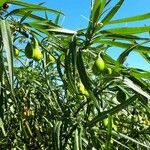
Solanum laciniatum
باذنجان استرالى · Kangaroo-apple · Large-flower kangaroo-apple · Large Kangaroo Apple · Poroporo
Description
Source: leafsnapSolanum laciniatum, commonly known as Kangaroo Apple, is a fast-growing shrub belonging to the Solanaceae family. Native to Australia and New Zealand, it can reach heights of up to 3 meters. The plant features large, lobed leaves that are dark green and produces purple or white flowers with yellow centers. Its fruit is a round berry that starts green and turns yellow or orange when ripe. For centuries, indigenous people have used the Kangaroo Apple for medicinal purposes. It contains alkaloids such as solasodine, known for their anti-inflammatory properties, which may be beneficial in treating skin conditions like eczema. In addition to its medicinal uses, the Kangaroo Apple is valued as an ornamental plant due to its attractive foliage and flowers. It thrives in full sun or partial shade and prefers well-drained soil with regular watering. However, it is important to note that all parts of the Kangaroo Apple are toxic if ingested raw. Its high levels of solanine can cause nausea, vomiting, diarrhea, headaches, or even death if consumed in large quantities. Overall, Solanum laciniatum is a fascinating plant with both medicinal and ornamental value, but it should be handled with care due to its toxicity when consumed raw.
💡 The kangaroo apple is occasionally found in New Zealand; however, it is classified as an introduced species by local authorities.
🌳 Besides its traditional uses, kangaroo apple is grown for its decorative appeal in horticulture. Its bright flowers and rapid growth make it appropriate for ornamental planting. The plant's ability to do well in a range of conditions increases its popularity among gardeners looking to cultivate a fast-flowering species. It also has potential ecological benefits, such as supporting local wildlife by providing habitat and food for certain insect species.
Care Guide
💧 Water Every 7 days
The Kangaroo apple, native to Australia and New Zealand, adapts well to varying moisture levels. It has a moderate tolerance for drought and should be watered every 2-3 weeks, allowing the soil to partially dry out between waterings. Its growth cycle and irrigation needs are influenced by seasonal rainfall patterns.
How should I water my Kangaroo apple plant?
Your Kangaroo apple is not picky about how you water it. You can use any common watering tool like watering cans, hoses, or cups. It's best to water directly on the soil and make sure all areas are equally moistened to provide water to the entire root system. Using filtered water is recommended to avoid harmful particles in tap water. It's also better to use water at or slightly above room temperature as colder or hotter water can be shocking to the Kangaroo apple. However, the Kangaroo apple generally responds well to any type of water.
What do I do if I give my Kangaroo apple too much or too little water?
Outdoor plants, especially newly planted ones or seedlings, are prone to lack of watering. Remember to water them enough for a few months when they are small or just planted. Once the roots are established, Kangaroo apple plants can rely on rain most of the time. When your Kangaroo apple is in a pot, overwatering is more likely. If you accidentally overwater, you should take immediate action to fix the situation. First, stop watering the plant to minimize the impact of overwatering. Then, remove the Kangaroo apple from the pot to check its roots. If none of the roots show signs of rot, you can return the plant to its container. However, if there is root rot, trim away the affected roots and consider applying a fungicide. Finally, repot the Kangaroo apple in well-draining soil. In the case of underwatering, simply water the Kangaroo apple plant more frequently. Underwatering is often easy to fix. When a plant is underwatered, its leaves may droop, dry out, and fall off. However, the leaves will regain their fullness quickly after sufficient watering. Make sure to correct your watering frequency as soon as you notice underwatering occurring.
How much often should I water my Kangaroo apple?
For most outdoor plants, normal growth is supported by rainfall. However, if your area experiences a lack of rainfall, you should ensure your plants receive adequate watering every 2 weeks in the spring and fall. In the summer, more frequent watering is necessary. Conversely, in the winter when growth slows down and plants require less water, you should water them sparingly or not at all. Young or newly planted Kangaroo apple plants need more frequent watering to aid in establishment and future drought tolerance. When it comes to potted plants, there are two main approaches for determining watering frequency for Kangaroo apple. The first option is to follow a predetermined watering schedule, typically once a week or every other week. However, this method does not consider the specific conditions of your Kangaroo apple's growing environment, so it may not always be effective. Alternatively, you can adjust your watering frequency based on the moisture level of the soil. It is generally best to wait until the top two to four inches of soil (around ⅓ to ½ of the pot's depth) have completely dried out before watering again. This approach takes into account the plant's seasonal water requirements, as a set watering schedule may not be sufficient during the high-water demand of summer.
How much water does my Kangaroo apple plant need?
To water your Kangaroo apple effectively, keep in mind that it doesn't always require a large amount of water. If the soil has only dried a few inches since the last watering, providing about five to ten ounces of water each time will support its healthy growth. You can also gauge the water volume based on the moisture in the soil. Take note of how many inches of soil have dried out between waterings. To ensure the Kangaroo apple receives the necessary moisture, water it enough so that all dry soil layers from the previous watering are moistened. If over half of the soil has dried, consider giving more water than usual, continuing until you see excess water draining from the pot's drainage holes. If your Kangaroo apple is planted outdoors in a region with ample rain, it may not need additional watering. When the plant is young or establishing, aim for 1-2 inches of rain per week. As it grows, it can rely on rainwater, except during hot weather or extended periods without rainfall for 2-3 weeks. In such cases, give your Kangaroo apple a thorough watering to prevent stress.
How can I know if I'm giving enough water to my Kangaroo apple plant?
The Kangaroo apple is more often affected by overwatering, which leads to several identifiable signs. One major indication is the presence of yellowing leaves, and in severe cases, leaf drop may occur. Overwatering can also cause the plant's overall structure to shrink, and it can contribute to root rot. Conversely, an underwatered Kangaroo apple will also start to wilt and may develop brown or brittle leaves. Regardless of whether you notice signs of overwatering or underwatering, it is important to intervene promptly and restore your Kangaroo apple's health.
☀️ Light Full sun
The Kangaroo apple, also called kangaroo apple, does well with abundant sunlight and can tolerate complete absence of shade, a characteristic originating from its native environment where sunlight is plentiful. The plant's growth and health are affected by these light conditions. Both too much exposure and too little can impair its development.
What are the sunlight requirements for Kangaroo apple?
Kangaroo apple (Solanum laciniatum) thrives in conditions where it receives abundant sunlight. The plant requires full sun, which means it should receive above 6 hours of sunlight daily, but it can also grow in partial sun, receiving about 3-6 hours of sunlight. It is crucial to watch how sunlight moves through your garden to ensure your Kangaroo apple gets the perfect balance of light and shade, as this significantly influences its growth and health.
How does artificial lighting affect the growth of indoor Kangaroo apple plants?
Indoor Kangaroo apple plants require adequate lighting to grow optimally. When natural sunlight is scarce, especially in winter or less sunny spaces, artificial lighting can be a vital solution. LED lights are a popular choice because they can be tailored to provide specific wavelengths needed by plants. The requirements for artificial light intensity are 30-50W/sq ft for full sun plants, 20-30W/sq ft for partial sun plants, and 10-20W/sq ft for full shade plants. The artificial light source should be placed 12-36 inches above the plant, mimicking natural sunlight as closely as possible, and provided for 8-12 hours per day to ensure faster, healthier growth.
What are the symptoms of light deficiency or overexposure in Kangaroo apple?
Kangaroo apple may exhibit several symptoms due to light deficiency or overexposure. Symptoms of light deficiency include small new leaves, leggy or sparse growth, faster leaf drop, slower or stopped growth, lighter-colored new leaves, indicating insufficient sunlight. Overexposure symptoms include chlorosis, where leaves lose their green color; sunscald, which damages plant tissues; leaf curling as a defense against too much sunlight; wilting from excessive water loss; and leaf scorching, characterized by brown, dry, and crispy leaf edges. These symptoms reveal the plant's struggle with suboptimal light conditions.
How can you manage Kangaroo apple plants for optimal sunlight exposure?
Managing Kangaroo apple plants for optimal sunlight involves a few strategies depending on the setting. Indoors, you can gradually move the plant to sunnier locations until it receives at least 6 hours of direct sunlight daily, utilizing south-facing windows for maximum exposure. Employ artificial light for additional support if needed. Outdoors, gradually adapt your plants to sunnier spots to avoid sunburn. Reducing obstructions by pruning trees or relocating smaller plants to sunnier locations can also help. It's important to remember that while affected parts may not recover, new growth will be healthy with better light exposure.
🌡️ Temperature 15–37.8°C
Kangaroo apple comes from climates where temperatures generally range from 59 to 100 °F (15 to 38 ℃). It does best in these warmer conditions. It can adapt to seasonal temperature fluctuations, but be sure to protect it from frost during the colder months.
What is the optimal temperature range for kangaroo apple?
Kangaroo apple thrives in climates where temperatures range between 59 to 100 °F (15 to 38 °C), adjusting seasonally to fluctuating temperatures. While it has some cold tolerance, generally not requiring extra measures above -5°C, protection against lower temperatures through means such as wrapping in fabric or plastic film is advised, with the removal of these protections once temperatures rise.
How does kangaroo apple react to low temperatures?
Kangaroo apple shows moderate tolerance to low temperatures, flourishing best above 15°C. During winter, it's important to keep it above -5°C to prevent damage. If temperatures fall below -10°C, leaves may droop and, in mild cases, recover, but in severe cases, they will wilt and drop. Solutions for frost damage include trimming frost-damaged parts and wrapping the plant with materials like non-woven fabric to protect from cold winds.
What steps should be taken if kangaroo apple experiences high temperatures?
During summer, it's crucial to keep Kangaroo apple below 38°C, as exceeding 43°C can cause leaves to lighten in color, dry out, and curl, increasing vulnerability to sunburn. To mitigate damage, remove sunburned or dried parts, and reposition the plant for shade or employ a shade cloth during peak sun exposure. Watering in the morning and evening to maintain soil moisture can also help.
💨 Humidity high (>60%)
This plant needs special care because it loves high humidity levels of 60-80% or more. The best way to achieve this is by placing a humidifier near the plant. Daily misting is also essential! Make sure the room has good ventilation.
🪴 Soil 5-6
🌱 Fertilizer
The timing of fertilizing Kangaroo apple is important. Apply fertilizer in early spring and repeat monthly until early summer. Fertilizer promotes attractive blooms and supplies energy during both dormant periods and active growth.
Why should I add fertilizer to my Kangaroo apple plant?
Fertilizing your Kangaroo apple is important for several reasons. Firstly, it helps the plant produce beautiful blooms. To ensure excellent flowers in spring, it is best to fertilize in early spring. Additionally, fertilizer provides the plant with energy that it can store in the ground during its dormant growth phases. By giving your Kangaroo apple extra nutrients during fall planting or late spring, it will have more energy to use once active growth resumes.
When should I fertilize my Kangaroo apple plant?
To effectively fertilize Kangaroo apple, timing is crucial. It is important to avoid applying fertilizer too early while the plant is dormant, as it will be ineffective and likely washed away by rainwater, which causes waste and pollution. Instead, the first application of fertilizer should be made in early spring. After that, continue to fertilize once a month until early summer.
When is the best time to not fertilize my Kangaroo apple plant?
To ensure optimal growth of Kangaroo apple, it is important to be mindful of the fertilizer used. Avoid using a fertilizer with excessive nitrogen content, as this can result in an abundance of leaves but few blooms. Instead, select a fertilizer that has a lower nitrogen level compared to other nutrients. Timing also plays a crucial role in fertilizing Kangaroo apple. It is advisable to refrain from fertilizing after early autumn, as this can lead to excessive growth right before winter. Moreover, during hot and dry periods, fertilization should be avoided since dry soil does not effectively deliver the nutrients. Fertilizing during this time can also stimulate growth, which requires additional water that may not be readily available. It is best to reserve the application of fertilizer for earlier in the season when temperatures are cooler. Lastly, it is essential to be cautious about unintentionally providing Kangaroo apple with an overdose of fertilizer. The plant has the ability to absorb fertilizer from nearby plants or lawns. Therefore, it is important to be aware of this potential and avoid inadvertently giving the tree or shrub a double-dose of fertilizer.
What kind of fertilizer does my Kangaroo apple plant need?
For the best growth of a Kangaroo apple plant, it is recommended to use a fertilizer that contains a balanced mix of nutrients, with slightly higher levels of phosphorus. Alternatively, adding organic materials like compost, worm castings, and manure can also help improve the soil for this plant. Experienced gardeners may choose to supplement with water-soluble fertilizers containing phosphorus when the flower buds appear. This will enhance flower development, leading to larger and longer-lasting blooms. Various forms of fertilizers can be used for the Kangaroo apple, but liquid or powdered forms are often considered the best. Whichever form you choose, it is important to dilute the fertilizer and apply it while watering the plant.
How can I give my Kangaroo apple plant the fertilizer it needs?
To properly fertilize your Kangaroo apple, it's important to follow the instructions for the specific fertilizer you are using. Avoid over-fertilization, as it can be harmful to the plant. To determine the correct amount of fertilizer, you can use the tree's age or trunk diameter as a guide. Generally, it's recommended to use about one-tenth of a pound of fertilizer per year or per inch of trunk, with a maximum of one pound. For granular and organic fertilizers like blood meal, you'll want to evenly sprinkle it around the base of the tree, extending all the way to the drip line (the area under the outermost branches). However, make sure the fertilizer doesn't come into direct contact with the trunk. Over time, the granules will break down and seep into the soil, allowing the roots to absorb the nutrients. After applying the fertilizer, it's a good idea to spread a one-inch layer of compost around the base of the tree and thoroughly water it.
🪴 Pot & Repot Every 12 months
✂️ Pruning
The Kangaroo apple is a fast-growing shrub characterized by its lobed leaves and purple, star-shaped flowers. To promote growth and increase flower production, prune the plant in early spring by cutting away any dead branches. Always use clean tools and make your cuts just above the leaf nodes for the best results. This approach will encourage a bushier appearance.
🌿 Propagating
🐛 Diseases & pets
☠️ Toxicity
Characteristics
- Plant Type
- Shrub
- Life Cycle
- Perennial
- Genus
- Solanum
- Family
- Solanaceae
- Hardiness Zone
- 8-11
- Mature Height
- 0.91 m to 3.96 m
- Mature Spread
- 3.05 m
- Leaf Color
- Green
- Leaf Type
- Evergreen
- Flower Color
- Purple, Violet
- Flower Size
- 3.05 cm to 5.08 cm
- Bloom Time
- All year round
- Planting Time
- Spring, Summer, Autumn
- Harvest Time
- Spring, Summer, Fall
- Native Area
- New Zealand