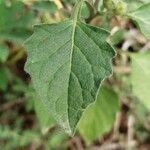
Solanum nigrum
بادنجان تاج ریزی · قارا قوشوزومو (AZB) · Black nightshade · Poisonberry · Common nightshade
Description
Source: leafsnapSolanum nigrum, the European black nightshade or simply black nightshade or blackberry nightshade, is a species of flowering plant in the genus Solanum, native to Eurasia and introduced in the Americas, Australasia, and South Africa. Ripe berries and cooked leaves of edible strains are used as food in some locales, and plant parts are used as a traditional medicine. A tendency exists in literature to incorrectly refer to many of the other "black nightshade" species as "Solanum nigrum".Solanum nigrum has been recorded from deposits of the Paleolithic and Mesolithic era of ancient Britain and it is suggested by the botanist and ecologist Edward Salisbury that it was part of the native flora there before Neolithic agriculture emerged. The species was mentioned by Pliny the Elder in the first century AD and by the great herbalists, including Dioscorides. In 1753, Carl Linnaeus described six varieties of Solanum nigrum in Species Plantarum.
💡 Black nightshade has been documented by renowned botanists and naturalists since the 19th century. The English botanist Edward Salisbury noted that fossil deposits suggest black nightshade has been present in Britain since the dawn of agriculture. Additionally, ancient Greek medical practitioners and Roman philosophers referenced black nightshade in their writings. The famous naturalist Carl Linnaeus also wrote about this plant.
🌳 Surprisingly, black nightshade can function as a marker of soil health, especially for detecting heavy metals. Because it accumulates contaminants such as cadmium and lead, it can indicate soil pollution levels and act as a natural sentinel for environmental monitoring. This little-known use increases the ecological importance of black nightshade beyond its immediate biological role.
🎭 Mortality, souls, the realm of the dead
Care Guide
💧 Water
Black nightshade is adaptable to a variety of habitats, but it prefers a moderate level of moisture and benefits from a consistent weekly watering schedule. This annual herb thrives outdoors and grows best with regular rainfall during its growing season, which enhances its overall growth and health.
What should I do if I give my Black nightshade plant too much or too little water?
To remedy underwatering of Black nightshade, simply increase the frequency of watering when you observe that the plant lacks moisture. On the other hand, overwatering can lead to serious problems, including diseases that can harm and kill the plant. To prevent this, choose a suitable location with ample sunlight to help dry the soil and good drainage to avoid water accumulation. If you overwater a potted Black nightshade, consider transferring it to a new pot that has better drainage. When repotting, ensure the use of loose soil and a pot that efficiently drains excess water.
How frequently should I water my Black nightshade?
Black nightshade requires regular watering throughout the growing season. In spring, water the plant about once a week. As the season progresses and it gets warmer, increase the watering to two to three times a week. Be careful not to exceed this rate as it can harm the plant. It's important to keep the soil moist but not wet, regardless of how often you water. Watering black nightshade in a pot is slightly different. The soil in a pot can dry out faster, so you'll need to increase the frequency. Generally, water a container-grown black nightshade a few times a week, compared to just once a week for an in-ground plant.
How much water does my Black nightshade plant need?
To determine how much water to give your Black nightshade, there are a few approaches you can take. One method is to feel the soil to gauge its moisture level and water until the top six inches feel damp. Another option is to use a specific measurement, like two gallons per week, depending on the heat and dryness of the soil. However, be cautious not to overwater if your plant needs less than that. When growing Black nightshade in a container, you'll need a different method. Make sure to water enough to moisten all dry layers of soil. You can test this by sticking your finger in the soil or allowing a small amount of excess water to drain from the pot's holes.
Am I watering my Black nightshade enough?
Avoiding overwatering your Black nightshade can be somewhat difficult. These plants have deep roots that need weekly moisture, but they are also highly susceptible to root rot. Overwatering can cause browning and wilting, while underwatering is less likely to occur but can result in wilt and dry leaves if neglected for too long.
How often should I water my Black nightshade throughout the year?
As the seasons change, the water needs of your Black nightshade will also change. In spring, it is recommended to water your plant once a week. However, as the summer heat arrives, you may need to water it more frequently, even up to three times a week. This is especially important if your Black nightshade is growing in a container since the soil in containers tends to dry out faster than ground soil in warm weather. In autumn, when the temperature declines and the sun is not as strong, your Black nightshade may require less water, even though it is still in bloom.
☀️ Light Full sun
Black nightshade flourishes with abundant light for maximum growth, yet it can also tolerate reduced light exposure, bestowing upon it a degree of hardiness. Sunlight is essential for its positive development, and fluctuating light levels can influence its growth, while severe light deficiency may lead to weakness. The environment from where it originates provides considerable sunlight, with only occasional partial shading.
How much sunlight does black nightshade require?
Black nightshade needs copious amounts of light to thrive optimally but is resilient enough to withstand lower light conditions. It originates from an environment with substantial sunlight, occasionally receiving partial shade. For healthy growth and to avoid frailty, exposure to varying levels of sunlight is necessary, though extreme deprivation of light can lead to the plant's weakness.
What are the requirements for full sun and partial sun plants?
Plants requiring full sun need more than 6 hours of sunlight daily while those needing partial sun should get about 3-6 hours of sunlight. Observing how sunlight moves through your garden can help in selecting the perfect spots that provide an ideal balance of light and shade, ensuring the plants' well-being.
How can artificial lighting support indoor plant growth?
Indoor plants may require artificial lighting to achieve optimal growth, especially when natural sunlight is insufficient, like in winter or less sunny spaces. LED lights, capable of providing specific light wavelengths needed by plants, are a popular choice. Full sun plants need 30-50W/sq ft, partial sun plants 20-30W/sq ft, and full shade plants 10-20W/sq ft of artificial light. The proper distance for placing the light source is 12-36 inches above the plants, mimicking natural sunlight, and most plants will need 8-12 hours of light per day.
What symptoms indicate black nightshade is getting insufficient light?
When black nightshade does not receive enough light, especially indoors, it may show several symptoms: new leaves may grow smaller, spaces between leaves or stems might lengthen giving the plant a sparse look, older leaves could be shed early, growth might slow down or stop, new leaves could appear lighter or show irregular color patterns indicating a lack of chlorophyll. Conditions like chlorosis and sunscald may also develop, affecting the plant's ability to photosynthesize and overall health.
How can I manage black nightshade's light exposure indoors and outdoors?
To manage light exposure for black nightshade, gradually increase sunlight access each week until the plant receives at least 6 hours of direct sunlight daily; indoor plants can be moved closer to a south-facing window, or augmented with artificial light from desk or ceiling lamps for at least 8 hours a day. Outdoor plants also benefit from gradual relocation to sunnier spots to avoid sunburn. If sunlight is obstructed by trees or buildings, consider pruning or transplanting to a location with better light. It's vital to remember that while parts of the plant affected by insufficient sunlight may not recover, new growth will be healthy with proper light exposure.
🌡️ Temperature 5–35°C
Native to temperate zones, black nightshade thrives best in a temperature spectrum of 68 to 95°F (20 to 35°C). Any deviation from this optimal temperature range necessitates environmental modifications to encourage maximum growth.
What is the native environment for Black nightshade?
Black nightshade, or Solanum nigrum, is native to temperate zones. It thrives in temperatures ranging from 68 to 95°F (20 to 35°C), indicating its preference for warm environments. Despite its strong cold resistance, ensuring the temperature stays within this range is crucial for optimal growth. Even though special frost protection measures are typically unnecessary due to its cold resilience, it's vital to provide some protection if winter temperatures are expected to fall below the plant's growth limit.
How should I protect Black nightshade during winter?
To protect Black nightshade during winter, especially if temperatures are anticipated to drop below its growth limit, it's important to cover the plant with soil or straw. This acts as insulation against extreme cold. Additionally, before the onset of the first freeze in autumn, watering the plant abundantly is recommended. This ensures that the soil around the plant remains moist and enters a frozen state prepared, which helps in preventing drought and water scarcity for the plant during the colder months, supporting it through winter and into early spring.
What should I do if Black nightshade experiences low temperatures?
If Black nightshade is exposed to temperatures below its ideal growing range, there may not be noticeable changes during the winter. However, these conditions might lead to a decrease in sprouting, or in severe cases, no sprouting at all come springtime. Once spring arrives, it is advised to remove any plant parts that have failed to sprout, as they won't contribute to the plant's growth and could potentially hinder new growth.
How do I care for Black nightshade in high temperatures?
Black nightshade should ideally be kept below the maximum suitable growth temperature during summer. If the temperatures climb beyond its tolerable range, the plant's leaves might become lighter, curl, become prone to sunburn, and in extreme cases, the entire plant could wilt and dry out. To mitigate these issues, trim away any sunburned or dried parts of the plant. Moving the plant to a shaded location or employing a shade cloth can also provide relief from the harsh midday and afternoon sun. Additionally, watering the plant in the morning and evening helps keep the soil moist, reducing stress on the plant.
💨 Humidity
🪴 Soil 5-7
🌱 Fertilizer
Black nightshade thrives when it receives regular, diluted amounts of fertilizer, as it encourages the proper development of leaves. During the summer, it is recommended to fertilize Black nightshade about once a month. Nitrogen plays a significant role in leaf growth, and providing Black nightshade with a nitrogen-rich supplement can contribute to its flourishing condition.
🪴 Pot & Repot
✂️ Pruning
As this plant is mostly considered a weed, pruning is usually done before the flower buds open to prevent further spread.
🌿 Propagating
🐛 Diseases & pets
☠️ Toxicity
Characteristics
- Plant Type
- Herb
- Life Cycle
- Annual, Perennial, Biennial
- Genus
- Solanum
- Family
- Solanaceae
- Hardiness Zone
- 5-10
- Mature Height
- 0.3 m to 1.22 m
- Mature Spread
- 61 cm
- Leaf Color
- Green, Purple
- Leaf Type
- Deciduous
- Flower Color
- White
- Flower Size
- 0.51 cm to 1.02 cm
- Bloom Time
- Late spring, Early summer, Mid summer
- Planting Time
- Spring
- Harvest Time
- Mid summer, Late summer
- Native Area
- Burkina Faso, Libya, India, Nigeria, Slovenia, Guinea-Bissau, Belarus, Cameroon, Ethiopia, Latvia, Netherlands, Tunisia, Bulgaria, Bangladesh, Laos, Chad, China, Afghanistan, Kyrgyzstan, Kazakhstan, Japan, Finland, Eswatini, Djibouti, Egypt, Angola, Austria, Namibia, Zimbabwe, Uzbekistan, Russia, Estonia, Ghana, Botswana, France, Nepal, Tajikistan, Sudan, Mauritania, Armenia, Poland, Greece, Norway, Switzerland, United Kingdom, Algeria, Turkey, Sweden, Slovakia, Montenegro, Croatia, Morocco, Uganda, Tanzania, Germany, Sierra Leone, Indonesia, Mozambique, Romania, Belgium, Portugal, Saudi Arabia, Malawi, Cyprus, Turkmenistan, Ukraine, Lebanon, Syria, Italy, Senegal, Iran, Côte d'Ivoire, Azerbaijan, Kuwait, Malaysia, Eritrea, Yemen, Kenya, Mali, Iraq, Liberia, Congo, Czech Republic, South Africa, Zambia, Serbia, Lithuania, Spain, Denmark, Myanmar, Albania, Ireland, Hungary, Thailand, Gabon