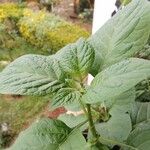
Solanum scabrum
Garden-huckleberry · Sunberry
Description
Source: leafsnapSolanum scabrum, commonly known as African nightshade, is a plant species belonging to the Solanaceae family. This perennial herb can grow up to 1.5 meters tall and is characterized by its dark green leaves with purple veins. The plant produces small white or purple flowers and round berries that transition from green to black when ripe. African nightshade is native to Africa, but it is also found in other parts of the world, including Asia and Australia. It thrives in various habitats such as forests, grasslands, and cultivated fields. Historically, the plant has been used for its medicinal properties to treat stomach ailments, fever, headaches, and respiratory infections. It also boasts high levels of antioxidants, which are beneficial for overall health. In addition to its medicinal uses, African nightshade serves as a food source in many African countries. The leaves, rich in vitamins A and C, are often cooked with other vegetables or added to stews and soups. Meanwhile, the berries contain significant levels of iron. Despite its numerous benefits, both medicinally and nutritionally, Solanum scabrum can be toxic if consumed in excess. It should be eaten with caution, particularly by pregnant women, who are advised to avoid it altogether due to potential risks associated with its consumption during pregnancy.
🌳 Pepino is more than a flavorful exotic fruit; it is also being recognized as suitable for people with diabetes because of its low glycemic index. Its adaptability reaches culinary uses, frequently appearing in both sweet and savory recipes. Though not widely known, it has potential for the development of natural sweeteners targeted at the health-conscious market. Moreover, its tasty juice could be used in distinctive beverages, extending its use beyond traditional consumption.
Care Guide
💧 Water Every 7 days
Garden huckleberry, native to moderate climates, thrives in evenly moist, well-drained soil. It needs weekly watering, and mulching helps retain moisture and regulate temperature, promoting vigorous growth throughout the growing season, especially in kitchen gardens.
☀️ Light Full sun
Pepino favors abundant sunlight and does not tolerate less. It originates from sunny habitats that encourage optimal growth. Too little sun can hinder its development, while too much may be harmful.
What are the sunlight requirements for garden huckleberry?
Garden huckleberry requires different intensities of sunlight to thrive. It does best in full sun, which means it should receive more than 6 hours of sunlight daily. However, it can also grow in partial sun, receiving about 3-6 hours of sunlight. Observing the movement of sunlight through your garden is crucial to find spots that provide a perfect balance of light and shade, ensuring the plants' well-being.
What are the essentials for growing garden huckleberry effectively?
The garden huckleberry thrives in abundant light throughout the day. Its growth and health are significantly influenced by sunlight, owing to its origins in habitats with extensive light availability. When natural sunlight is not enough, especially in winter or less sunny spaces, artificial lighting can be a vital solution. Ensuring your indoor plants receive adequate lighting involves selecting the right type of artificial light, such as LED lights, adjusting the amount of light (30-50W/sq ft for full sun plants, 20-30W/sq ft for partial sun plants, and 10-20W/sq ft for full shade plants), setting the correct distance (12-36 inches above the plant), and determining the duration of exposure (8-12 hours per day).
What are some common symptoms of inadequate sunlight in garden huckleberry?
When garden huckleberry does not receive enough sunlight, it may exhibit several symptoms, including smaller new leaves, leggy or sparse growth, faster leaf drop, slower or no new growth, lighter-colored new leaves, and chlorosis, or yellowing of leaves. Excessive sunlight can also cause issues such as sunscald, leaf curling, wilting, and leaf scorching. These symptoms highlight the plant's struggle with either too much or too little light.
What measures can be taken to improve sunlight exposure for garden huckleberry?
To ensure optimal growth of garden huckleberry, gradually increase sunlight exposure by moving the plants to sunnier locations each week until they receive at least 6 hours of direct sunlight daily. For indoor plants that are large or not easily movable, consider using artificial lights. Outdoor plants should also be gradually moved to avoid sunburn. Removing obstructions, such as pruning branches that block sunlight or transplanting smaller plants to sunnier spots, can help. Remember, parts of the plant affected by insufficient sunlight may not recover, but new growth will be healthy with improved light exposure.
🌡️ Temperature 15–37.8°C
Pepino originates from areas with a temperate climate. It does best at temperatures between 59 and 100 °F (15 to 38 ℃). In cooler months it may require extra warmth, which can be supplied by a heated greenhouse or an indoor setting.
What is the botanical name of the Garden huckleberry?
The botanical name of the Garden huckleberry is Solanum scabrum.
💨 Humidity
🪴 Soil 5-7
🌱 Fertilizer
The Pepino plant needs adequate nutrients to achieve the best fruit production. Apply fertilizer in early spring to encourage new growth and flower development. Regular feeding keeps the plant healthy, produces tastier fruit, and prevents nutrient deficiency problems such as yellowing leaves and poor fruit yield.
🪴 Pot & Repot
✂️ Pruning
Garden huckleberries feature glossy, dark green leaves and produce small, edible berries. To improve air circulation and light exposure, prune the plant from early to late spring by removing dead branches. Thinning the branches also promotes growth and increases berry yield. Be sure to sterilize your tools before pruning to prevent disease and ensure a healthier, more productive plant.
🌿 Propagating
🐛 Diseases & pets
☠️ Toxicity
Characteristics
- Plant Type
- Shrub
- Life Cycle
- Perennial
- Genus
- Solanum
- Family
- Solanaceae
- Hardiness Zone
- 8-11
- Mature Height
- 1.83 m
- Mature Spread
- 91 cm
- Leaf Color
- Green
- Leaf Type
- Evergreen
- Flower Color
- Lavender, White
- Flower Size
- 2.03 cm to 3.05 cm
- Bloom Time
- All year round
- Planting Time
- Spring, Autumn
- Harvest Time
- All year round
- Native Area
- Colombia, Ecuador, Peru