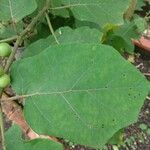
Solanum torvum
بادنجان تایلندی · Turkey berry · Pea eggplant · Platebrush · Susumber
Description
Source: leafsnapSolanum torvum, commonly known as turkey berry or devil's fig, is a small shrub belonging to the Solanaceae family. Native to tropical regions of Africa and Asia, it has since been introduced to other parts of the world. The plant typically grows up to 2 meters tall and features dark green, ovate leaves with pointed tips. The fruit of Solanum torvum is small, round, and green when unripe, turning yellow or orange when mature. It contains numerous small seeds that are edible but have a bitter taste. The fruit is traditionally used in medicine for its anti-inflammatory properties and as a natural remedy for various ailments such as fever, cough, asthma, and skin diseases. The leaves of Solanum torvum also hold medicinal value due to their antibacterial properties. They can be boiled or crushed into a paste for topical application on wounds or skin infections. Beyond its medicinal uses, Solanum torvum is a culinary staple, particularly in Southeast Asian cuisine, where it is a common ingredient in curries and stews. Overall, Solanum torvum is a versatile plant with significant cultural value in various regions where it naturally grows or has been introduced over time.
Care Guide
💧 Water Every 7 days
Turkey berry thrives in warm, moist conditions but still requires watering every 1-2 weeks due to its moderate drought tolerance. Although it is typically grown outdoors, it flourishes best when the soil moisture is kept balanced, ensuring that the plant is not overwatered during periods of active growth.
How should I water my Turkey berry plant?
Your Turkey berry is not too particular about how you water it. You can use any common watering tool to moisten the soil, such as watering cans, hoses, or even cups. Regardless of the tool you choose, make sure to apply the water directly to the soil. This ensures that all areas of the root system receive equal moisture. Using filtered water is recommended, as tap water may contain harmful particles for plants. It is also best to use water at or slightly above room temperature, as extremely hot or cold water can shock the Turkey berry. However, the Turkey berry generally responds well to any type of water you provide.
What do I do if I give my Turkey berry too much or too little water?
For outdoor plants, especially newly planted ones or seedlings, the lack of watering can be a common issue. It's important to water them consistently for a few months when they are small or recently planted. This is because once the roots are established, Turkey berry plants can rely on rain most of the time. When your Turkey berry plant is in a pot, overwatering can often happen. If you accidentally overwater your plant, you should take immediate action to fix the situation. First, stop watering the plant to minimize the effect of overwatering. Then, remove the plant from its pot to check the roots. If there are no signs of root rot, you can put the plant back in its container. However, if you find any roots affected by root rot, trim them away and consider applying a fungicide to prevent further damage. Finally, repot the Turkey berry in well-draining soil. In the case of underwatering, simply water the plant more frequently. This is usually an easy fix. If you notice drooping, drying, or falling leaves, watering the plant properly will help them regain their fullness. Make sure to adjust your watering frequency as soon as you realize the plant is being underwatered.
How many times should I give water to my Turkey berry?
Most outdoor plants grow fine with just rainfall. However, if your area doesn't get much rain, you should water your plants every two weeks in spring and fall. In the summer, you'll need to water more often. In winter, when plants grow slower and need less water, you can water less frequently, or not at all. If your Turkey berry plant is young or newly planted, it needs more frequent watering to help it establish and become more tolerant to drought. For potted plants, there are two main ways to determine watering frequency. One way is to follow a set schedule, like watering once a week or every other week. However, this may not be ideal for your specific Turkey berry plant, as it doesn't consider the conditions it's growing in. Another option is to check the soil moisture. Wait until the first two to four inches of soil have dried out completely before watering again. Remember, during the summer when the plant's water needs are highest, a predetermined schedule may not be enough. Adjust your watering frequency accordingly.
How much water does my Turkey berry plant need?
When watering your Turkey berry, it's important to recognize that it doesn't always require a large amount of water. Instead, if only a few inches of soil have dried since the last watering, providing it with about five to ten ounces of water each time can support healthy growth. You can also determine the amount of water based on the moisture in the soil. Take note of how many inches of soil have dried out between waterings. A reliable method to ensure your Turkey berry receives sufficient moisture is to water enough to moisten all the dry soil layers since the last watering. If over half of the soil has dried out, consider giving more water than usual. In such cases, continue adding water until excess water drains from the pot's drainage holes. If your Turkey berry is planted where it receives ample outdoor rain, additional watering may not be necessary. When the Turkey berry is young or still establishing, be sure it receives 1-2 inches of rain per week. As it grows and becomes established, it can rely entirely on rainwater, except during hot weather without any rainfall for 2-3 weeks. In those situations, giving your Turkey berry a full watering will prevent it from suffering stress.
How can I know if I'm giving enough water to my Turkey berry?
Overwatering is a common issue for Turkey berry plants, and there are a few signs to watch for. When a Turkey berry is overwatered, its leaves will turn yellow and it may lose some of them. Additionally, overwatering can cause the plant to shrivel and promote root rot. On the other hand, if a Turkey berry is underwatered, it will wilt and its leaves may turn brown or become brittle. Regardless of whether you notice signs of overwatering or underwatering, it's important to take action and restore the health of your Turkey berry.
☀️ Light Full sun
Turkey berry needs substantial light exposure to enhance its healthy growth. While it can endure some shade, it thrives most when receiving plenty of sunlight. Hailing from an environment bountiful in sunlight, turkey berry can survive but not reach its full potential in areas with less light. Both high amounts of shade and harsh light can put the plant under stress, impacting its vitality and productivity.
What are the sunlight requirements for turkey berry plants?
Turkey berry plants require 'Full sun', which means they thrive in locations that receive more than 6 hours of sunlight daily. However, they can also grow in 'Partial sun' conditions, receiving about 3-6 hours of sunlight. It's essential to observe the movement of sunlight through your garden to choose spots that offer the perfect balance of light and shade, ensuring the plants are happy. Keep in mind that turkey berries crave ample exposure to light, as it promotes healthy growth, but they can still tolerate some shade. Originating from sunny environments, turkey berries will endure but not flourish in low light conditions.
How does inadequate sunlight affect turkey berry plants, and what are the symptoms?
Inadequate sunlight can significantly impact the health and growth of turkey berry plants, leading to several symptoms. These include small leaves, leggy or sparse growth, faster leaf drop, slower or no new growth, lighter-colored new leaves, chlorosis (leaves turning yellow due to chlorophyll breakdown), sunscald (damage from intense sunlight), leaf curling (to minimize water loss), wilting (loss of turgor pressure), and leaf scorching (brown, dry edges). These symptoms indicate the plant's struggle to adapt to suboptimal lighting conditions and emphasize the importance of proper sunlight exposure.
How can artificial lighting be used for turkey berry plants?
When natural sunlight is insufficient, especially in winter or less sunny spaces, artificial lighting can be a crucial solution for growing turkey berry plants. Choose LED lights, as they are popular for indoor plant lighting and can be customized to provide the specific wavelengths of light your plants need. For full sun plants, 30-50W/sq ft of artificial light is recommended, for partial sun plants, 20-30W/sq ft, and for full shade plants, 10-20W/sq ft. Position the light source 12-36 inches above the plant to mimic natural sunlight and set the duration to mimic natural daylight hours, typically 8-12 hours per day, for optimal growth.
What are some solutions for addressing the light needs of turkey berry plants?
To address the light needs of turkey berry plants, you can adopt several strategies depending on their location (indoor, outdoor, or ground). Indoors, gradually move plants to a sunnier spot each week until they receive at least 6 hours of direct sunlight daily, using a south-facing window for maximum exposure. Consider artificial lighting, such as desk lamps or professional grow lights, for at least 8 hours daily for plants that are large or not easily movable. Outdoors, acclimate your plants to sunlight by moving them to sunnier locations gradually to avoid sunburn. If needed, prune nearby trees to minimize obstructions and allow more sunlight to reach your plants. For smaller plants, consider transplanting during their dormant period to a location with better sunlight and drainage. Remember, while parts of the plant affected by insufficient light may not recover, new growth should be healthier once light exposure increases.
🌡️ Temperature 15–37.8°C
Turkey berry, which emerged in environments with temperatures between 59 and 100 °F (15 to 38 ℃), favors mild warmth. During seasons of extreme heat or cold, changes in the temperature might be required.
What is the optimal temperature range for growing Turkey Berry?
Turkey Berry, known botanically as Solanum torvum, thrives in climates with temperatures ranging from 59 to 100 °F (15 to 38 °C). It prefers moderate warmth and has some tolerance to cold, but may require temperature modifications during excessively hot or chilly seasons. If temperatures fall below its tolerable growing temperature minimum, protective measures such as wrapping the plant with plastic film, fabric, or other suitable materials are recommended until warmer conditions return.
How does low temperature affect Turkey Berry, and what are the solutions?
Turkey Berry has a moderate tolerance to low temperatures and performs best when the temperature remains above its suitable growth temperature minimum. During winter, it is important to ensure the temperature stays above its tolerable growing minimum. If the temperature drops below the limit growth temperature, the leaves may droop and, in severe cases, wilt and fall off. To mitigate frost damage, trimming off frost-damaged parts and wrapping the plant with non-woven fabric or cloth, along with constructing a wind barrier, can help protect it from cold wind.
What happens to Turkey Berry in high temperatures, and how can it be protected?
In high temperatures, particularly during summer, it is crucial to keep Turkey Berry below its suitable growth temperature maximum to avoid stress. Exceeding the tolerable growing temperature maximum can lead to lighter leaf color, dry and withered leaf tips, leaf curling, and increased susceptibility to sunburn. To protect the plant, trim away sunburned and dried parts, relocate it to a shadier spot or use a shade cloth to reduce direct sunlight. Ensuring the soil remains moist through morning and evening watering sessions can also help manage the heat stress.
💨 Humidity
🪴 Soil 5-6
🌱 Fertilizer
The root system of the turkey berry naturally produces nitrogen, which decreases the requirement for supplemental fertilizers. Soils with good drainage are ideal, and the need for fertilization can vary based on the makeup of the soil. But if the soil lacks sufficient levels of potassium or phosphorus, it could inhibit the plant's growth, while a shortage of nitrogen is not a problem.
🪴 Pot & Repot
✂️ Pruning
🌿 Propagating
🐛 Diseases & pets
☠️ Toxicity
Characteristics
- Plant Type
- Shrub
- Life Cycle
- Perennial
- Genus
- Solanum
- Family
- Solanaceae
- Hardiness Zone
- 8-11
- Mature Height
- 2.13 m to 3.05 m
- Mature Spread
- 1.52 m
- Leaf Color
- Green, Blue
- Leaf Type
- Evergreen
- Flower Color
- White
- Flower Size
- 2.54 cm
- Bloom Time
- Late spring, Summer, Early fall
- Planting Time
- Spring, Summer, Autumn, Winter
- Harvest Time
- Summer, Fall
- Native Area
- Colombia, Bahamas, Belize, Honduras, Mexico, Guatemala, Guyana, Nicaragua, Ecuador, Costa Rica, Panama