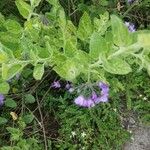
Solanum xanti
Chaparral nightshade · Purple nightshade · San Diego Nightshade
Description
Source: leafsnapSolanum xanti, known commonly as chaparral nightshade, purple nightshade, and San Diego nightshade, is a member of the genus Solanum. It is native to the Western United States in Arizona, California, Nevada, and Oregon, and to northwest Mexico in Baja California.The plant grows in chaparral, oak woodlands, conifer forests, desert Madrean Sky Islands, and other habitats.
🎭 Trickery, peril, and death
Care Guide
💧 Water
☀️ Light Full sun
The purple nightshade requires a significant amount of sunlight, ideally in places that have uninterrupted light exposure. In warmer climates, it can withstand some shade, which can be beneficial for the plant's wellness. Its natural habitat provides ample light which supports robust growth. However, excessive or insufficient light can obstruct its growth, leading to its possible wilting or stunting, respectively.
What are the sunlight requirements for purple nightshade?
Purple nightshade thrives best in areas that receive ample amounts of sunlight. It is optimal in locations with continuous sun exposure but can tolerate some shade, especially in hotter climates, which can aid in maintaining the plant's health. The natural habitat of purple nightshade encompasses significant light, contributing to its vibrant growth. However, both excessive and insufficient sunlight can be detrimental, possibly causing the plant to wither or stunt its growth.
How can artificial lighting be used for purple nightshade?
Indoor purple nightshade plants require adequate lighting to grow optimally. In cases where natural sunlight is limited, particularly during winter or in less sunny areas, artificial lighting is a beneficial alternative, enabling faster and healthier plant growth. Opting for LED lights is advisable as they can be customized to supply specific light wavelengths needed by the plant. The amount of artificial light required varies depending on the plant's sunlight needs: full sun plants require 30-50W per square foot, partial sun plants need 20-30W per square foot, and full shade plants need 10-20W per square foot. The light source should be placed 12-36 inches above the plant, mimicking natural sunlight, and it's crucial to adjust the lighting duration to the natural daylight hours appropriate for the plant species, generally between 8-12 hours of light per day.
What are the symptoms of inadequate lighting for purple nightshade?
Purple nightshade exhibits various symptoms when exposed to inadequate lighting. These include smaller new leaves compared to mature ones, leggy or sparse growth characterized by longer spaces between leaves or stems, leading to a stretched and weak appearance. Early leaf drop can occur as the plant tries to conserve resources, and growth may either slow down or halt completely in poor light conditions. New leaves might develop with irregular color patterns or appear pale, indicating a lack of chlorophyll and essential nutrients. Chlorosis, or the yellowing of leaves due to chlorophyll breakdown from excessive sunlight, sunscald resulting in pale or necrotic areas on the plant tissue, leaf curling as a defense against excessive sunlight to minimize water loss, wilting due to loss of turgor pressure from overexposure to sunlight increasing water loss, and leaf scorching marked by brown, crispy edges on leaves from too much sunlight are also common symptoms of improper lighting conditions.
What solutions are available for addressing lighting issues for purple nightshade?
To address lighting issues with purple nightshade, a gradual approach to increasing sunlight exposure is essential. For indoor plants, progressively moving them to sunnier locations each week until reaching at least 6 hours of direct sunlight daily is recommended. Utilizing a south-facing window and keeping curtains open during daylight maximizes sunlight exposure. If the plant is large or moving it is not feasible, consider using artificial light, keeping a desk or ceiling lamp on for at least 8 hours daily or investing in professional plant grow lights. For outdoor plants, transitioning them gradually to sunnier spots prevents sunburn by avoiding sudden changes in light intensity. It's crucial to note that parts of the plant already affected by insufficient sunlight may not recover, but new growth will be healthy after increased light exposure. Minimizing obstructions like pruning trees to allow more sunlight, and transplanting smaller plants during their dormant period to better-lit areas with good drainage can also help.
🌡️ Temperature 15–35°C
The purple nightshade is a plant that thrives in temperatures between 59 and 95 ℉ (15 and 35 ℃). It originates from areas with a warmer to hotter climate, although it can withstand lower temperatures in the winter. In frostier climates, it's suggested to cultivate the purple nightshade inside a greenhouse or indoor environment to provide the stable temperature it requires.
What are the essential care instructions for Purple Nightshade?
Purple Nightshade (Solanum xanti) thrives in a temperature range of 59 to 95°F (15 to 35°C) and is native to warm to hot climates. It can tolerate cooler temperatures in winter but should be grown in a greenhouse or indoors in colder climates to maintain appropriate temperatures. Despite its strong cold resistance, if winter temperatures are expected to drop below a certain point, cold protection by covering the plant with soil or straw is recommended. It's also advised to water the plant abundantly before the first freeze in autumn to ensure the soil remains moist, preventing drought and water scarcity during winter and early spring.
How does low temperature affect Purple Nightshade, and what are the solutions?
Purple Nightshade is cold-tolerant, ideally thriving above a certain minimum suitable growth temperature and maintained above a tolerable minimum growing temperature during winter. When temperatures fall below a specified limit, while there may not be noticeable changes in winter, there could be decreased sprouting or even no sprouting in springtime. The solution is to remove any parts that have failed to sprout in spring, fostering healthier growth.
How does high temperature affect Purple Nightshade, and what are the solutions?
In summer, Purple Nightshade should be kept below a certain maximum suitable growth temperature. Exceeding a tolerable maximum growing temperature might lead to the leaves becoming lighter in color, curling, being prone to sunburn, and in severe cases, the plant might wilt and dry up. The solutions include trimming away sunburned and dried-up parts, relocating the plant to a shadier spot, or using a shade cloth to protect it from midday and afternoon sun. Additionally, it's important to water the plant in the morning and evening to keep the soil moist.
💨 Humidity
🪴 Soil 5-7
🌱 Fertilizer
Typically, a one-time application of fertilizer in the spring is enough for Purple nightshade, though its growth can be maximized through multiple feedings. Provide nourishment every month to six weeks. The process of fertilization improves the look and functionality of the leaves, contributing to a steady color and robust texture. Additionally, it boosts the growth of roots and the absorption of nutrients, leading to the sustenance of the plant's health in the long run.
🪴 Pot & Repot
✂️ Pruning
🌿 Propagating
🐛 Diseases & pets
☠️ Toxicity
Characteristics
- Plant Type
- Herb
- Life Cycle
- Perennial
- Genus
- Solanum
- Family
- Solanaceae
- Hardiness Zone
- 7-10
- Mature Height
- 91 cm
- Mature Spread
- 91 cm
- Leaf Color
- Green
- Leaf Type
- Evergreen, Semi-evergreen
- Flower Color
- Purple, Lavender
- Flower Size
- 2.54 cm
- Bloom Time
- Spring, Early summer
- Planting Time
- Spring
- Harvest Time
- Summer, Early fall