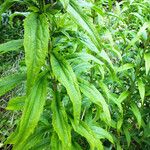
Solidago altissima
Tall Goldenrod · Late goldenrod · Canada goldenrod · Great Plains goldenrod · Tall Golden-rod
Description
Source: leafsnapSolidago altissima, the tall goldenrod or late goldenrod, is a North American species of goldenrod widespread across much of Canada, the United States, and northern Mexico. It is common in much of its range, and fairly tolerant of landscapes which have been disturbed by humans. It has become naturalized in many parts of the world.
🌳 Tall goldenrod, recognized for supporting bee populations by supplying pollen and nectar, also has another important role. It functions as a key host plant for certain insect species, providing places for egg-laying and nourishment for the developing larvae. Despite its ecological value, tall goldenrod has not been used in human-focused areas such as essential oil extraction, spice production, furniture making, pigment/dye production, sweetener manufacture, or beverage production.
🎭 Finances, prophecy, development, support, prudence, fortune
Care Guide
💧 Water
Canada goldenrod flourishes in open, moist environments and needs regular water, typically weekly. Although it can adapt to different conditions, it is best grown outdoors where it can take advantage of natural rainfall. Its strong root system helps it withstand diverse climate patterns, making it suitable for various environments.
When should I water my Canada goldenrod?
Watering Canada goldenrod is essential for its health and development. To determine when to water, check the soil moisture by inserting your finger about 1-2 inches deep; if dry, it's time to water. Additionally, wilting or drooping leaves, as well as yellowing leaves, indicate a need for water. Stunted growth can also signal insufficient watering. However, it's crucial to avoid overwatering to prevent root rot and diseases. Underwatering for extended periods can cause severe dehydration and potentially kill the plant. Recognizing these signs helps in managing the watering schedule effectively, promoting growth and maintaining plant health.
How should I water my Canada goldenrod?
To water Canada goldenrod effectively, one should ensure a consistent but not excessive moisture level, ideally in well-drained soil. Using a watering can with a long, narrow spout directs water to the base of the plant, minimizing disease risks. Tools like a moisture meter can help in determining when to water, avoiding a fixed schedule and ensuring the top inch of the soil has dried out before the next watering. Focus on watering the base and avoid overhead watering to prevent diseases. It's also important to avoid over-watering, especially in winter months, ensuring water drains out properly from the pot to prevent root rot and fungal diseases.
How much water does Canada goldenrod really need?
The amount of water Canada goldenrod needs varies based on its growing conditions but generally, it requires enough water to wet its entire root system thoroughly. For a 12-inch pot, this might be around 1-2 liters of water once the soil's top surface feels dry. Signs that the plant has received enough water include moist but not wet soil and vibrant foliage. Overwatering can lead to yellowing leaves and stunted growth, while underwatering may cause wilting and browning leaf edges. Due to its deep root system, it's essential to ensure deep soil penetration, especially in larger pots or ground planting.
What kind of water is best for Canada goldenrod?
Canada goldenrod has moderate water sensitivity and does best with water that is free of harmful chemicals and contaminants. Distilled water is optimal due to its purity. Rainwater is also suitable as it's natural and typically chemical-free. Tap water can be used if it's the only option available, but it's important to dechlorinate it due to the plant's sensitivity to chlorine, which can cause leaf burn. Filtered water that removes harmful substances without altering the pH level is a good alternative. The preferred water temperature is moderate, around 68-72°F or 20-22°C, to avoid shocking the plant.
How do Canada goldenrod's watering needs change with the seasons?
Canada goldenrod's watering needs vary throughout the year. In spring, during its active growth phase, it requires consistent soil moisture, meaning regular watering to keep the soil evenly moist. In summer, reduce watering as the plant may enter a drought period of natural dormancy. Autumn calls for a gradual decrease in watering frequency as the plant prepares for winter dormancy, keeping the soil lightly moist. In winter, water sparingly as the plant's moisture requirement is minimal, allowing the topsoil to dry out between waterings.
☀️ Light Full sun
Tall goldenrod performs best when it receives ample light throughout the day. It can tolerate partial shade, though that may negatively affect its health and growth rate. Its native habitat tends to offer plentiful light. Both excessive and insufficient light can impair its development and wellbeing.
What are the sunlight requirements for Canada goldenrod?
Canada goldenrod thrives best in conditions that provide abundant light throughout the day, ideally flourishing in full sun, characterized by more than 6 hours of sunlight. It can tolerate partial sun, which is about 3-6 hours of sunlight, but this might affect its health and growth rate. Its natural habitat suggests a strong preference for generous light exposure, highlighting the importance of selecting locations in your garden that ensure a harmonious balance of light and shade, as per the plant's need for happiness and growth.
How does artificial lighting support indoor plants, such as Canada goldenrod, in low-light conditions?
Indoor plants, including Canada goldenrod, require adequate lighting to achieve optimal growth. When natural sunlight is insufficient, particularly during winter or in less brightly lit spaces, artificial lighting serves as an essential solution. Suitable artificial lights, like LED, can provide the specific wavelengths needed by plants, with the requirement that full sun plants need 30-50W/sq ft, partial sun plants 20-30W/sq ft, and full shade plants 10-20W/sq ft of artificial light. Placement should be 12-36 inches above the plant, and the duration should mimic natural daylight hours, generally 8-12 hours per day, to promote healthier, more robust growth.
What are the signs of inadequate lighting for Canada goldenrod?
When Canada goldenrod is subjected to inadequate lighting, several symptoms may manifest, signaling distress. These include the emergence of smaller leaves than usual, leggy or sparse growth as the plant stretches towards the light source, accelerated leaf drop as a result of the plant conserving its resources, and slower or halted new growth as the plant enters survival mode. Pale or discolored new leaves, symptomatic of chlorosis, sunscald with visible damage from intense light, leaf curling as a defense against excessive light, wilting due to loss of water, and leaf scorching characterized by browned, crisp leaf edges, are other significant indicators. Recognizing these signs early can help in mitigating adverse effects by adjusting the plant's lighting conditions.
What are the recommended solutions for addressing light-related issues in Canada goldenrod?
Addressing light-related issues in Canada goldenrod involves several strategic approaches, depending on whether the plant is indoors, outdoors, or in the ground. For indoor plants, a gradual transition to a sunnier location or the use of artificial lighting can greatly benefit the plants. Outdoor plants can be acclimatized to increased sunlight by gradually moving them to brighter spots. For plants in the ground, reducing obstructions like overhanging branches and considering transplantation to more sunlit areas during the plant's dormant period can significantly enhance light access. These measures aim at ensuringthat the plant receives adequate sunlight for healthy growth, while avoiding sudden changes that could lead to sunburn or stress.
🌡️ Temperature 5–35°C
Tall goldenrod is a temperate species that prefers a temperature range of 41 to 95 ℉ (5 to 35 ℃). It naturally occurs in cool to warm climates, giving it adaptability across different temperature conditions. In winter it copes with colder conditions by becoming dormant to conserve energy.
What is the preferred temperature range for Canada goldenrod?
Canada goldenrod, botanically known as Solidago altissima, thrives in a temperate environment with a temperature range between 41 to 95 °F (5 to 35 °C). This range indicates its preference for cool to warm climates, demonstrating its adaptability to varying temperature conditions. To adapt to winter's lower temperatures, the plant goes dormant, conserving energy and demonstrating strong cold resistance. Special frost protection measures are generally not required, although preparations should be made if temperatures are expected to drop below -25°C.
How do you protect Canada goldenrod from extreme cold?
To protect Canada goldenrod from extreme cold, especially when winter temperatures are forecasted to drop below -25°C, certain cold protection measures should be put in place. These include covering the plant with insulating materials such as soil or straw to protect it from frost. Additionally, it is advisable to water the plant abundantly before the first freeze of autumn to ensure the soil remains moist and enters a frozen state. This method helps in preventing drought and water scarcity during the winter and early spring months.
What symptoms indicate that Canada goldenrod is experiencing temperature stress?
Canada goldenrod shows different symptoms when experiencing temperature stress due to unusually low or high temperatures. When temperatures drop below -25°C, the plant might not show immediate changes but could face decreased sprouting or fail to sprout in spring. Conversely, when summer temperatures exceed 35°C, leading to conditions above 41°C, the plant's leaves might lighten in color, curl, become prone to sunburn, and, in severe cases, the entire plant might wilt and dry. These symptoms indicate the plant is under temperature stress and requires attention.
What are the solutions for Canada goldenrod affected by low or high temperatures?
For Canada goldenrod affected by low temperatures, particularly when it does not sprout as expected in spring due to cold damage, the remedy involves removing any parts that failed to sprout. In cases where high temperatures have caused damage, such as sunburned or dried-up parts, these should be trimmed away. To protect the plant from further high-temperature stress, it's beneficial to move it to a shadier location or use a shade cloth, especially during the midday and afternoon sun. Ensuring the soil stays moist by watering the plant in the morning and evening is also crucial under these conditions.
💨 Humidity
🪴 Soil 5-7
🌱 Fertilizer
A single fertilizer application in spring is typically enough for Tall goldenrod, though repeated feedings can maximize growth. Fertilize once every month to a month and a half. Fertilization improves the leaves' appearance and function, maintaining even color and a healthy texture. It also promotes root development and nutrient uptake for the plant's long-term health.
🪴 Pot & Repot
For Canada goldenrod to thrive and avoid root rot when grown in pots, it needs excellent drainage.
✂️ Pruning
🌿 Propagating
🐛 Diseases & pets
☠️ Toxicity
Characteristics
- Plant Type
- Herb
- Life Cycle
- Perennial
- Genus
- Solidago
- Family
- Asteraceae
- Hardiness Zone
- 5-10
- Mature Height
- 0.91 m to 2.13 m
- Mature Spread
- 91 cm
- Leaf Color
- Green
- Leaf Type
- Semi-evergreen
- Flower Color
- Yellow
- Flower Size
- 2.54 cm
- Bloom Time
- Mid summer
- Planting Time
- Spring, Autumn
- Harvest Time
- Mid summer, Late summer, Early fall
- Native Area
- Mexico, China