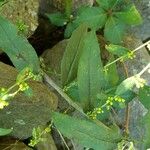
Solidago caesia
Woodland goldenrod · Axillary goldenrod · Wreath goldenrod · Bluestem goldenrod · Blue-stemmed Goldenrod
Description
Source: leafsnapSolidago caesia, commonly known as blue-stemmed goldenrod, is a perennial herbaceous plant in the Asteraceae family. Native to eastern North America, it thrives in woodlands, meadows, and along roadsides. This plant typically reaches heights of up to 3 feet and features blue-green stems covered in fine hairs. Its leaves are alternate, lance-shaped, and have serrated edges. From late summer through early fall, Solidago caesia produces clusters of small yellow flowers at the tops of its stems. These flowers attract various pollinators, including bees and butterflies. For centuries, Native Americans have used the plant for medicinal purposes, believing it to have anti-inflammatory properties useful in treating conditions such as arthritis and sore throats. Solidago caesia is also an important food source for wildlife, such as birds and small mammals, which feed on its seeds during the winter months. Overall, Solidago caesia is a beautiful native plant with significant ecological value. It can add color and interest to any garden or natural area it inhabits.
🌳 Bluestem goldenrod is a versatile plant that enhances the beauty of pollinator and cottage gardens. Its striking blooms last from summer through fall, attracting late-season bees, butterflies, and hummingbirds. With its natural tendency to form clumps, it works well as a border plant or as an ornamental addition to wildflower beds. This plant is easy to grow and resistant to deer.
🎭 Currency, Fortune-telling
Care Guide
💧 Water Every 7 days
Bluestem goldenrod thrives in moderate water conditions and typically needs watering every 1-2 weeks. Although native to deciduous forests, it is adaptable to both wet and dry environments. During drier seasons, it enters dormancy to conserve water and support future growth.
How should I water my Bluestem goldenrod plant?
To properly water the Bluestem goldenrod, it is best to use filtered water at room temperature. Tap water may contain harmful particles that could affect the plant's health. The Bluestem goldenrod prefers warmer temperatures, so avoid using cold water as it can be a shock to its system. Additionally, be sure to avoid overhead watering as it can cause issues with the foliage. Instead, gently apply the filtered room temperature water directly to the soil until it is completely soaked. This method helps to moisturize the roots and allows them to spread and absorb nutrients from the soil effectively.
What should I do if I give my Bluestem goldenrod too much water or too little water?
Both overwatering and underwatering can harm the health of your Bluestem goldenrod, but overwatering is more commonly problematic. Excess water can cause wilting, yellowing leaves, and potentially lead to diseases like root rot, mold, and mildew that can kill the plant. Underwatering is less common due to the plant's drought tolerance, but it can still occur and result in brittle, brown leaves. It's important to recognize signs of overwatering early, as some diseases may not be reversible if left untreated for too long. If you notice early signs of overwatering, reduce watering immediately and assess the soil's drainage quality. If the soil drains poorly, replace it with a loose, well-draining potting mix. Conversely, if you notice signs of underwatering, increase watering until the signs subside.
How often should I give water to my Bluestem goldenrod?
If your Bluestem goldenrod is in a pot, you can easily check if it needs water by sticking your finger into the soil. If the top two to three inches of soil feel dry, it's time to water it. If you have planted the Bluestem goldenrod outside in the ground, you can use the same method to test the soil. When the top few inches of soil are dry, it's time to water it. In the spring and early fall, you'll likely need to water this plant about once a week using this method. During extremely hot weather, you may need to water it twice a week or even more. However, mature and well-established Bluestem goldenrod has a remarkable ability to withstand drought.
How much water does my Bluestem goldenrod require?
To properly water your Bluestem goldenrod, be generous with the amount of water you give. Make sure the first two to three inches of soil are dry before watering. It's important to thoroughly water the plant by soaking the soil completely. You'll know you've added enough water when excess water starts to flow through the drainage holes at the bottom of the pot. If you don't see any excess water draining, it means you haven't watered enough. However, be cautious not to let water accumulate inside the soil as it can harm the plant. On the other hand, if water doesn't drain well from the pot, it suggests that the soil isn't draining properly, which can negatively affect the plant's health. For outdoor plants, receiving about 1 inch of rain per week is adequate.
How do I water my Bluestem goldenrod at various stages of growth?
The water needs of the Bluestem goldenrod can vary at different growth stages. When the plant is young or has been recently transplanted, it requires more water to support root growth. As the roots develop, they require additional moisture to thrive. However, after a few seasons, the plant will require less water. Another stage where increased watering may be necessary is during the bloom period, as flower development requires a significant amount of moisture.
☀️ Light Full sun
Bluestem goldenrod generally does best with full sun for much of the day, though it can also tolerate places where sunlight is filtered through leafy canopies. Its native habitat reflects this preference for ample light, but very strong exposure raises the risk of water loss and may call for more frequent watering. Too little light can restrict its growth and flowering.
What are the sunlight requirements for Bluestem Goldenrod (Solidago caesia)?
Bluestem Goldenrod requires full sunlight exposure for optimal growth, thriving best with over 6 hours of direct sunlight per day. It can also tolerate partial sun, which means about 3-6 hours of sunlight. In its natural habitat, Bluestem Goldenrod is accustomed to abundant light, though too much exposure without adequate water can increase the risk of dehydration. Conversely, insufficient sunlight may hinder its growth and flowering. Notably, indoor plants might need artificial lighting, especially in less sunny spaces or during winter. LED lights are recommended for providing the necessary wavelengths plants need, with specific wattage depending on whether the plant is full sun, partial sun, or full shade.
What are some indicators of insufficient or excess sunlight in Bluestem Goldenrod?
Symptoms of insufficient sunlight include smaller new leaves, leggy or sparse growth, faster leaf drop, slowed or ceased new growth, and paler new leaves. Conversely, too much sunlight can lead to chlorosis (yellowing of leaves), sunscald (pale, damaged areas on leaves or stems), leaf curling, wilting, and leaf scorching (brown, crispy leaf edges). These symptoms reflect the plant’s struggle to adapt to its lighting environment, either by conserving resources in low light or protecting itself from excessive light.
How can I address sunlight-related issues for my Bluestem Goldenrod indoors and outdoors?
To optimize growth and address sunlight issues for Bluestem Goldenrod, consider gradually acclimatizing your plant to its ideal lighting conditions. Indoors, move the plant to receive at least 6 hours of direct sunlight daily, utilizing a south-facing window or supplementing with artificial light for 8 hours daily if the plant is large or immobile. Outdoors, adapt your plant to sunlight gradually to prevent sunburn, aiming to find the best sun-exposure spot. For ground plants, reduce obstructions like overhanging branches and consider transplanting to brighter locations with good drainage, especially during the plant’s dormant period for minimal stress.
🌡️ Temperature 5–35°C
As a native species in the bluestem goldenrod growing habitat, it does well in temperatures ranging from 41 to 95 ℉ (5 to 35 ℃). In winter it copes with colder conditions, and in summer it copes with heat. With slow temperature changes, it can achieve its full growth potential.
What are the ideal temperature conditions for Bluestem Goldenrod?
Bluestem Goldenrod thrives in temperatures ranging from 41 to 95°F (5 to 35°C). It has a strong cold resistance and can adjust to colder temperatures during winter and adapt to heat during summer. For it to grow to its full potential, it's vital that the temperature changes gradually. Special frost protection measures are not typically necessary, but if temperatures are expected to drop below -25°C, it is important to provide cold protection by covering the plant with soil or straw and watering it abundantly before the first freeze in autumn to ensure the soil remains moist.
How does Bluestem Goldenrod respond to low temperatures?
Bluestem Goldenrod is cold-tolerant and fares best when temperatures remain above 5°C. During winter, it's advisable to keep it above -20°C. At temperatures dropping below -25°C, you might not observe immediate changes, but there can be a decrease in sprouting or a complete lack of sprouting in spring. To manage any parts of the plant that fail to sprout by spring, they should be removed.
What should I do if Bluestem Goldenrod experiences high temperatures?
During summer, ensure that Bluestem Goldenrod's environment does not exceed 35°C. Temperatures above 38°C can cause the leaves to lighten in color, curl, become prone to sunburn, and in severe cases, the entire plant might wilt and dry. To mitigate the damage, trim away sunburned and dried-up parts, move the plant to a shaded location away from the midday and afternoon sun, or use a shade cloth. Also, water the plant in the morning and evening to maintain soil moisture.
💨 Humidity
🪴 Soil 5-7
🌱 Fertilizer
Typically, a single fertilizer application in spring is enough for Bluestem goldenrod, but multiple feedings can boost growth. Fertilize every month to every month and a half. Fertilization improves leaf appearance and function, maintaining even color and a healthy texture. It also promotes root development and nutrient uptake for long-term plant health.
Why do I have to add fertilizer to my Bluestem goldenrod plant?
The leaves of the Bluestem goldenrod are an important part of its structure. Fertilization can help the leaves look great and function properly. It also helps the plant grow new roots and maintain existing roots. Fertilization is important for both the present health of the plant and its ability to absorb nutrients in the future.
When should I fertilize my Bluestem goldenrod for the best results?
If you grow your Bluestem goldenrod outdoors, it will send out new growth in early spring. This is a sign that it's time to fertilize for the year. Typically, one application of fertilizer in the spring is enough. However, if you want to promote maximum growth, you can repeat the feeding several times throughout spring and early summer. In this case, you can fertilize your Bluestem goldenrod every month to a month and a half.
When is it not a good idea to use fertilizer on Bluestem goldenrod?
During the late fall and winter, your Bluestem goldenrod goes through a dormant phase and stops growing. Therefore, it is not recommended to fertilize it during this time. If you choose to fertilize your Bluestem goldenrod in the spring and summer, you should gradually reduce the amount of fertilization as summer approaches, as the growth rate of the plant also slows down. In general, it is not advisable to fertilize your Bluestem goldenrod during extremely hot weather or when the soil is exceptionally dry. Fertilizing it under those conditions can stress the plant and cause it to die prematurely.
What kind of fertilizer does my Bluestem goldenrod require?
Choosing the best fertilizer for a Bluestem goldenrod is actually quite simple. For optimal growth, these plants thrive on a general-purpose garden fertilizer that contains equal amounts of nitrogen, phosphorus, and potassium. Look for a fertilizer with a 10-10-10 ratio or something similar as it will be highly effective. However, it's important to steer clear of fertilizers with high nitrogen content if you are unsure. The majority of recommended fertilizers for Bluestem goldenrod are available in granular form. These fertilizers should be slow-release and easy to apply to the soil. Additionally, consider nourishing your Bluestem goldenrod with an organic soil amendment like compost; it can provide great benefits.
How can I add fertilizer to my Bluestem goldenrod?
In early spring, wait until you see the first leaves of your Bluestem goldenrod poking through the soil's surface. Once you notice this sign, apply a balanced formula of granular slow-release fertilizer to the soil around the base of your plant. You can repeat this process later in the season if desired. When reapplying fertilizer, make sure to apply it to the soil at the base of the Bluestem goldenrod, rather than directly on the plant. Sometimes, you may need to move some leaves aside to access the soil above the roots. Additionally, it is recommended to water your Bluestem goldenrod before and after fertilizing to ensure proper absorption.
🪴 Pot & Repot
Bluestem goldenrod thrives best when planted in pots with excellent drainage. This ensures that moisture levels are balanced and helps prevent root rot. To achieve optimal growth, use potting mixes that provide good drainage and select pots with plenty of drainage holes.
✂️ Pruning
Bluestem goldenrod is known for its upright growth habit and striking yellow flowers. To maintain its health and appearance, prune the plant from early to late spring, removing any dead or damaged stems. Thinning crowded areas will improve air circulation. Regular trimming encourages robust flowering and overall vitality, helping the plant maintain a healthy appearance throughout the growing season.
🌿 Propagating
🐛 Diseases & pets
☠️ Toxicity
Characteristics
- Plant Type
- Herb
- Life Cycle
- Perennial
- Genus
- Solidago
- Family
- Asteraceae
- Hardiness Zone
- 5-9
- Mature Height
- 20 cm to 91 cm
- Mature Spread
- 30 cm to 61 cm
- Leaf Color
- Green
- Leaf Type
- Deciduous
- Flower Color
- Yellow, Gold
- Flower Size
- 2.54 cm
- Bloom Time
- Mid summer, Late summer
- Planting Time
- Spring
- Harvest Time
- Late summer, Early fall