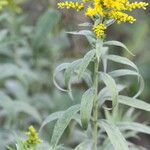
Solidago canadensis
Goldenrod · Canada goldenrod · Canadian Goldenrod · Fersovich · Meadow goldenrod
Description
Source: leafsnapSolidago canadensis, known as Canada goldenrod or Canadian goldenrod, is an herbaceous perennial plant of the family Asteraceae. It is native to northeastern and north-central North America and often forms colonies of upright growing plants, with many small yellow flowers in a branching inflorescence held above the foliage. It is an invasive plant in other parts of the continent and several areas worldwide, including Europe and Asia. It is grown as an ornamental in flower gardens.
💡 In the Shanghai area, Canada goldenrod is blamed for the local extinction of up to 30 native species. It spreads rapidly and overwhelms other plants. In other parts of China, it has even been linked to reduced orange harvests. Although it is less harmful in its native North American habitats, Canada goldenrod is still typically regarded as a weed.
🌳 A less well-known use of canada goldenrod is in sugar-making. Evidence from Native American settlements shows it was eaten for its sweetness. Early inhabitants boiled its blossoms to produce a syrup-like sweetness. Today, scientists are investigating canada goldenrod's potential as a natural sweetener. Additionally, the plant's bright yellow flowers are not only visually striking but are edible, ideal for enlivening salads. By contrast, canada goldenrod also functions as a source of organic dye. The name 'Solidago' reflects its historical medicinal use, originally denoting its healing properties.
🎭 Development, support, prudence, good luck
Care Guide
💧 Water
Canada goldenrod thrives in meadows and prairies, where it prefers consistent moisture and moderate humidity. As an herbaceous perennial, it benefits from weekly watering to maintain optimal health. This plant flourishes when water is abundant, and its growth cycle is closely aligned with the availability of rainfall.
When Should I Water My Canada Goldenrod?
Proper and timely watering is critical for the health and development of Canada Goldenrod (Solidago canadensis), affecting its growth, flower production, and disease resistance. You should water the plant when the top 1 to 2 inches of soil feels dry to the touch, as this indicates the soil's moisture content is low enough to require watering. Additionally, wilting leaves, a dull or yellowing color, stunted growth, and the critical pre-flowering stage signal the need for watering. Increased water requirements are noted during warm temperatures and high sunlight exposure. Conversely, watering too early can cause root diseases due to moist conditions, and late watering could lead to dehydration and possibly the plant's death.
How Should I Water My Canada Goldenrod?
Canada Goldenrod requires specific watering practices to maintain optimal hydration. Employing bottom-watering by placing the pot in a tray of water allows the plant to absorb moisture from the bottom, avoiding over-saturation of the soil surface and encouraging deep root hydration. Mist the foliage in dry conditions or hot weather to increase humidity. If using a watering can, select one with a narrow spout for targeted watering at the base, avoiding wetting the foliage directly to prevent fungal diseases. A moisture meter can help accurately determine the soil's moisture level. Avoid overhead watering to reduce the risk of fungal diseases and ensure proper soil drainage to avoid waterlogged conditions.
How Much Water Does Canada Goldenrod Really Need?
Canada Goldenrod, with its extensive root system, thrives in moist yet not waterlogged soil. The amount of water needed varies by factors like pot size, root depth, and plant size, with a mature plant potentially requiring 2 to 3 liters per session. Indications of correct watering include vibrant, lush leaves, sturdy stems, and abundant flowering. Overwatering can lead to root rot and disease, while underwatering can stunt growth and reduce vitality. Though tolerant of standing water for short periods, allowing the soil to dry out somewhat between waterings is essential to avoid problems with nutrient absorption.
What Kind of Water is Best for Canada Goldenrod?
Mildly acidic to neutral pH water is ideal for Canada Goldenrod, making rainwater, filtered, or dechlorinated tap water great choices due to their typically neutral pH. While Canada Goldenrod can tolerate small amounts of chlorine, dechlorinating tap water by letting it sit out or using a filter can be beneficial. Although not particularly sensitive to fluoride, lower levels are generally healthier. Hard water, which is high in minerals, should be avoided if possible. Filtration and dechlorination can improve plant health, with room temperature water being the most suitable. Rainwater is excellent if available, and tap water should be dechlorinated by letting it sit out for a few hours before use.
How Do Canada Goldenrod's Watering Needs Change with the Seasons?
Seasonal variations affect the watering needs of Canada Goldenrod. In spring, during its active growth phase, maintaining consistent soil moisture is crucial. During summer, which may bring drought, reduce watering, allowing the soil to dry slightly between waterings. In autumn, as it prepares for winter dormancy, gradually decrease watering, keeping the soil lightly moist. In winter, water sparingly, allowing the topsoil to dry out between sessions.
☀️ Light Full sun
Canada goldenrod grows best where it can access plentiful sunlight; it tolerates some shade but performs best in strong sun. Originating from sun-rich habitats, it may develop pale coloring or stunted growth in low-light conditions. Excessive exposure, however, can cause dehydration.
What are the sunlight requirements for Canada Goldenrod?
Canada Goldenrod, known botanically as Solidago canadensis, demands specific sunlight conditions for optimal growth. It thrives in full sun, requiring more than 6 hours of direct sunlight daily. However, it can also grow in partial sun, with about 3 to 6 hours of sunlight. Attention to the movement of sunlight through your garden is crucial. Finding spots that provide the right balance of light and shade is essential for the happiness and health of your plants.
How does sunlight affect the growth of Canada Goldenrod?
Sunlight plays a pivotal role in the growth and health of Canada Goldenrod. This plant prospers in environments with abundant solar energy, showing a tolerance for some shade but predominantly flourishing under intense sun exposure. Originating from sunny locales, insufficient light can lead to symptoms like pale coloration or stunted growth. Conversely, too much direct exposure without adequate water can cause dehydration. In scenarios where natural light is lacking, especially indoors, artificial lighting offers a practical solution, enabling healthy plant development.
What artificial lighting requirements do indoor Canada Goldenrods have?
For indoor Canada Goldenrods, when natural sunlight is insufficient, artificial lighting becomes a crucial substitute to mimic natural light conditions. LED lights are recommended due to their adaptability in providing specific light wavelengths needed by plants. The light intensity requirements vary based on the plant's natural sunlight needs: 30-50W/sq ft for full sun, 20-30W/sq ft for partial sun, and 10-20W/sq ft for full shade plants. The artificial lights should be placed 12-36 inches above the plant to simulate the sun's natural position, with a duration mimicking natural daylight hours, usually between 8-12 hours daily.
What are the symptoms of light deficiency in Canada Goldenrod?
Canada Goldenrod exhibits several tell-tale symptoms when suffering from insufficient light. These include the development of smaller new leaves compared to mature ones, leggy or sparse growth indicating a stretched appearance due to increased space between leaves or stems, faster leaf drop as the plant conserves resources, delayed or halted growth as the plant enters survival mode, and the appearance of lighter-colored or yellow leaves, signaling a lack of chlorophyll. These symptoms highlight the plant's struggle in low-light conditions, emphasizing the importance of adequate lighting for its health.
How do you address sunlight-related issues in Canada Goldenrod?
To address sunlight-related issues in Canada Goldenrod, consider several approaches depending on the setting. Indoors, gradually move the plant to sunnier locations, aiming for at least 6 hours of direct sunlight daily from a south-facing window. If moving the plant isn't feasible, artificial lighting can supplement light needs. For outdoor plants, transitioning them to sunnier spots gradually prevents shock. Reducing obstructions like pruned tree branches can increase sunlight exposure. Remember, while parts of the plant damaged by low sunlight may not recover, new growth will emerge healthy with improved light conditions.
🌡️ Temperature 5–35°C
In its native habitat, canada goldenrod endures a broad range of temperatures but prefers 41-95 ℉ (5-35 ℃). In cooler conditions its growth may slow, but it can still thrive. In warmer weather it may require more water. In the winter, canada goldenrod can tolerate frost and will die back to the ground, then regrow in the spring.
What temperatures can Canada goldenrod tolerate?
Canada goldenrod thrives in a wide temperature range of 41-95°F (5-35°C). It possesses strong resistance to cold, tolerating cooler temperatures by slowing its growth and can survive frost by dying back to the ground in winter, regrowing in spring. For extreme cold, below its growth limit temperature, it's advised to protect it with soil or straw coverings and ensure the soil is moist before the first freeze.
How does Canada goldenrod react to different temperature conditions?
In its optimum temperature range, Canada goldenrod grows well, but requires additional water in warmer conditions. During winter, it can tolerate cold and frost by dying back and regrowing in spring. If temperatures drop significantly below its growth limit, no special frost protection is usually needed, but pre-winter watering and potential covering can help it survive harsh conditions. In contrast, high temperatures can cause the leaves to lighten, curl, and the plant may suffer from sunburn or dehydration, requiring trimming of damaged parts, relocation to shade, and ample watering.
What are the key symptoms and solutions for Canada goldenrod in extreme temperatures?
For low temperatures, Canada goldenrod is cold-tolerant but must be kept above its tolerable growing temperature minimum to avoid reduced or no sprouting in spring. The solution is to remove unsprouted parts in spring. For high temperatures, the plant should be kept below its suitable maximum. Exceeding this can cause leaf discoloration, curling, sunburn, and wilting. Solutions include trimming damaged areas, providing shade, and ensuring soil moisture through morning and evening watering.
💨 Humidity normal (40-60%)
This plant will thrive in moderate humidity, which is probably the level in your home. However, misting it a few times a week can be very beneficial. Make sure the room has good ventilation.
🪴 Soil 5-7
🌱 Fertilizer
A single fertilizer application in spring is generally adequate for Canada goldenrod, although multiple feedings can boost growth. Feed every month to every month and a half. Fertilization improves the leaves' appearance and function, helping maintain even color and a healthy texture. It also encourages root development and nutrient uptake for sustained plant health.
Why should I use fertilizer on my Canada goldenrod?
Proper fertilization of the Canada goldenrod is vital for maintaining healthy leaves and promoting new root growth. The leaves of the Canada goldenrod form the most significant part of its overall structure. By fertilizing correctly, you can ensure that these leaves maintain a consistent color and a healthy texture. Fertilization also benefits the roots by supporting the development of new roots and maintaining existing ones. This not only keeps your plant healthy currently but also enhances its ability to absorb essential nutrients from the soil in the future.
When should I add fertilizer to my Canada goldenrod plant?
If you grow Canada goldenrod outdoors, it will start growing new leaves in early spring. This is the signal to start fertilizing. Usually, one application of fertilizer in the spring is enough. But if you want to maximize growth, you can fertilize multiple times from spring to early summer. In that case, fertilize about once every month to a month and a half.
When is it not a good idea to fertilize my Canada goldenrod?
During the late fall and winter, your Canada goldenrod will go into a dormant phase and stop producing new growth. It is best to avoid fertilizing it during this time. However, if you decide to fertilize during the spring and summer, you should gradually reduce the amount as summer approaches because the growth rate of your Canada goldenrod will also slow down. In general, it is not recommended to fertilize your Canada goldenrod during very hot weather or when the soil is extremely dry, as this can cause stress and premature death.
What kind of fertilizer does my Canada goldenrod plant need?
Choosing the best fertilizer for a Canada goldenrod is fortunately quite straightforward. These plants thrive on a general-purpose garden fertilizer that contains equal amounts of nitrogen, phosphorus, and potassium. A fertilizer with a ratio of 10-10-10 or similar will be highly effective. To be safe, avoid fertilizers with high nitrogen content. The majority of the best fertilizers for Canada goldenrod are available in granular form, which is convenient for easy application to the soil. Additionally, using organic soil amendments like compost can also be beneficial for feeding your Canada goldenrod.
How should I give nutrients to my Canada goldenrod?
- Wait until early spring when your Canada goldenrod starts sprouting its first leaves. - When you see this sign, apply a granular slow-release fertilizer with a balanced formula to the soil around the base of the plant. - You can repeat this process later in the season if you want. - Remember to apply the fertilizer to the soil at the base of the plant, not on the plant itself. You may need to move some leaves to access the soil above the roots. - It's a good idea to water your Canada goldenrod before and after fertilizing it.
🪴 Pot & Repot Every 12 months
Canada goldenrod needs pots with excellent drainage to thrive, as this helps maintain the right moisture levels and prevents root rot. Good drainage is key to keeping Canada goldenrod healthy. Therefore, choosing the right pot and providing proper care are vital for successful growth.
✂️ Pruning
Canada goldenrod is characterized by its tall clusters of yellow flowers and thrives with proper pruning. In early spring, cut the stems down to ground level to promote healthy growth and prevent overcrowding. Later, in spring, deadhead the flowers to encourage further blooming and manage self-seeding. This practice not only enhances the plant's appearance but also helps maintain control over its spread.
🌿 Propagating
🐛 Diseases & pets
☠️ Toxicity
Characteristics
- Plant Type
- Herb
- Life Cycle
- Perennial
- Genus
- Solidago
- Family
- Asteraceae
- Hardiness Zone
- 5-9
- Mature Height
- 1.52 m to 3.05 m
- Mature Spread
- 91 cm
- Leaf Color
- Green
- Leaf Type
- Deciduous
- Flower Color
- Gold, Yellow
- Flower Size
- 2.54 cm
- Bloom Time
- Mid summer
- Planting Time
- Spring, Summer, Autumn, Winter
- Harvest Time
- Mid summer, Late summer, Early fall
- Native Area
- Mexico