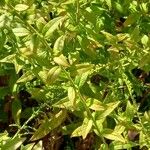
Solidago rugosa
Wrinkleleaf goldenrod · Rough goldenrod · Rough-stem goldenrod · Rough-stemmed goldenrod · Wrinkle-leaf goldenrod
Description
Source: leafsnapSolidago rugosa, commonly called the wrinkleleaf goldenrod or rough-stemmed goldenrod, is a species of flowering plant in the family Asteraceae. It is native to North America, where it is widespread across eastern and central Canada (from Newfoundland to Ontario) and the eastern and central United States (Maine west as far as Wisconsin and Iowa, south to Florida and Texas). It is usually found in wet to mesic habitats.
🌳 Although not widely known, wrinkleleaf goldenrod may serve as a natural bioindicator of certain soil conditions, including the presence of heavy metals. Its hardiness and tendency to thrive in diverse environments could offer useful insights into ecosystem health, helping to direct conservation efforts and support environmental monitoring.
🎭 Currency, Fortune-telling
Care Guide
💧 Water Every 1-2 weeks
Wrinkleleaf goldenrod is well-suited to environments with varying moisture levels. It prefers moderate hydration and consistent moisture without becoming waterlogged. For best results, water the plant once every 1-2 weeks. This plant thrives in meadows and open woods, benefits from rainwater, and adapts well to different climate zones.
When Should I Water My Wrinkleleaf Goldenrod?
To determine the right time to water your wrinkleleaf goldenrod, check for signs like soil dryness by pressing your finger about an inch into the soil. If it feels dry, the plant needs watering. Leaf wilt, slow growth, and color changes in the leaves are also indicators that your wrinkleleaf goldenrod requires water. However, it's critical to avoid overwatering to prevent root rot, while underwatering can lead to wilt and decreased growth. Paying attention to these signs will help ensure the successful cultivation of your wrinkleleaf goldenrod.
How Should I Water My Wrinkleleaf Goldenrod?
Wrinkleleaf goldenrod thrives best in well-drained, loamy soil and should be watered using a gentle shower watering can to replicate rain and avoid waterlogging. Ensure you're using a nozzle with adjustable patterns for control and a moisture meter to avoid over-watering. It's essential to focus watering at the base to hydrate the roots effectively and prevent foliar diseases. Deep watering is recommended to reach the plant's deepest roots without causing oversaturation. For a thorough watering, you might occasionally use the bottom watering method to ensure even moisture distribution.
How Much Water Does Wrinkleleaf Goldenrod Really Need?
The optimal watering amount for wrinkleleaf goldenrod varies based on factors like pot size and plant size but generally, it prefers moderate soil moisture. For a mature plant in a medium-sized pot, 1.5 to 2 liters per session is ideal. Properly hydrated plants display healthy, vibrant leaves and abundant flowers. To avoid risks such as root rot from overwatering or stunted growth from underwatering, use well-draining soil and allow the soil to slightly dry between watering sessions, adjusting more frequently during hot, dry periods.
What Kind of Water is Best for Wrinkleleaf Goldenrod?
Wrinkleleaf goldenrod does well with distilled water as it's free of harmful minerals and contaminants. Rainwater is another excellent choice due to its natural purity, while filtered water is suitable if it removes chlorine, fluoride, and heavy metals. Tap water can be used if other sources aren't available, but let it sit out for 24 hours to evaporate the chlorine. The plant prefers room temperature water (68-72°F or 20-22°C). Moderate sensitivity to chlorine necessitates dechlorination treatments, while its low fluoride sensitivity somewhat simplifies water selection.
How Do Wrinkleleaf Goldenrod's Watering Needs Change with the Seasons?
Wrinkleleaf goldenrod's watering needs vary by season. In spring, as growth begins, ensure the plant is sufficiently hydrated, supplementing spring rain as needed. In summer, with increased evaporation, maintain consistent soil moisture for healthy growth. Autumn's cooler weather reduces the plant's water requirement; water only when the soil's top inch is dry. During winter dormancy, reduce watering significantly, but prevent the soil from completely drying out to avoid root damage. Always adjust your watering based on the plant's current condition and seasonal changes.
☀️ Light Full sun
Wrinkleleaf goldenrod requires abundant sunlight for healthy growth. Native to habitats that commonly have unobstructed sun, it is suited to sites where ample light reaches the plant. Still, it performs well under moderate sunlight. Both overexposure and insufficient light can impair its robust growth and vibrancy.
What are the sun requirements for growing Wrinkleleaf goldenrod?
Wrinkleleaf goldenrod requires significant sunlight exposure for healthy growth, thriving in full sun conditions which entail more than 6 hours of direct sunlight daily. It can also perform well under partial sun, defined as about 3-6 hours of sunlight a day. Monitoring the movement of sunlight through your garden helps in selecting the ideal location for planting, ensuring a balanced environment of light and shade for optimal plant health.
What are the essentials for Wrinkleleaf goldenrod's growth?
Originating from environments with ample unobstructed sunlight, Wrinkleleaf goldenrod prospers in areas receiving substantial sunlight but can also adapt to moderate light conditions. Excessive sunlight or insufficient light exposure can negatively impact its growth and color vibrancy. For optimal growth indoors, especially in low natural light conditions or during winter, artificial lighting can be a solution. LED lights are recommended due to their customizability for different plant needs, with full sun plants requiring 30-50W/sq ft, partial sun plants 20-30W/sq ft, and full shade plants 10-20W/sq ft of artificial light. The artificial light should be placed 12-36 inches above the plant, ensuring 8-12 hours of light per day to mimic natural daylight.
What are the symptoms of inadequate lighting for Wrinkleleaf goldenrod?
Wrinkleleaf goldenrod shows several symptoms when exposed to insufficient light, including the development of smaller new leaves, elongated spaces between leaves or stems leading to sparse and possibly weak growth, premature leaf drop to conserve resources, halted growth as the plant enters a survival state, paler new leaves indicating a deficiency in chlorophyll and nutrients, and various responses to excessive light such as chlorosis, sunscald, leaf curling to minimize water loss, wilting from rapid water loss through transpiration, and leaf scorching.
How can I address light-related growth issues in Wrinkleleaf goldenrod?
To combat light-related growth issues in Wrinkleleaf goldenrod, gradually acclimatize the plant to receive at least 6 hours of direct sunlight daily, using a south-facing window for indoor plants or strategically moving outdoor plants to sunnier spots weekly. If relocating the plant isn’t feasible, consider artificial light options like keeping a lamp on for a minimum of 8 hours daily or investing in specialized grow lights. For plants blocked by environmental barriers, removing obstructions or transplanting the plant during its dormant period to a sunnier location can significantly improve light exposure. While damaged parts might not recover, new growth should flourish under improved lighting conditions.
🌡️ Temperature 5–35°C
Wrinkleleaf goldenrod prefers temperatures between 41 and 95℉ (5 and 35℃) and is commonly found in temperate regions. In summer, keeping the temperature near 68 to 77℉ (20 to 25℃) is recommended, while in winter it can be reduced to 50 to 59℉ (10 to 15℃).
What is the optimal temperature range for Wrinkleleaf goldenrod?
Wrinkleleaf goldenrod thrives in a temperature range of 41 to 95°F (5 to 35°C), making it suitable for temperate environments. During summer, it's best to maintain the temperature between 68 to 77°F (20 to 25°C). In the cooler months of winter, temperatures can be adjusted to a cooler 50 to 59°F (10 to 15°C). The plant has a strong resistance to cold, and special frost protection measures are generally not required, although it is advisable to protect the plant if temperatures are expected to drop below -25°C by covering it with materials such as soil or straw. Prior to the first freeze in autumn, abundant watering is recommended so that the soil remains moist and helps prevent drought and water scarcity for the plant during winter and early spring.
How does low temperature affect Wrinkleleaf goldenrod and what are the solutions?
Wrinkleleaf goldenrod is cold-tolerant, flourishing best when temperatures stay above 5°C and should remain above -20°C during winter. If temperatures fall below -25°C, the plant may not show immediate adverse effects during winter, but there could be a noticeable decrease in sprouting or a complete lack of sprouting come spring. In such cases, it's advisable to remove any parts of the plant that have failed to sprout in spring as part of the solution to this issue.
What should be done if Wrinkleleaf goldenrod experiences high temperatures?
During the summer months, it is crucial to keep Wrinkleleaf goldenrod's temperature below 35°C. Exposure to temperatures above 38°C can cause the leaves to lighten in color, become prone to curling, susceptible to sunburn, and in severe cases, might lead to the entire plant wilting and drying out. To mitigate these effects, trim away any sunburned and dried parts of the plant. The plant should also be moved to a location with ample shade from the midday and afternoon sun, or a shade cloth can be used to create necessary shade. To keep the soil moist and further assist the plant, water it during the cooler times of morning and evening.
💨 Humidity
🪴 Soil 5-7
🌱 Fertilizer
One fertilizer application in spring is generally adequate for Wrinkleleaf goldenrod, though repeated feedings can maximize its growth. Fertilize about once every month to a month and a half. Feeding improves the leaves' appearance and function, helping maintain uniform color and a healthy texture. It also encourages root development and enhances nutrient uptake for long-term plant health.
Why should I use plant food on my Wrinkleleaf goldenrod plant?
The main structure of the Wrinkleleaf goldenrod is made up of its leaves. Fertilization is an important way to make sure the leaves of your Wrinkleleaf goldenrod look great and function properly. Proper fertilization will maintain consistent color and healthy texture in the leaves. It also supports root growth and maintenance, helping the plant absorb soil nutrients better in the future.
When should I fertilize my Wrinkleleaf goldenrod?
If you grow your Wrinkleleaf goldenrod outdoors each year, it will send out new growth in early spring. This is when you should start fertilizing. Usually, one application of fertilizer is enough. But if you want to maximize the growth, you can fertilize multiple times throughout spring and early summer. In this case, feed your Wrinkleleaf goldenrod once every month to a month and a half.
When is the wrong time to fertilize my Wrinkleleaf goldenrod?
During the late fall and winter, your Wrinkleleaf goldenrod goes into a dormant phase where it doesn't produce new growth. It's best to avoid fertilizing it during this time. If you choose to fertilize in the spring and summer, gradually reduce the amount as summer approaches since the growth rate of the goldenrod slows down. It's not a good idea to fertilize when it's unusually hot or when the soil is extremely dry, as this can cause stress and premature death for the goldenrod.
What kind of fertilizer does my Wrinkleleaf goldenrod plant need?
Choosing the best fertilizer for a Wrinkleleaf goldenrod is fortunately a simple task. These plants thrive on a general-purpose garden fertilizer with equal amounts of nitrogen, phosphorus, and potassium, such as a 10-10-10 ratio. It's best to avoid fertilizers with high nitrogen levels when uncertain. Granular fertilizers in a slow-release form are generally the most effective and easy to apply to the soil for Wrinkleleaf goldenrod. Additionally, using organic soil amendments like compost can be beneficial for feeding these plants.
How can I add fertilizer to my Wrinkleleaf goldenrod plant?
To ensure proper growth for your Wrinkleleaf goldenrod, wait until the first leaves emerge in early spring. Then, apply a slow-release fertilizer with a balanced formula to the soil around the base of the plant. If desired, you can repeat this process later in the season. Remember to apply the fertilizer to the soil, not the plant itself, which may require moving some leaves. Additionally, it's beneficial to water the goldenrod before and after feeding it.
🪴 Pot & Repot
For wrinkleleaf goldenrod to thrive in pots, it needs excellent drainage. This ensures proper water management and prevents root rot.
✂️ Pruning
Wrinkleleaf goldenrod benefits greatly from annual pruning, done between early and late spring. This practice encourages healthy growth and results in vibrant yellow flowers. The pruning process involves removing dead stems and thinning out crowded areas, which improves air circulation, prevents disease, and enhances both the plant's longevity and aesthetics.
🌿 Propagating
🐛 Diseases & pets
☠️ Toxicity
Characteristics
- Plant Type
- Herb
- Life Cycle
- Perennial
- Genus
- Solidago
- Family
- Asteraceae
- Hardiness Zone
- 5-9
- Mature Height
- 0.91 m to 1.83 m
- Mature Spread
- 91 cm
- Leaf Color
- Green
- Leaf Type
- Deciduous
- Flower Color
- Gold, Yellow
- Flower Size
- 2.54 cm
- Bloom Time
- Mid summer, Late summer
- Planting Time
- Spring
- Harvest Time
- Fall
- Native Area
- North America