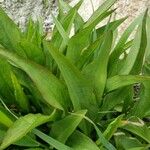
Solidago sempervirens
Salt-marsh goldenrod · Seaside goldenrod · Evergreen Goldenrod
Description
Source: leafsnapSolidago sempervirens, commonly known as seaside goldenrod, is a perennial plant in the Asteraceae family. Native to the eastern coast of North America, it thrives in sandy coastal habitats like dunes, beaches, and salt marshes. Typically reaching up to 3 feet in height, seaside goldenrod features narrow leaves that remain evergreen in warmer climates. From late summer through fall, it produces clusters of bright yellow flowers that attract a variety of pollinators, including bees and butterflies. For centuries, Native Americans have used seaside goldenrod for medicinal purposes. The plant contains compounds with anti-inflammatory properties that can help treat conditions like arthritis. Beyond its medicinal benefits, seaside goldenrod plays a crucial ecological role, providing habitat for various wildlife species, including birds and insects. Overall, Solidago sempervirens is a beautiful coastal plant with significant ecological importance and medicinal value, making it a vital part of North America's natural heritage.
🌳 Seaside goldenrod is known for its bright yellow blooms, which enhance garden settings and act as a preferred resource for a variety of butterfly species, including monarchs. Importantly, seaside goldenrod has developed the unique ability to absorb and store salt in its tissues, a characteristic that gives it resilience in saline coastal habitats. This adaptation also suggests that seaside goldenrod could be useful for phytoremediation, helping to cleanse and detoxify areas contaminated with harmful substances. Ongoing research indicates promising potential for seaside goldenrod in environmental cleanup applications beyond salt.
🎭 Currency, Fortune-telling
Care Guide
💧 Water Every 7 days
Seaside goldenrod thrives in coastal sandy soils and is well adapted to humidity and salt spray. It prefers consistent moisture, which means it needs weekly watering. Thanks to its robust root system, it efficiently uses water even during droughts. For optimal health, seaside goldenrod benefits most when rainfall aligns with its growing season.
☀️ Light Full sun
Seaside goldenrod develops most easily in abundant sunlight, though it can tolerate a moderate amount as well. Coming from coastal habitats known for ample sun, too little light can limit its growth. Excessive exposure, on the other hand, can lead to plant stress.
What are the sunlight requirements for seaside goldenrod?
Seaside goldenrod, scientifically known as Solidago sempervirens, thrives best in full sun conditions, which means it needs more than 6 hours of sunlight daily to grow optimally. It can also handle partial sun, requiring about 3-6 hours of sunlight. Originating from coastal regions accustomed to ample sunlight, insufficient light may limit its growth, while too much exposure could stress the plant. It's crucial to observe how sunlight moves through your garden to find spots that offer a perfect balance for the plants, ensuring they stay healthy and happy.
How can artificial lighting be used for seaside goldenrod indoors?
For indoor seaside goldenrod or other plants that may not receive enough natural sunlight, especially during winter or in less sunny locations, artificial lighting serves as an effective solution to promote optimal growth. LED lights are often preferred for their ability to be customized to the particular light wavelengths needed by plants. Full sun plants benefit from 30-50W/sq ft of artificial light, partial sun plants need 20-30W/sq ft, and full shade plants require 10-20W/sq ft. It's important to place the light source 12-36 inches above the plant, mimicking natural sunlight, and ensure that most plants receive 8-12 hours of light per day.
What are some common symptoms of inadequate sunlight in seaside goldenrod?
When seaside goldenrod does not receive adequate sunlight, it may exhibit several symptoms indicating light deficiency. These include smaller new leaves compared to older ones, leggy or sparse growth due to extended spaces between leaves or stems, faster leaf drop as the plant tries to conserve resources, and a halt or slowdown in new leaf production. Leaves may also appear pale or develop irregular coloration due to insufficient chlorophyll and essential nutrients. Additionally, overexposure can cause symptoms like chlorosis, sunscald, leaf curling, wilting, and leaf scorching, impacting the plant's health.
How can seaside goldenrod be cared for to address light conditions both indoors and outdoors?
To optimize seaside goldenrod's light exposure, gradually relocate the plants to sunnier spots, aiming for at least 6 hours of direct sunlight daily. For indoor plants not easily moved, consider supplementing with artificial light, maintaining it for at least 8 hours a day. Outdoor plants should be gradually accustomed to sunnier locations to prevent sunburn. Removing obstructions that block sunlight, such as pruning trees, can help outdoor and ground plants receive better light. Transplanting smaller plants during their dormant periods to areas with ample sunlight and good drainage is beneficial. Note that while parts of the plant affected by low light may not recover, new growth following improved light exposure will be healthy.
🌡️ Temperature 5–35°C
As a plant native to coastal regions, seaside goldenrod is adapted to a broad temperature range of 5 to 35 ℃ (41 to 95 ℉). This hardy perennial prefers warmer climates and is well suited to flourish in hot, humid summer conditions. In winter it can tolerate colder temperatures but should be protected during severe frosts.
What are the essential care instructions for Seaside Goldenrod?
Seaside Goldenrod (Solidago sempervirens) thrives in temperatures ranging from 5°C (41°F) to 35°C (95°F), making it well-suited for hot and humid summer conditions. It is a perennial that does well in coastal areas and can tolerate a wide range of temperatures. While it has strong resistance to cold and usually doesn't require special frost protection, if temperatures are expected to fall below -25°C, it's important to protect the plant by covering it with soil or straw. Additionally, before the first freeze of autumn, watering the plant abundantly to keep the soil moist is recommended. This helps prevent drought and water scarcity during winter and early spring.
What should I do if my Seaside Goldenrod experiences low temperatures?
Seaside Goldenrod is cold-tolerant and thrives best when temperatures are above 5°C. During winter, it's important to ensure the temperature stays above -20°C. However, if temperatures drop below -25°C, you might not notice changes during winter, but there could be a decrease in sprouting or even no sprouting in spring. If this occurs, it is advised to remove any parts of the plant that have failed to sprout in spring as part of the care process.
How should I care for my Seaside Goldenrod during high temperature periods?
In the summer, it's best to keep Seaside Goldenrod below 35°C. Should temperatures exceed 41°C, the plant's leaves may lighten in color, curl, suffer sunburn, and the plant can wilt and dry in severe cases. To mitigate this, trim away any sunburned and dried-up parts of the plant. Move the plant to a shaded location or use a shade cloth to protect it from midday and afternoon sun. Watering the plant in the morning and evening to keep the soil moist is also beneficial in preventing heat stress.
💨 Humidity
🪴 Soil 6-7
🌱 Fertilizer
For Seaside goldenrod, one fertilizer application in spring is generally enough, though several feedings can boost growth to the fullest. Apply fertilizer about every month to six weeks. Fertilizing improves the leaves’ look and function, helping maintain even color and a healthy texture. It also encourages root development and better nutrient uptake, supporting the plant’s long-term health.
🪴 Pot & Repot
To thrive, seaside goldenrod needs pots with excellent drainage. This ensures healthy root development and prevents waterlogging.
✂️ Pruning
The hardy, salt-tolerant seaside goldenrod thrives in coastal areas. To promote healthy growth and abundant blooms, it's best to prune the plant from early to late spring. This helps improve airflow, remove damaged stems, and prevent diseases. Be sure to use clean, sharp tools for effective pruning and to maintain optimal plant health.
🌿 Propagating
🐛 Diseases & pets
☠️ Toxicity
Characteristics
- Plant Type
- Herb
- Life Cycle
- Perennial
- Genus
- Solidago
- Family
- Asteraceae
- Hardiness Zone
- 5-10
- Mature Height
- 1.22 m to 1.83 m
- Mature Spread
- 30 cm to 61 cm
- Leaf Color
- Green
- Leaf Type
- Evergreen
- Flower Color
- Gold, Yellow
- Flower Size
- 2.54 cm
- Bloom Time
- Mid summer, Late summer
- Planting Time
- Spring
- Harvest Time
- Fall
- Native Area
- Bahamas, Mexico, Cuba