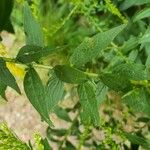
Solidago ulmifolia
Elm-leaf goldenrod · Elmleaf goldenrod · Elm-leaved Goldenrod
Description
Source: leafsnapSolidago ulmifolia, commonly known as elmleaf goldenrod, is a North American species of goldenrod in the family Asteraceae. It is found in Canada (Ontario and Nova Scotia) and the eastern and central United States (from Maine west to Minnesota, south as far as Texas and the Florida Panhandle).Its natural habitat is thin woodlands and bluffs, often over calcareous substrates. In Florida, it is found in moist hammock communities. This species is found in both high quality and degraded habitats, such as the shaded edges of lawns and old fields.
🌳 Beyond its decorative appeal, elmleaf Goldenrod plays an important role in supporting local ecosystems. Its flowers offer plentiful nectar that attracts a range of pollinators, including bees, butterflies, and other beneficial insects. The plant’s importance also reaches ecosystem restoration, where it is used to stabilize soil and promote biodiversity. In areas undergoing rehabilitation, planting elmleaf Goldenrod could help reestablish ecological balance.
Care Guide
💧 Water
Elmleaf Goldenrod flourishes in woodland environments, where it prefers moderate moisture and can tolerate short periods of drought. It requires little maintenance and thrives with a weekly watering schedule. When grown outdoors, it benefits from natural rainfall, which aligns with its growth cycle and ensures adequate hydration during crucial development stages.
How should I water my Elmleaf Goldenrod plant?
To properly water the Elmleaf Goldenrod, it's best to use filtered water at room temperature. Tap water can contain harmful particles, so filtered water is the safer choice. The plant prefers slightly warm water because it is native to warm environments and cold water can be a shock. It's important to avoid overhead watering to prevent foliage issues. Instead, water the soil directly until it is completely soaked. This helps the roots stay moist and spread through the soil to gather nutrients effectively.
What should I do if I give my Elmleaf Goldenrod too much or too little water?
Overwatering is a more common problem than underwatering for the health of your Elmleaf Goldenrod. When this plant receives too much water, its stems and leaves may wilt and turn yellow. Overwatering over a long period can also lead to diseases like root rot, mold, and mildew, which can be fatal. Underwatering is less likely to occur as the Elmleaf Goldenrod has good drought tolerance. However, when underwatering does happen, the leaves may become brittle and brown. It's important to recognize the signs of overwatering early to avoid irreparable damage like root rot. If you notice early signs, reduce your watering schedule and check if the soil drains well. If the soil doesn't drain properly, replace it with loose, well-draining potting mix. If you see signs of underwatering, simply water more regularly until the signs improve.
How much water does my Elmleaf Goldenrod need?
If your Elmleaf Goldenrod is in a pot, you can determine if it needs water by sticking your finger in the soil. If the top two to three inches are dry, it's time to water it. If your Elmleaf Goldenrod is planted outdoors, you can use the same method. When the top few inches of soil are dry, it's time to water. Usually, during spring and early fall, watering once a week is sufficient. In extremely hot weather, watering may need to be increased to twice a week or more. However, mature and well-established Elmleaf Goldenrod plants can tolerate drought well.
How much water does my Elmleaf Goldenrod plant require?
To properly water your Elmleaf Goldenrod, it's important to be generous with the amount of water you provide. Make sure the top two to three inches of soil are dry before watering. When you do water, make sure to thoroughly saturate the soil until water begins to flow out of the drainage holes at the bottom of the pot. If you don't see any excess water draining, you may not have given enough water. However, be cautious about letting the water accumulate in the soil, as this can harm the plant. Additionally, if water is not draining properly, it could be a sign of poorly draining soil, which is harmful to the plant's health. If the plant is outdoors, receiving about 1 inch of rain per week should be sufficient.
How should I water my Elmleaf Goldenrod at different stages of growth?
The water needs of the Elmleaf Goldenrod can vary depending on its growth stages. In the first few years or after transplanting, it will require more water to support the growth of new roots. These roots need extra moisture to thrive and support future growth. As the plant matures, it will require less water. Additionally, during the bloom period, the plant will need more water as flower development relies on significant moisture.
☀️ Light Full sun
Elmleaf Goldenrod does best when it gets ample sunlight throughout the day, which promotes vigorous growth. It can tolerate areas with less light, but performs best when sun exposure is abundant. Different growth stages do not require different amounts of sun. Excessive sunlight can be damaging, while insufficient light may hinder growth and vitality.
What are the sunlight requirements for Elmleaf Goldenrod?
Elmleaf Goldenrod thrives in conditions where it is exposed to an ample amount of sunlight throughout the day. It requires full sun, which means above 6 hours of sunlight daily, for optimal growth and vitality. It can also grow in partial sun, about 3-6 hours of sunlight, but its growth may not be as robust. Inadequate sunlight may stunt the plant's growth, while overexposure can be harmful.
What is the importance of artificial lighting for Elmleaf Goldenrod?
Artificial lighting is crucial for Elmleaf Goldenrod's growth, especially when natural sunlight is insufficient, like in winter or less sunny spaces. Adequate lighting promotes healthier and faster growth, compensating for the lack of natural sunlight. LED lights, customized to provide specific wavelengths of light, are popular for indoor plant lighting. The intensity of artificial light required varies with the plant's sunlight needs: full sun plants need 30-50W/sq ft, partial sun plants need 20-30W/sq ft, and full shade plants need 10-20W/sq ft. The light source should be 12-36 inches above the plant, mimicking natural sunlight, for 8-12 hours per day.
What are the symptoms of improper lighting for Elmleaf Goldenrod?
Symptoms of improper lighting in Elmleaf Goldenrod include small or lighter-colored new leaves, leggy or sparse growth, faster leaf drop, slower or no growth, chlorosis, sunscald, leaf curling, wilting, and leaf scorching. These symptoms reveal the plant's struggle with either too much or too little light, indicating a need to adjust its lighting environment.
How can Elmleaf Goldenrod's lighting conditions be improved?
To improve Elmleaf Goldenrod's lighting conditions, gradually move plants to sunnier spots to receive at least 6 hours of direct sunlight daily, especially if they're indoors. For large or immovable plants, consider using a desk or ceiling lamp for at least 8 hours daily, or invest in professional plant grow lights. Outdoors, choose the best spot for sunlight and adapt your plants gradually to avoid sunburn. Reducing obstructions such as branches or leaves that block sunlight and transplanting smaller plants during their dormant period to locations with better sunlight exposure and good drainage, are also effective strategies.
🌡️ Temperature 5–25°C
Elmleaf Goldenrod is native to temperate areas and prefers to grow where temperatures range from 41 to 77 °F (5 to 25 ℃). For best growth in all seasons, keep the temperature within that range.
What is Elmleaf Goldenrod and where is it native to?
Elmleaf Goldenrod, botanically known as Solidago ulmifolia, is native to areas with temperate climate conditions. It thrives in regions where the temperatures range between 41 to 77 °F (5 to 25 °C), indicating its preference for growing in environments that maintain these temperature conditions across different seasons. This plant is highly cold-tolerant, adapting well to the temperate climates where it originates.
How should Elmleaf Goldenrod be cared for in winter?
Elmleaf Goldenrod does not require additional frost protection measures during the winter due to its high tolerance to cold. To prepare it for winter, it's recommended to water the plant generously before the first freeze in autumn. This ensures the soil around the plant remains moist as it enters a frozen state, helping to prevent drought and water scarcity for the plant during the colder months and into early spring.
What are the important symptoms to watch for in Elmleaf Goldenrod when there are temperature extremes?
Elmleaf Goldenrod displays particular symptoms when exposed to temperature extremes. In low temperatures, specifically below -25°C, there may not be visible changes during winter; however, a significant decrease in sprouting or a complete absence of it may occur in spring. The solution involves removing parts that have failed to sprout. In high temperatures, exceeding 25°C, this plant stops growing and becomes susceptible to rot. Remedial actions include trimming away sunburned and dried-up parts, moving the plant to a shaded location, or using a shade cloth to protect it from the midday and afternoon sun. Additionally, keeping the soil moist by watering in the morning and evening can help mitigate the effects of heat.
💨 Humidity
🪴 Soil 6-7
🌱 Fertilizer
The best time to fertilize an Elmleaf Goldenrod is in early spring, as it comes out of dormancy and begins active growth. Fertilizing supplies essential nutrients for healthy growth. Although Elmleaf Goldenrod has relatively low fertilization needs, applying fertilizer once a year can improve its survival and promote better, longer-lasting flowers.
🪴 Pot & Repot
To ensure healthy growth and prevent root rot, Elmleaf Goldenrod needs to be planted in pots with excellent drainage.
✂️ Pruning
Elmleaf Goldenrod has slender stems topped with clusters of yellow flowers. To encourage growth, prune the plant in the early to late spring by removing any dead stems. Pruning after the flowers have bloomed prevents seeding and helps the plant develop a bushier appearance. Additionally, ensuring good air circulation around the plant can help prevent disease and enhance its overall health and vitality.
🌿 Propagating
🐛 Diseases & pets
☠️ Toxicity
Characteristics
- Plant Type
- Herb
- Life Cycle
- Perennial
- Genus
- Solidago
- Family
- Asteraceae
- Hardiness Zone
- 5
- Mature Height
- 0.91 m to 1.83 m
- Mature Spread
- 30 cm to 61 cm
- Leaf Color
- Green, Blue
- Leaf Type
- Deciduous
- Flower Color
- Gold, Yellow
- Flower Size
- 2.54 cm
- Bloom Time
- Mid summer, Late summer
- Planting Time
- Spring, Summer, Autumn
- Harvest Time
- Late summer, Early fall