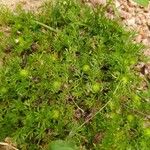
Soliva sessilis
Lawn burrweed · Field burweed · Lawn burweed · Lawnweed · Jo-jo
Description
Source: leafsnapSoliva sessilis: The Lawnweed and Its Characteristics Soliva sessilis, commonly known as lawnweed or field burrweed, is a small annual herb belonging to the Asteraceae family. Originally native to South America, this plant has spread across many parts of the world, including North America and Europe. Description and Growth Habit Soliva sessilis grows prostrate, reaching up to 30 cm in length. Its leaves are small, deeply lobed, and have toothed edges, giving them a fern-like appearance. The flowers are tiny, yellowish-green, and are arranged in clusters at the ends of long stalks. Invasive Properties This plant is considered an invasive weed because of its ability to spread rapidly through prolific seed production. It commonly invades lawns, fields, gardens, and disturbed areas such as roadsides. Medicinal Uses Although regarded as a nuisance by many gardeners due to its invasive nature, Soliva sessilis does have medicinal properties. Traditional medicine practitioners use it to treat various ailments, including fever reduction and pain relief. Conclusion In summary, Soliva sessilis is an annual herb with fern-like leaves and tiny yellowish-green flowers on long stalks. Native to South America, it is now found worldwide. It is considered an invasive weed primarily because of its prolific seed production. However, traditional medicine practitioners often use this plant for its medicinal properties, such as reducing fever and relieving pain.
🎭 Mischievous, oppositional, journeying
Care Guide
💧 Water Every 7 days
Field burrweed is adapted to intermittent moisture and thrives when watered every 1-2 weeks. It is resilient across various climate zones and maintains a balanced water relationship. Typically grown outdoors, field burrweed adjusts its growth cycle to suit different water conditions.
How should I water my Field burrweed?
To water Field burrweed, you have several options such as a garden hose with a spray nozzle or a watering can. This plant is not too particular about the type of water it receives, whether it's rainwater, tap water, or filtered water. It's best to avoid watering this plant from above, as it can harm the leaves, flowers, and potentially lead to disease. Instead, a drip irrigation system is often the most effective method for watering. This system evenly and directly applies water to the soil. When it comes to container-grown Field burrweed, you can still use a similar approach but with different tools. You can use a cup, watering can, or tap to water the plant, making sure to apply the water directly to the soil.
What should I do if I give my Field burrweed too much or too little water?
To remedy underwatering, simply water the Field burrweed more regularly when you notice it lacks moisture. Overwatering, on the other hand, is a more serious issue. It can lead to diseases and ultimately the decline and death of the plant. To prevent this, choose a growing location that gets plenty of sunlight for soil drying and offers good drainage to avoid waterlogging. If your potted Field burrweed is overwatered, consider changing it to a pot with better drainage and loose soils during repotting.
How often do I need to water my Field burrweed plant?
Field burrweed requires regular watering throughout the growing season. In the spring, it is recommended to water the plant once a week. As the season progresses and temperatures rise, you may need to increase watering to two to three times per week. However, exceeding this rate can harm the Field burrweed. It is important to keep the soil moist but not wet, regardless of the watering frequency. When growing Field burrweed in a pot, watering needs to be more frequent. Potted plants tend to dry out faster than those planted in the ground, so watering a container-grown Field burrweed a few times per week is necessary, compared to just once a week for a plant in the ground.
How much water does my Field burrweed plant need?
Determining the appropriate amount of water for your Field burrweed can be done in a few different ways. Some gardeners prefer to rely on the feel of the soil to judge its moisture level. For this method, you would water until the top six inches of soil feels moist. Another approach is to use a specific measurement to guide your watering. Typically, giving your Field burrweed about two gallons of water per week is recommended, depending on the temperature and how quickly the soil dries out. However, it's important to note that strictly adhering to this guideline could result in overwatering if your plant doesn't actually require that much water. When growing Field burrweed in a container, a different method should be used to determine watering needs. In this case, you should water enough to moisten all the dry layers of soil. To check for moisture, simply stick your finger in the soil. Additionally, you can water until you observe a slight trickle of excess water coming out of the drainage holes in your pot.
How do I know if I'm giving enough water to my Field burrweed?
Avoiding overwatering your Field burrweed can be a little tricky. On one hand, these plants have deep roots that require weekly soil moisture. However, Field burrweed is prone to root rot and can suffer from browning when overwatered. Underwatering is less of a concern because these plants can survive without additional watering for some time. However, if you wait too long to give them water, they may start to wilt and develop dry leaves.
☀️ Light Full sun
Field burrweed does best in locations that receive plentiful sunlight all day. It can, however, tolerate a degree of shade. Its robust growth in parts of its native range that receive intense sun suggests that sunlight supports its overall vigor. Still, a pronounced shortage or surplus of sunlight can negatively affect its development.
What are the sunlight requirements for Field Burrweed?
Field Burrweed (Soliva sessilis) thrives in locations receiving abundant sunlight throughout the day but can tolerate some shade. Ideal sunlight conditions include full sun, described as more than 6 hours of sunlight a day, and partial sun, characterized by about 3-6 hours of sunlight. It's important to observe how sunlight moves through your garden to choose spots that provide an optimal balance of light and shade, ensuring the plants thrive.
How does artificial lighting support plant growth?
Artificial lighting is crucial for indoor plants, especially when natural sunlight is insufficient, like in the winter or in less sunny spaces. It promotes faster, healthier growth by providing appropriate light intensity and duration. LED lights are popular for their customizability to meet specific plant needs. Full sun plants require 30-50W/sq ft, partial sun plants 20-30W/sq ft, and full shade plants need 10-20W/sq ft of artificial light. The light source should be placed 12-36 inches above the plant, simulating natural sunlight for 8-12 hours daily.
What symptoms indicate that Field Burrweed is receiving inadequate light?
Symptoms of inadequate light in Field Burrweed include: small, newly matured leaves; leggy or sparse growth; accelerated leaf drop; halted new growth; pale new leaves indicating low chlorophyll; chlorosis or yellowing of leaves due to excessive sunlight; sunscald with pale or necrotic areas on plant tissue; leaf curling to reduce surface area exposed; wilting from loss of water; and leaf scorching characterized by brown, dry edges. These symptoms reflect the plant's struggle with either too much or too little light.
How can I adjust the light conditions for an optimal growth of Field Burrweed?
Optimizing light conditions for Field Burrweed involves careful management of both indoor and outdoor settings. Indoors, gradually move plants to sunnier spots to achieve at least 6 hours of direct sunlight daily, using artificial light if necessary. Outdoors, adjust plant placement gradually to prevent shock. Minimize light obstructions by pruning and consider transplanting smaller plants during dormant periods to areas with better sunlight and drainage. Remember, parts of the plant damaged by poor light conditions may not recover, but new growth should be healthy with improved light.
🌡️ Temperature 15–35°C
Field burrweed is native to areas where temperatures range from 68 to 95 °F (20 to 35 °C). The plant does well in these moderate climates, and adjustments are necessary when temperatures fall outside this range.
What is the indigenous temperature range for Field Burrweed?
Field burrweed is indigenous to regions where temperatures range from 68 to 95 °F (20 to 35 °C). The plant thrives in these temperate climates and requires adjustments when temperatures fall outside this range. It exhibits strong cold resistance, which typically eliminates the need for special frost protection measures in winter. However, preparations should be made for winter temperatures expected to drop below -15°C to ensure the plant's survival, such as covering it with soil or straw and watering it abundantly before the first freeze in autumn to keep the soil moist and prevent drought during winter and early spring.
How does Field Burrweed react to low temperatures?
Field burrweed thrives best at temperatures above 20°C and should be kept above 0°C during winter. Although it is cold-tolerant, temperatures falling below -15°C might not show immediate adverse effects during winter but could result in decreased sprouting or absence of sprouting in spring. To mitigate this, the recommendation is to remove any parts of the plant that have failed to sprout during springtime, ensuring the plant's continued growth and health.
What should be done if Field Burrweed is exposed to high temperatures?
Field burrweed should ideally be kept below 35°C during the summer months. Exposure to temperatures above 38°C can lead to the leaves becoming lighter in color, curling, becoming susceptible to sunburn, and in severe cases, the plant may wilt and dry out completely. In such situations, it is advisable to trim away the sunburned and dried parts of the plant. Moving the plant to a shaded location or using a shade cloth to protect it from the midday and afternoon sun can be beneficial. Additionally, watering the plant in the morning and evening to keep the soil moist can help alleviate stress caused by high temperatures.
💨 Humidity
🪴 Soil 6-7
🌱 Fertilizer
Field burrweed responds well to regular, light applications of fertilizer to encourage healthy leaf development. You should fertilize Field burrweed about once a month during the summer. Nitrogen is essential for foliage, and supplying nitrogen-rich sources helps Field burrweed thrive.
🪴 Pot & Repot
✂️ Pruning
🌿 Propagating
🐛 Diseases & pets
☠️ Toxicity
Characteristics
- Plant Type
- Herb
- Life Cycle
- Annual
- Genus
- Soliva
- Family
- Asteraceae
- Hardiness Zone
- 7-9
- Mature Height
- 1 cm to 25 cm
- Mature Spread
- 10 cm to 20 cm
- Leaf Color
- Green
- Leaf Type
- Deciduous
- Flower Color
- Yellow, Green, Gold
- Flower Size
- 0.20 cm to 0.51 cm
- Bloom Time
- Spring
- Planting Time
- Winter
- Harvest Time
- Late spring, Early summer, Mid summer
- Native Area
- Uruguay, Chile, Paraguay, Argentina, Bolivia, Peru, Brazil