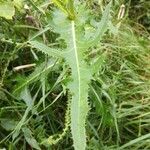
Sonchus arvensis
قیاق · شیر تیغک وحشی · Field sowthistle · Sowthistle · Field Milk-thistle
Description
Source: leafsnapSonchus arvensis, commonly known as the field sowthistle, is a perennial herbaceous plant that belongs to the Asteraceae family. Native to Europe and Asia, it has now spread worldwide and is commonly found in many regions of North America. This plant can grow up to 1 meter in height and features a hollow stem filled with milky sap. Its leaves are alternate, lobed or toothed, and display a bluish-green coloration. The flowers are yellow, with numerous ray florets encircling the central disk florets. Field sowthistle prefers moist soils but can thrive in various soil types, including sandy and clay soils. It is commonly found along roadsides, in fields, gardens, and disturbed areas. Historically, the plant has been used for medicinal purposes due to its anti-inflammatory properties, which help relieve pain associated with arthritis and other inflammatory conditions. However, it is considered an invasive species because of its ability to spread rapidly through wind-dispersed seeds. This rapid spread can pose problems for agricultural crops by competing with them for nutrients and water resources. In summary, Sonchus arvensis is both beneficial and problematic, depending on where it grows, making it a fascinating subject for botanical research today.
🌳 Perennial sow thistle occupies a distinctive role among plants as an indicator species for particular metal ores. Its occurrence in certain areas signals the presence of those metals in the soil, offering potential exploration opportunities for mining. Used by both scientists and prospectors, its roots absorb specific minerals that appear in the plant's foliage, helping to locate underground resources.
🎭 Power, Defense, Removing Hexes
Care Guide
💧 Water Every 7 days
Perennial sow thistle flourishes in open fields and requires moderate watering. It thrives best with weekly watering, which mimics its natural environment and maintains a balance between hydration and drought tolerance. This hardy herbaceous plant also benefits from seasonal rainfall, which promotes healthy growth while minimizing the risk of waterlogging.
How should I water my Perennial sow thistle to keep it healthy?
To properly water the Perennial sow thistle, use filtered water at room temperature or slightly warmer. Tap water may contain harmful particles, so filtering is important. The plant originates from a warm environment, so cold water can be a shock to its system. Avoid overhead watering to prevent foliage issues. Instead, thoroughly soak the soil with filtered, room temperature water. This helps moisten the roots, aiding their spread and nutrient absorption.
What should I do if I give too much or too little water to my Perennial sow thistle plant?
Overwatering and underwatering can harm your Perennial sow thistle, but overwatering is more common. When this plant gets too much water, the stems and leaves may wilt and turn yellow. Prolonged overwatering can also result in diseases like root rot, mold, and mildew, which can be fatal for your plant. While underwatering is less likely, it can still happen, causing brittle and brown leaves. It's important to recognize the signs of overwatering early when caring for your Perennial sow thistle. Some diseases caused by overwatering, such as root rot, may not be fixable if you delay. If you see early signs of overwatering, reduce your watering immediately and consider replacing poorly draining soil with a loose, well-draining potting mix. If your plant shows signs of receiving too little water, simply water it more frequently until the signs improve.
How often should I water my Perennial sow thistle plant?
If your plant is in a pot, the most precise way to determine if your Perennial sow thistle needs water is to check the soil moisture by sticking your finger into it. If the top two to three inches of soil feel dry, it's time to water it. If you grow your Perennial sow thistle outdoors in the ground, you can use the same method to test the soil. Once the top few inches of soil have dried out, it's time to water. Typically, during the spring and early fall, you'll need to water this plant about once a week. However, during extremely hot weather, you may need to increase the frequency to twice or more per week. It's important to note that mature, well-established Perennial sow thistles have the impressive ability to withstand drought.
How much water does my Perennial sow thistle require?
To effectively water your Perennial sow thistle, don't be afraid to give it a generous amount of water. Make sure the top two to three inches of soil are dry before watering, and then thoroughly soak the soil. The water should be enough to cause excess water to drain out of the pot's drainage holes. If you don't see any excess water draining, you may have not given enough water. However, be cautious not to let the water accumulate in the soil, as this can be harmful to the plant. Additionally, if water doesn't drain well through the pot, it's likely due to poorly draining soils, which can negatively affect the plant's health. Finally, if the plant is outdoors, around 1 inch of rain per week should suffice.
How should I water my Perennial sow thistle as it grows?
The water needs of the Perennial sow thistle vary depending on its growth stages. In the first few years or after transplantation, more water is required because the plant is focused on developing new roots for future growth. These roots need extra moisture to thrive. As the plant becomes more mature, it will need less water. Additionally, during the bloom period, the Perennial sow thistle may require more water as flower development uses up a significant amount of moisture.
☀️ Light Full sun
Perennial sow thistle does best with plenty of light and can tolerate less-than-full exposure when necessary. Adequate light supports healthy growth, while both insufficient and excessive light can cause poor development. This aligns with its native habitat, which typically offers abundant light.
What are the sunlight requirements for Perennial Sow Thistle?
Perennial sow thistle requires full sun, which means it needs above 6 hours of sunlight daily, but it can also thrive in partial sun, receiving about 3-6 hours of sunlight. It's crucial to observe how sunlight moves through your garden to find spots that offer the right balance of light and shade for your plants. This observation ensures their growth and happiness, mimicking their native environment where abundant light is common.
How can artificial lighting be used for Perennial Sow Thistle indoors?
Indoor plants, including Perennial sow thistle, may require artificial lighting for optimal growth, especially in circumstances where natural sunlight is insufficient, like in winter or in less sunny spaces. LED lights are a popular choice for artificial plant lighting as they can provide specific wavelengths needed for plant growth. For full sun plants, 30-50W per square foot is needed, for partial sun plants 20-30W per square foot, and for full shade plants 10-20W per square foot. The artificial light source should be placed 12-36 inches above the plant to mimic natural sunlight and be kept on for 8-12 hours per day to mimic the plant species' natural daylight hours.
What are the symptoms of inadequate lighting for Perennial Sow Thistle?
Symptoms of light deficiency in Perennial sow thistle can include smaller new leaves, leggy or sparse growth, faster leaf drop, slower or no new growth, lighter-colored new leaves, and specific conditions like chlorosis, sunscald, leaf curling, wilting, and leaf scorching. Chlorosis refers to leaves losing their green color, turning yellow due to chlorophyll breakdown. Sunscald causes pale, bleached areas on plant tissue, while leaf curling is a defense mechanism to reduce exposure to excessive sunlight. Wilting and leaf scorching are related to water loss and excessive sunlight exposure, respectively.
What solutions exist for addressing light-related issues in Perennial Sow Thistle?
To address light-related issues in Perennial sow thistle: For indoor plants, gradually move them to a sunnier location until they receive at least 6 hours of direct sunlight daily or use artificial light for additional light exposure. Outdoors, move plants gradually to sunnier spots to avoid sunburn. Pruning obstructive trees and transplanting smaller plants to sunlight-rich locations can also help. It's important to introduce changes slowly to allow the plant to adapt without stress.
🌡️ Temperature 5–32.2°C
Perennial sow thistle favors temperatures between 41 and 90.4 ℉ (5 to 32 ℃). It originates from temperate regions and can tolerate varying temperatures throughout the year. In winter it withstands frost and freezing conditions. In summer it copes with higher temperatures by reducing its water uptake and increasing leaf surface area to enhance transpiration.
What is the preferred temperature range for Perennial sow thistle, and how does it adapt to different seasons?
Perennial sow thistle, botanically known as Sonchus arvensis, thrives in a temperature range of 41°F (5°C) to 90.4°F (32°C). Originating from temperate regions, it exhibits remarkable adaptability across a spectrum of temperatures throughout the year. In the winter months, it showcases a high tolerance to frost and freezing conditions, with no need for additional frost protection measures. To prepare for the first freeze of autumn, it's advisable to water the plant abundantly to ensure the soil remains moist and enters a frozen state. This preparation helps prevent drought and water scarcity for the plant during the colder winter and early spring months. As temperatures rise in the summer, the plant adjusts by reducing its water intake and enlarging its leaf surface for enhanced transpiration, efficiently managing higher temperatures.
What should be done if the temperature drops below -30°C or rises above 32°C for Perennial sow thistle?
Perennial sow thistle is exceptionally cold-tolerant, capable of withstanding temperatures well below freezing. However, if temperatures plummet below -30°C, while the plant may not exhibit immediate distress during the winter, there's a risk of decreased or absent sprouting come spring. In this case, the best course of action is to remove any parts of the plant that fail to sprout in the spring. On the other end of the spectrum, the plant does not fare well in high temperatures exceeding 32°C, where it stops growing and becomes more prone to rot. To mitigate damage from excessive heat, remove sunburned and dried-up sections of the plant, relocate it to a shaded area or employ a shade cloth to protect it from the strong midday and afternoon sun. Additionally, maintaining soil moisture through morning and evening watering sessions is crucial for the plant's survival during hot periods.
💨 Humidity
🪴 Soil 6-7
🌱 Fertilizer
Typically, one fertilizer application in spring is enough for Perennial sow thistle, though multiple feedings can enhance growth. Fertilize about once every month to month and a half. Feeding improves leaf appearance and function, maintaining even color and a healthy texture. It also encourages root development and nutrient uptake, supporting the plant’s long-term health.
🪴 Pot & Repot
✂️ Pruning
🌿 Propagating
🐛 Diseases & pets
☠️ Toxicity
Characteristics
- Plant Type
- Herb
- Life Cycle
- Perennial
- Genus
- Sonchus
- Family
- Asteraceae
- Hardiness Zone
- 4-7
- Mature Height
- 0.4 m to 1.52 m
- Mature Spread
- 30 cm to 61 cm
- Leaf Color
- Green, Blue
- Leaf Type
- Deciduous
- Flower Color
- Yellow
- Flower Size
- 2.54 cm to 5.08 cm
- Bloom Time
- Late spring, Early summer, Mid summer
- Planting Time
- Spring
- Harvest Time
- Early summer, Mid summer