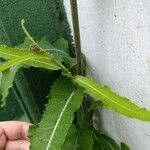
Sonchus wightianus
Corn sow thistle · Corn Sowthistle
Description
Source: leafsnapSonchus wightianus is an Asian species of plants in the tribe Cichorieae within the family Asteraceae. It is widespread across much of Asia, found in China, the Indian Subcontinent, and Southeast Asia as far south as Indonesia.Sonchus wightianus is a perennial herb up to 150 cm tall. Stems and the bracts around the flower heads have many purple hairs. The plant produces flat-topped arrays of several flower heads, each head with 180-300 yellow ray flowers but no disc flowers.
Care Guide
💧 Water
Perennial sowthistle thrives in consistently moist conditions, requiring evenly watered soil and weekly irrigation. Adapted to temperate climates, it adjusts its water uptake throughout the growing season to optimize flowering.
☀️ Light Full sun
The Perennial sowthistle is an enduring herbaceous plant that thrives in sunny conditions and hails from open environments, typically flourishing in fields and grasslands. While this plant favors complete sun exposure, it can also withstand semi-shaded situations.
What are the sunlight requirements for Perennial sowthistle?
Perennial sowthistle, a sun-loving perennial herbaceous plant that thrives in open habitats like meadows and grasslands, requires full sun, defined as above 6 hours of sunlight daily, for optimal growth. However, it can also tolerate partial sun conditions, which means about 3-6 hours of sunlight daily. It's essential to watch how sunlight moves through your garden and choose spots that offer the perfect balance of light and shade to ensure the plants' health and happiness.
How can artificial lighting support Perennial sowthistle's growth indoors?
When natural sunlight is insufficient for Perennial sowthistle, particularly in winter or less sunny spaces, artificial lighting can be a vital solution for optimal growth. LED lights are recommended, as they can provide specific light wavelengths needed by the plants. Full sun plants require 30-50W/sq ft, partial sun plants need 20-30W/sq ft, and full shade plants require 10-20W/sq ft of artificial light. The light source should be placed 12-36 inches above the plant to mimic natural sunlight, and most plants need 8-12 hours of light per day.
What are the symptoms of inadequate lighting for Perennial sowthistle?
Symptoms of light deficiency in Perennial sowthistle may include smaller new leaves, leggy or sparse growth, faster leaf drop, slower or no new growth, and lighter-colored new leaves. Chlorosis, sunscald, leaf curling, wilting, and leaf scorching are other symptoms indicating either insufficient or excessive sunlight. These symptoms show the plant's struggle with adapting to its lighting conditions.
What solutions exist for Perennial sowthistle's light problems?
To address light issues for Perennial sowthistle, gradually move plants to sunnier locations to receive at least 6 hours of direct sunlight daily, utilizing south-facing windows and keeping curtains open during the day. If moving the plant isn't feasible, consider using artificial light, keeping it on for at least 8 hours daily. Outdoors, adapt plants gradually to sunlight to prevent sunburn, observing that affected parts may not recover, but new growth can be healthy after light increases. Minimizing obstructions, like pruning obstructive trees, and transplanting smaller plants during their dormant period to sunny locations with good drainage are effective solutions.
🌡️ Temperature 15–37.8°C
Perennial sowthistle demonstrates excellent resilience to temperature, with the ability to withstand heat and significant temperature changes. It's crucial to monitor watering and furnish sufficient shading during high heat to avoid sun damage. However, Perennial sowthistle shows mediocre resistance to cold temperatures. Although it can bear a certain level of cold, overly frigid conditions may result in frost injury.
💨 Humidity
🪴 Soil 6-7
🌱 Fertilizer
For Perennial sowthistle, one application of fertilizer in the spring is typically adequate, although applying it multiple times can lead to optimal growth. Administer the feed every one to six weeks. Fertilizing improves the look and operation of the leaves, aiding in maintaining a uniform color and a robust texture. Additionally, it encourages the growth of roots and the uptake of nutrients, thereby ensuring the enduring health of the plant.
🪴 Pot & Repot
✂️ Pruning
Perennial sowthistle is characterized by its bold, serrated leaves and vibrant yellow flowers. To effectively manage its growth, remove dead stems, and encourage a bushier form, prune the plant from early to late spring. Regular pruning also improves air circulation, which helps reduce the risk of disease. By following trusted horticultural practices, you can ensure a healthy and thriving perennial sowthistle.
🌿 Propagating
🐛 Diseases & pets
☠️ Toxicity
Characteristics
- Plant Type
- Herb
- Life Cycle
- Perennial
- Genus
- Sonchus
- Family
- Asteraceae
- Hardiness Zone
- 8-11
- Mature Height
- 1.52 m
- Mature Spread
- 3 cm to 4 cm
- Leaf Color
- Green, Dark Green
- Leaf Type
- Semi-evergreen
- Flower Color
- Yellow
- Flower Size
- 1.02 cm to 2.03 cm
- Bloom Time
- Summer, Early fall, Mid fall
- Planting Time
- Summer, Autumn
- Harvest Time
- Mid summer, Late summer, Fall
- Native Area
- Nepal, Sri Lanka, Afghanistan, India, Malaysia, Indonesia, Vietnam, Myanmar, Bhutan, Bangladesh, Pakistan, Laos, Thailand, China