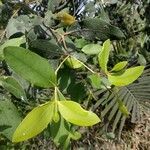
Sonneratia caseolaris
Pidada · Crabapple mangrove · Firefly mangrove · Mangrove apple · Apple Mangrove
Description
Source: leafsnapSonneratia caseolaris, commonly known as mangrove apple, is a species of plant in the family Lythraceae. The fruit is noted for its outward similarity to the persimmon fruit. This tree is a type of mangrove growing up to 20 m in height and with a trunk reaching a maximum diameter of 50 cm. It is present in tropical tidal mud flats from Africa to Indonesia, southwards down to northeast Australia and New Caledonia and northwards up to Hainan Island in China and the Philippines. The fruit of this tree is the subject of a legend of Maldivian folklore, Kulhlhavah Falhu Rani. Kuhlhavah (ކުއްޅަވައް) is the Dhivehi name for the mangrove apple (Sonneratia caseolaris). The tree is associated with congregating fireflies throughout southeast Asia and is the food source of moth and other insects.
Care Guide
💧 Water
The Apple Mangrove thrives in mangrove ecosystems and adapts well to the brackish water found there. It is also resilient to both flooding and drought conditions. For optimal growth, water the plant every 2-3 weeks. It prefers full sunlight and well-draining soil, especially during its active growing season in coastal outdoor environments.
☀️ Light Full sun
The apple mangrove flourishes under the sun's direct rays throughout the day. Its original habitat is open areas beside bodies of water, where sunlight is unobstructed. Such sun exposure supports the plant's healthy growth. An environment that is too dim can reduce its vigor, while excessive exposure may cause stress to the plant.
What are the sunlight requirements for an Apple Mangrove?
The Apple Mangrove (Sonneratia caseolaris) thrives best under full sun, requiring above 6 hours of sunlight daily for optimal growth. It's crucial to watch the movement of sunlight through your garden to find spots that provide a balance of light and shade, ensuring the well-being of your plants. This plant benefits significantly from unfiltered sunlight throughout the day, especially as it is naturally found in open areas near bodies of water. However, environments that are too dim can hinder its growth, and excessive exposure may lead to stress.
How does artificial lighting support plant growth, and what are the specific requirements?
Artificial lighting is vital for indoor plant growth when natural sunlight is insufficient, especially during winter or in spaces with low light. LED lights are a popular choice because they can be adapted to provide the specific wavelengths needed by plants. The requirements vary by plant type: full sun plants need 30-50W/sq ft, partial sun plants require 20-30W/sq ft, and full shade plants need 10-20W/sq ft. The light source should be placed 12-36 inches above the plant and mimic natural daylight hours, generally 8-12 hours per day, to promote faster, healthier growth.
What are the symptoms of light deficiency in Apple Mangroves, and how does excessive sunlight affect them?
Apple Mangroves show several symptoms when they don't receive sufficient light, including smaller new leaves, leggy or sparse growth, faster leaf drop, slowed or halted growth, lighter-colored new leaves, and symptoms of too much sunlight like chlorosis, sunscald, leaf curling, wilting, and leaf scorching. These symptoms indicate either a lack of chlorophyll and essential nutrients due to insufficient light or damage from excessive sunlight, impacting the plant's ability to photosynthesize effectively.
What solutions can be applied to address light-related issues in indoor, outdoor, and ground-planted Apple Mangroves?
To address light-related issues, gradually expose plants to more sunlight until they receive at least 6 hours of direct sunlight daily, ensuring gradual adaptation to prevent sunburn. For indoor plants or those that cannot be easily moved, using artificial lighting such as a desk or ceiling lamp for at least 8 hours daily, or investing in professional plant grow lights, can provide additional light. For outdoor or ground-planted situations, reducing obstructions like pruning trees, or transplanting the plant during its dormant period to a spot with ample sunlight and good drainage, can significantly improve light exposure and plant health. It's important to note that parts of the plant affected by insufficient sunlight may not recover, but new growth will be healthy after adjusting light conditions.
🌡️ Temperature 20–37.8°C
Apple mangrove grows best in its natural habitat where temperatures range from 68 to 100 °F (20 to 38 ℃). In colder seasons, consider increasing indoor temperatures or using a heated greenhouse to meet its needs.
What are the ideal growth temperatures for Apple mangrove?
Apple mangrove, known botanically as Sonneratia caseolaris, thrives in temperatures ranging from 68 to 100 °F (20 to 38 °C). To ensure the plant's healthy growth, it's important to maintain these temperature conditions. During cooler seasons, or when the temperature drops, it is advisable to raise indoor temperatures or utilize a heated greenhouse to meet the plant's warmth requirements. Especially in the autumn, if the plant is grown outdoors, it should be brought indoors and placed near a bright window, yet kept at a suitable distance from heaters to avoid any damage. Maintaining temperatures above 20°C during the winter season is beneficial for the plant's growth, while exposure to temperatures around or below 5°C can be harmful.
How should you care for an Apple mangrove during low temperature conditions?
Apple mangrove is sensitive to low temperatures and performs best when the environment is above 20°C. It is vital to keep the plant in conditions higher than 5°C during winter. Exposure to temperatures below 1°C can lead to discoloration of the leaves, turning them lighter, and after frost damage, they gradually darken to brown or black. Symptoms may include wilting and drooping. If such conditions occur, it's crucial to trim off the frost-damaged parts and move the plant immediately into a warm environment indoors for cold protection. Placing it near a south-facing window ensures the plant gets sufficient sunlight. Additionally, keep the plant away from heaters or air conditioning vents to avoid the air around it becoming excessively dry.
What steps should be taken if an Apple mangrove experiences high temperatures?
In the summer, it's essential to ensure that the Apple mangrove's surrounding temperature does not exceed 100 °F (38 °C). Exposure to temperatures above 109 °F (43 °C) can cause the leaves to lighten in color and increase susceptibility to sunburn. To alleviate such stress, trim away the sunburned and dried-up parts of the plant. Then, move the plant to a shaded location, particularly to avoid the harsh midday and afternoon sun. It's also advisable to water the plant during the cooler parts of the day, such as in the morning and evening, to keep the soil adequately moist and provide relief from the heat.
💨 Humidity
🪴 Soil 6-7
🌱 Fertilizer
The best time to fertilize an Apple mangrove is in early spring as it comes out of dormancy. This encourages overall growth and the development of flowers. Fertilizing improves the foliage, stems, and branches, and encourages large, vibrant, long-lasting blooms. It also helps move nutrients from the roots to the flowers and enhances the plant’s health and resistance to disease.
🪴 Pot & Repot
✂️ Pruning
Apple mangroves thrive when pruned between early and late spring. To promote healthy growth, key techniques include removing dead branches to improve air circulation and thinning the interior to allow better light penetration. This practice aligns with the growth cycle of apple mangroves, enhancing their health, resilience to pests, and overall aesthetic appearance.
🌿 Propagating
🐛 Diseases & pets
☠️ Toxicity
Characteristics
- Plant Type
- Tree
- Life Cycle
- Perennial
- Genus
- Sonneratia
- Family
- Lythraceae
- Hardiness Zone
- 10-12
- Mature Height
- 20.12 m
- Mature Spread
- 14.94 m
- Leaf Color
- Dark Green
- Leaf Type
- Evergreen
- Flower Color
- White
- Flower Size
- 10.16 cm
- Bloom Time
- All year round
- Planting Time
- Spring, Summer, Autumn
- Harvest Time
- All year round
- Native Area
- Sri Lanka, India, Malaysia, Indonesia, Cambodia, Vietnam, Vanuatu, Philippines, Bangladesh, Pakistan, Thailand, China