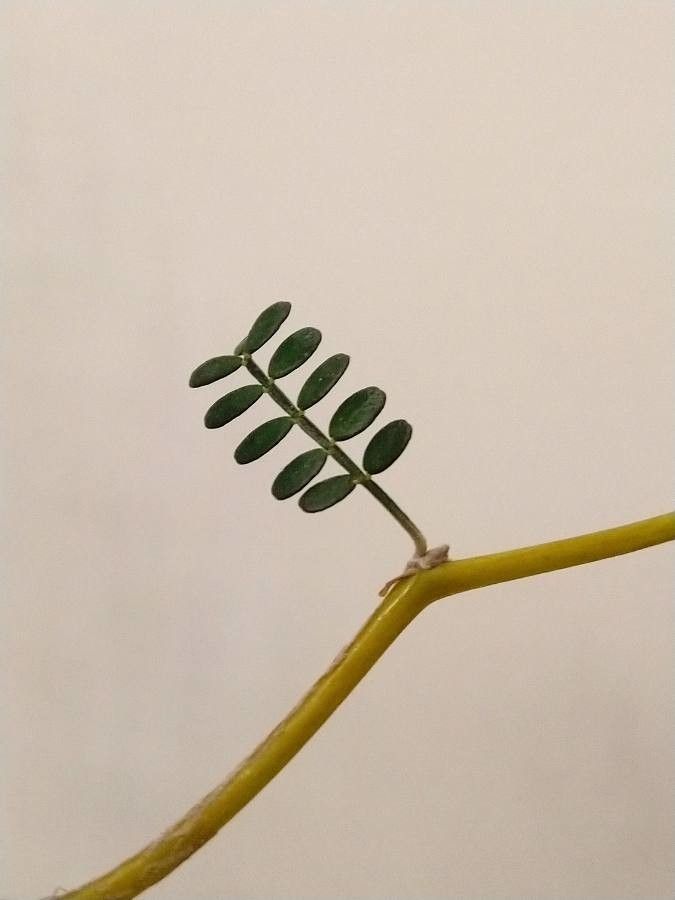
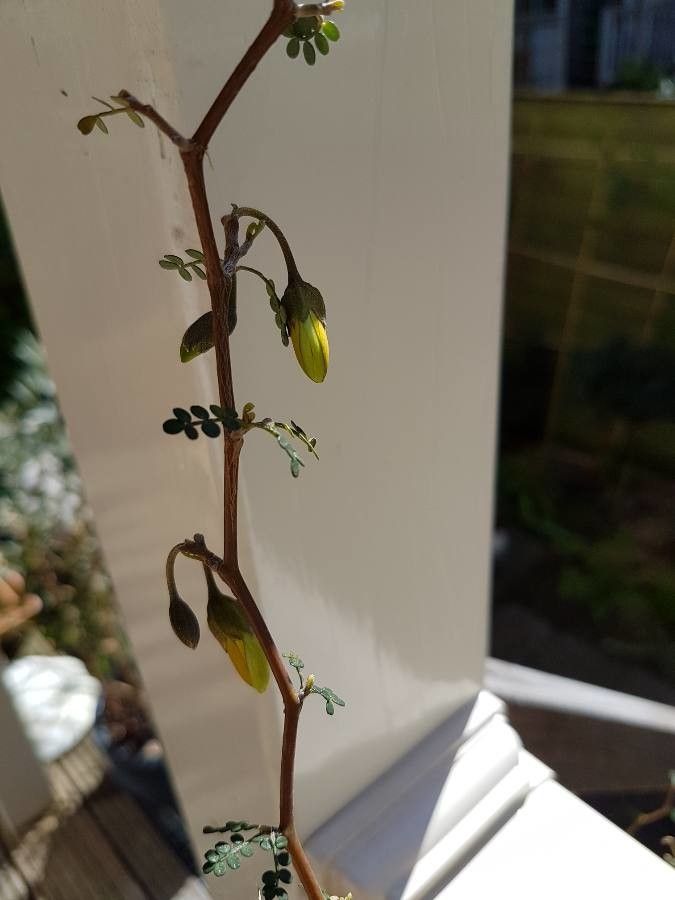
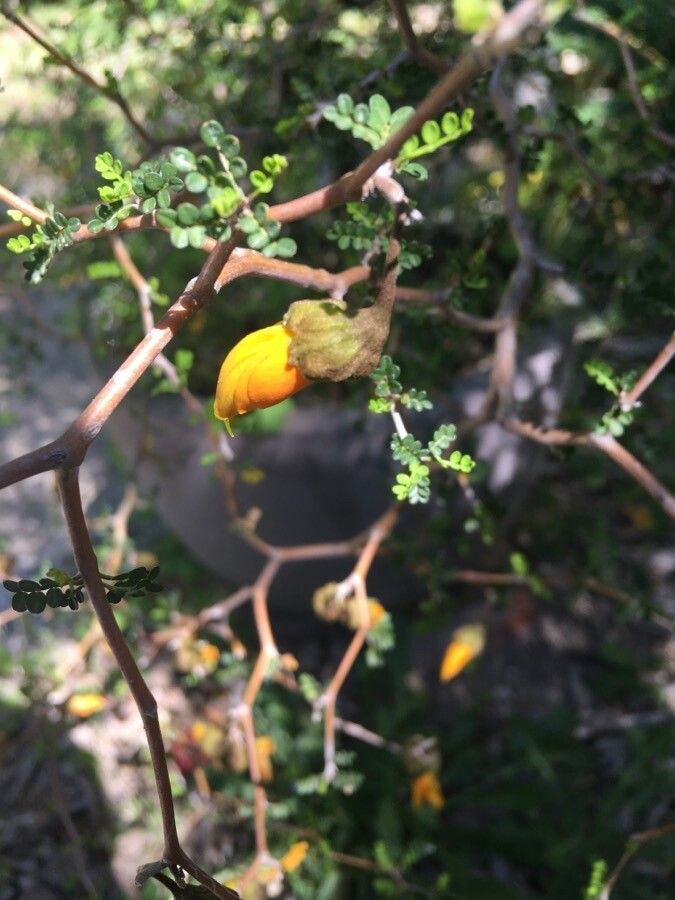
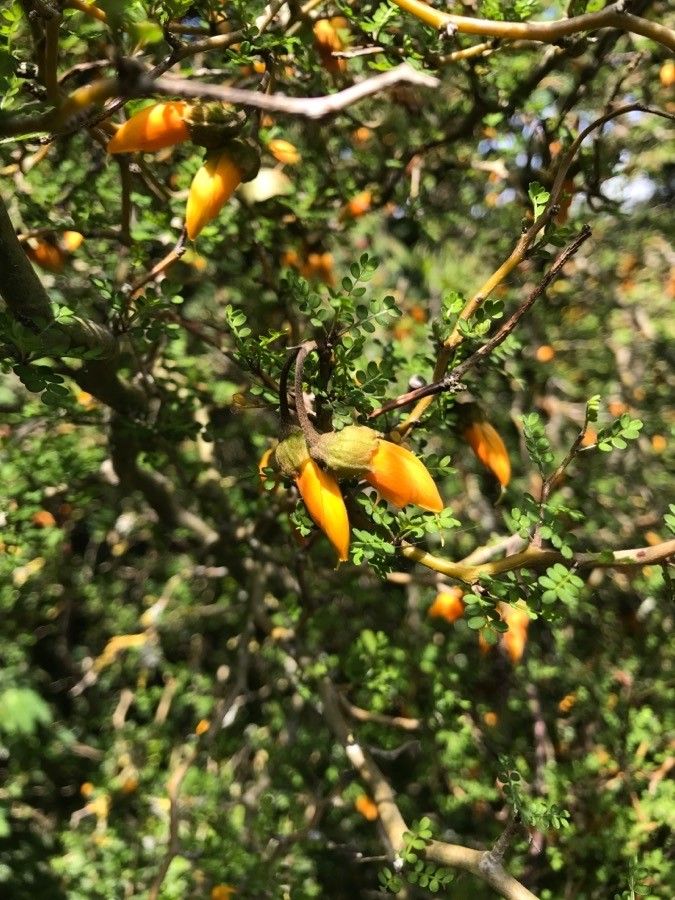
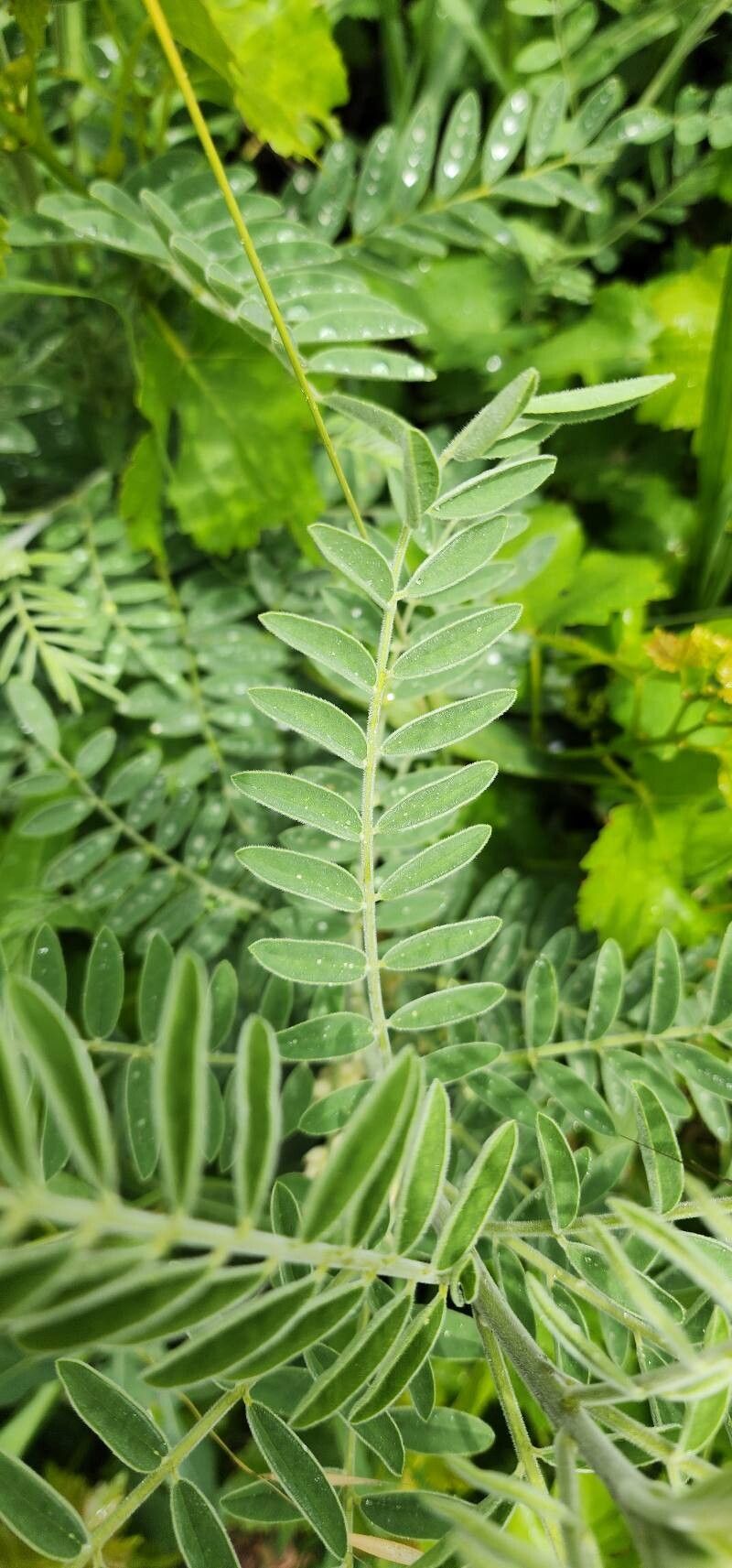
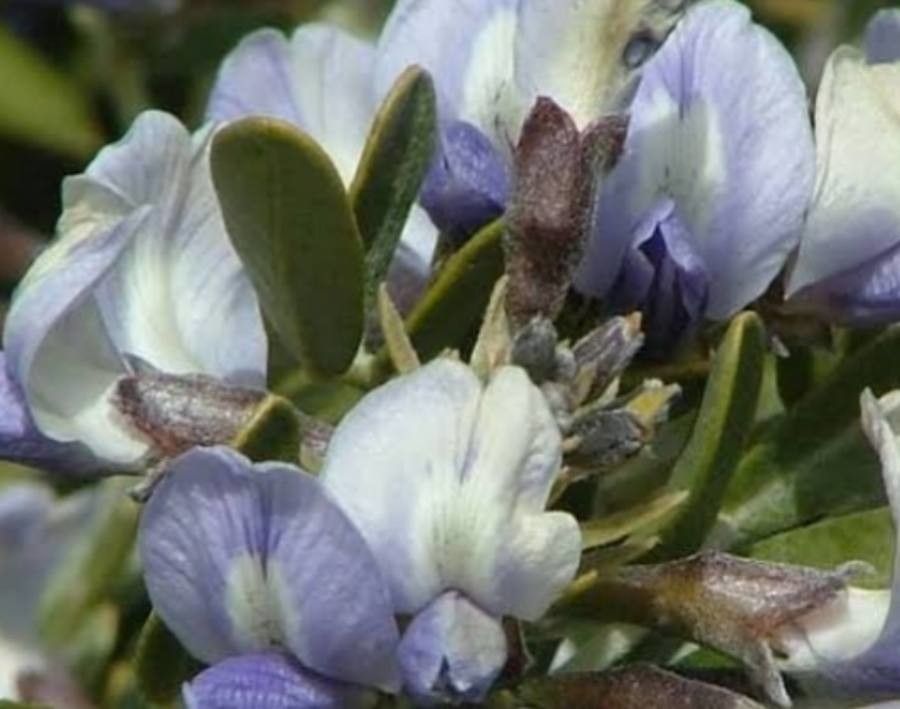
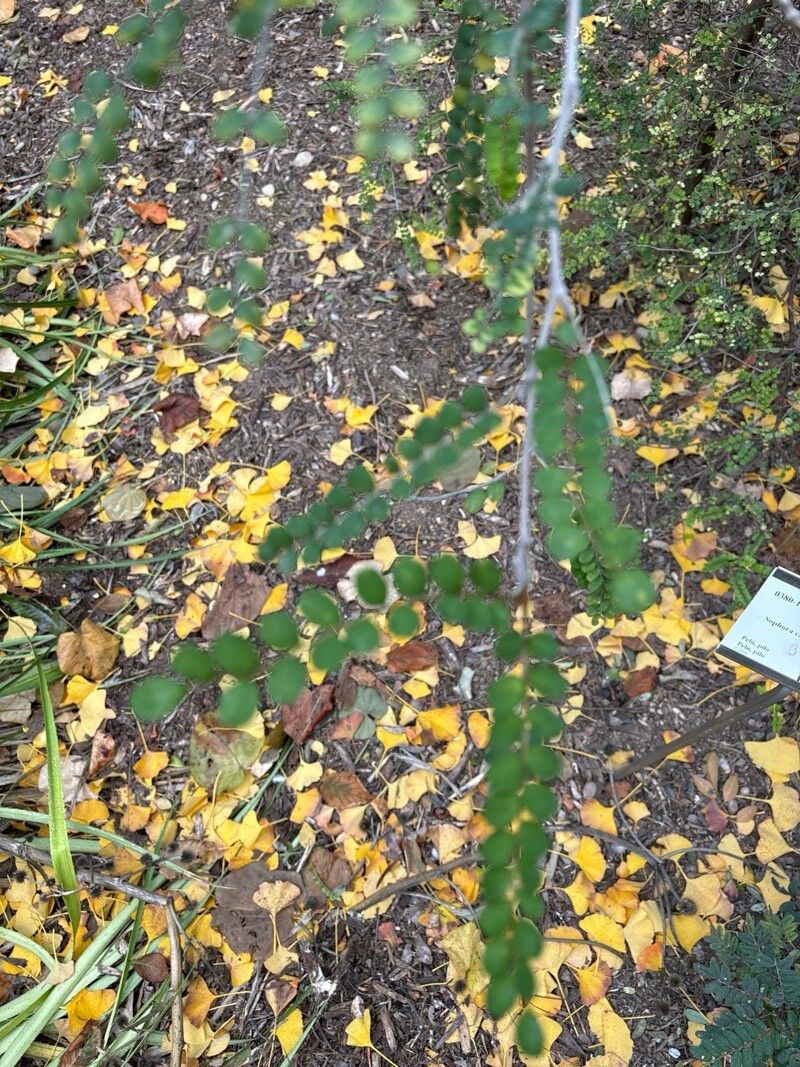
Sophora prostrata, commonly known as the Chinese scholar tree or dwarf sophora, is a small shrub or tree in the Fabaceae family. Native to China and Japan, it can grow up to 1.5 meters tall. The plant has a spreading habit with a dense crown of dark green, pinnate leaves, each comprising 7-9 leaflets. In late spring or early summer, the Chinese scholar tree produces small yellow flowers, which are followed by brown seed pods containing multiple seeds. The plant thrives in well-drained soil with full sun exposure, though it can also tolerate partial shade. Sophora prostrata boasts several medicinal properties and is used in traditional Chinese medicine to treat various ailments, including fever, coughs, asthma, and skin diseases. Its anti-inflammatory properties are attributed to the presence of flavonoids. This plant is also popular in landscaping due to its attractive foliage and flowers. It can be grown as an ornamental shrub or pruned into a small tree form by trimming its lower branches. Overall, Sophora prostrata is an appealing ornamental plant with medicinal benefits, making it an excellent addition for any garden enthusiast seeking both beauty and functionality in their plants.
Prostrate kowhai is resistant to disease and is generally not susceptible to illnesses. Regarding care, this plant is fairly low-maintenance. When grown outdoors, it needs little watering and larger specimens typically do not require pruning. Smaller plants, however, should be pruned after they have finished flowering. Prostrate kowhai is suitable for anyone with an outdoor area, such as a garden or deck, and does not require extensive care experience.
How to keep Sophora Prostrata.
Light
Prostrate kowhai does best in locations similar to its native habitats where strong sunlight predominates. It can, however, tolerate moderately bright conditions. Too little light may lead to reduced growth and a weakened plant, while excessive sunlight can cause stress and may burn its leaves.
Water
Prostrate kowhai, a plant native to dry regions, is drought-tolerant and thrives with watering every two weeks. It is perfect for outdoor gardens in arid climates because it prefers well-draining soil to avoid waterlogging. This plant flourishes in areas that experience occasional rainfall.
Temperature
Prostrate kowhai is highly adaptable to a wide range of climate conditions, from very hot summers to cold winters. Still, it has a preferred temperature range for healthy growth. If temperatures become too high, the plant is susceptible to heat and humidity stress, which can lead to its death. In locations where temperatures approach the lower limit of its cold tolerance, providing insulation to protect the plant is important.
Fertilizer
Timing is vital for fertilizing Prostrate kowhai. Apply fertilizer in early spring and continue monthly until early summer. Fertilizer encourages attractive blooms and supplies energy during both dormant periods and active growth phases.
Pruning
Prostrate kowhai benefits from winter pruning to shape its growth and improve air circulation. Each year, remove up to one-third of the old growth to encourage new shoots. This practice helps maintain the plant's health and enhances its appearance.
Pot & Repot
To ensure optimal growth for your prostrate kowhai, repot it every 2 to 3 years during the spring. Choose a pot that is slightly larger than the current one to provide adequate root support. After repotting, place the plant in a location with bright light and maintain consistent watering. Use well-draining soil to prevent root rot and keep your prostrate kowhai vibrant.
Botanical profile.
- Plant Type
- Shrub
- Life Cycle
- Perennial
- Genus
- Sophora
- Family
- Fabaceae
- Hardiness Zone
- 7-10
- Mature Height
- 1.52 m
- Mature Spread
- 1.22 m
- Leaf Color
- Green
- Leaf Type
- Evergreen
- Flower Color
- Yellow
- Flower Size
- 2.54 cm
- Bloom Time
- Mid spring, Late spring
- Planting Time
- Spring, Summer
- Harvest Time
- Summer
- Native Area
- New Zealand
Other names.
Reader questions.
How should I water my Prostrate kowhai plant?
To water your Prostrate kowhai, you can use various common watering tools like watering cans, hoses, or even cups. It's important to apply the water directly to the soil, making sure to moisten all areas equally to provide water to the entire root system. Using filtered water is recommended to avoid harmful particles that may be present in tap water. Additionally, it's beneficial to use water that is at or slightly above room temperature as extreme temperatures can shock the plant. However, the Prostrate kowhai generally responds well to any type of water.
Why do I have to put fertilizer on my Prostrate kowhai?
No matter which kind of Prostrate kowhai you have, regularly fertilizing it will improve its overall health. Providing the right nutrients will promote stronger growth and make your Prostrate kowhai more resistant to difficult conditions, while also enhancing its ability to defend against diseases and pests. A key aspect of its beauty is its foliage, so it's important to ensure its preservation. To achieve this, follow a consistent fertilization schedule tailored to your Prostrate kowhai, which will result in vibrant, lush leaves.
What are the sunlight requirements for Prostrate Kowhai?
Prostrate Kowhai requires full sun, which is above 6 hours of sunlight daily, to thrive properly. However, it can also tolerate partial sun, receiving about 3-6 hours of sunlight a day. It's important to observe the movement of sunlight through your garden to choose the best spots that provide a balance of light and shade for your plants, ensuring their growth and happiness.
What is Prostrate Kowhai?
Prostrate Kowhai, known botanically as Sophora prostrata, is a plant species without further provided details. The provided information does not include specifics about the plant's essentials, such as care, growth habits, or common uses, nor does it mention any symptoms related to the plant.
What should I do if I give my Prostrate kowhai too much water or too little water?
Outdoor plants, especially newly planted ones or seedlings, are prone to lack of watering. It's important to water them regularly for a few months until the roots are established. Prostrate kowhai plants rely on rain once their roots are established. When planting Prostrate kowhai in pots, be careful not to overwater them. If you accidentally overwater, take immediate action to rectify the situation. Stop watering the plant and remove it from the pot to check its roots. If there is no root rot, you can put the plant back in the pot. If there are signs of root rot, trim the affected roots and apply fungicide. Repot the Prostrate kowhai in well-draining soil. If the Prostrate kowhai is underwatered, simply water it more frequently. Underwatering is easily fixed and you'll notice the leaves drooping and drying out, but they will regain their fullness after sufficient watering. Adjust the watering frequency as soon as you notice underwatering.
When should I put fertilizer on my Prostrate kowhai plant?
To keep your Prostrate kowhai healthy and prepared for different seasons, it's important to fertilize it at specific times. The first time you should fertilize is in late winter or early spring, as this provides essential nutrients for growth when the weather becomes warmer. If you live in a warm climate region, an additional fertilization in early fall is recommended. This not only adds nutrients for the following growing season but also helps the kowhai become more resilient to winter cold and prevents foliage damage. Fertilizing earlier will ensure the new branches have sufficient time to grow strong enough to withstand winter.
What should I know about providing the right light conditions for Prostrate Kowhai?
Prostrate Kowhai thrives best in conditions that emulate its natural habitat, which means it needs abundant sunlight. While it does well in full sun, it can manage in moderately sunlit environments. Be cautious, as insufficient sunlight can lead to stunted growth and weakened plants, whereas too much sunlight can stress the plant and potentially scorch its leaves. For indoor plants, artificial lighting can be a vital alternative when natural light is lacking, especially in winter or less sunny spaces. LED lights are recommended, with full sun plants needing 30-50W/sq ft, partial sun plants requiring 20-30W/sq ft, and full shade plants needing 10-20W/sq ft of artificial light.
How often do I need to water my Prostrate kowhai?
Most outdoor plants can grow well with rainfall. However, if your area doesn't get much rain, you'll need to water your plants every 2 weeks in the spring and fall, and more often in the summer. In the winter, when plants grow slower and need less water, you can reduce the watering amounts and frequency. Sometimes, you may not need to water at all during the winter. If your Prostrate kowhai plant is young or newly planted, it will need more frequent watering to help it establish and grow into a resilient and drought-tolerant plant. For potted Prostrate kowhai plants, there are two main ways to determine watering frequency. One way is to follow a set schedule, such as watering once a week or every other week. However, this approach may not always work since it doesn't consider the specific conditions your plant is growing in. The other way is to water based on soil moisture. Ideally, you should wait until the top two to four inches of soil have completely dried out before watering again. Keep in mind that during the summer, your plant will need more water than what a set schedule may provide.
When is the best time to not fertilize my Prostrate kowhai?
There are specific periods throughout the year when you should avoid fertilizing your Prostrate kowhai. Firstly, during the early and mid-winter months, your Prostrate kowhai will be in a dormant state and will not require any feeding. Additionally, it is not recommended to fertilize this plant in late spring and throughout the summer. During this time, the weather is usually hotter and drier, which increases the likelihood of a negative reaction to fertilization. To prevent any problems, it is best to stick to a fertilization schedule that only involves feeding in early spring and early fall.
What are the symptoms of improper lighting conditions for Prostrate Kowhai?
Symptoms of improper lighting for Prostrate Kowhai include small or lighter-colored new leaves, leggy or sparse growth, faster leaf drop, and slower or halted growth, denoting light deficiency. Exposure to excessive sunlight can lead to chlorosis, sunscald, leaf curling, wilting, and leaf scorching. These symptoms indicate the plant's struggle with too little or too much light, from difficulty in maintaining nutrient levels to physical damage from intense sun.
How much water does my Prostrate kowhai plant require?
To water your Prostrate kowhai, you don't always need a lot of water. If only a few inches of soil have dried since the last watering, give it about five to ten ounces of water. You can also base your water volume on soil moisture by noting how many inches of soil have dried out between waterings. If more than half of the soil has become dry, give more water until you see excess water draining from the pot's drainage holes. If the plant is in an area with plenty of rain, it may not need additional watering. When the Prostrate kowhai is young, make sure it gets 1-2 inches of rain per week. As it grows, it can survive on rainwater, but if there is no rainfall for 2-3 weeks during hot weather, give it a full watering to prevent stress.
Which kind of fertilizer is best for my Prostrate kowhai plant?
The Prostrate kowhai plant primarily requires nitrogen as its most essential nutrient, but this does not diminish the importance of phosphorus and potassium. In fact, a Prostrate kowhai plant typically benefits from a decent amount of all three nutrients. Using a balanced fertilizer, such as a 10-10-10 ratio, can be effective. However, a carefully balanced ratio of nutrients tends to promote optimal growth for Prostrate kowhai plants. Fertilizers with a slightly higher nitrogen content, like a 10-6-4 ratio, often yield good results. There are two options for fertilizing: granular fertilizers or liquid fertilizers.