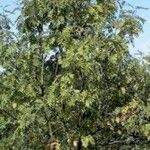
Sorbus decora
Northern Mountain Ash · Showy Mountain-ash · Dogberry
Description
Source: leafsnapSorbus decora, commonly known as the northern mountain ash, showy mountain-ash, or dogberry, is a deciduous shrub or very small tree native to northeastern North America. It occurs throughout the Laurentian Mixed Forest Province, the New England-Acadian forest region, and the eastern Canadian boreal forests.
Care Guide
💧 Water
Originating from cooler climates, the northern mountain ash requires consistent soil hydration, but it should not be waterlogged. Watering every 1-2 weeks mimics its natural environment. As an outdoor plant, it thrives when its watering schedule is adjusted seasonally: it needs less water during dormancy and more during active growth periods.
☀️ Light Full sun
Northern mountain ash does best in locations where it receives sunlight throughout the day, yet it can also grow reasonably well in moderate light. Its native habitat reflects its preference for plentiful sun. Excessive exposure can compromise its health, just as too little light can impede its growth.
What are the sunlight requirements for Northern mountain ash?
Northern mountain ash requires ample sunlight throughout the day for optimal growth, thriving in full sun conditions which entail above 6 hours of sunlight daily. It can also grow under moderate light, indicating a partial sun exposure of about 3-6 hours. The plant's origin in habitats that support a propensity for abundant sun highlights its need for significant light exposure, although both overexposure and inadequate lighting can pose challenges to its health.
How does artificial lighting support indoor Northern mountain ash plants?
Indoor Northern mountain ash plants benefit significantly from artificial lighting, especially when natural sunlight is insufficient, such as during winter or in less sunny spaces. Artificial lighting promotes faster, healthier growth by providing the specific wavelengths of light that plants need. For full sun plants, 30-50W/sq ft of artificial light is recommended; partial sun plants require 20-30W/sq ft, and full shade plants need 10-20W/sq ft. It's vital to place the artificial light source 12-36 inches above the plant and mimic natural daytime hours, with most plants necessitating 8-12 hours of light per day.
What are the symptoms of light deficiency or overexposure in Northern mountain ash?
Northern mountain ash exposed to suboptimal lighting may exhibit symptoms such as smaller new leaves, leggy or sparse growth, faster leaf drop, slower or halted new growth, and lighter-colored or yellowing leaves (chlorosis). Overexposure to sunlight can lead to sunscald, leaf curling, wilting, leaf scorching, and even damage to plant tissue. Identifying these symptoms early is crucial for adjusting the lighting conditions to support the plant's health.
What solutions can address light-related issues for indoor and outdoor Northern mountain ash plants?
To combat insufficient sunlight for indoor plants, gradually increase exposure to natural light or use artificial lighting, aiming for at least 6 hours of direct sunlight daily or 8 hours of artificial light. Positioning plants near south-facing windows and keeping curtains open during the day can help. For outdoor plants, incrementally moving them to sunnier spots each week helps them adapt without experiencing sunburn. Pruning obstructions and transplanting smaller plants to sunnier locations with good drainage are effective strategies for optimizing light exposure. It's important to note that parts of the plant already affected may not recover, but new growth should be healthy with improved lighting.
🌡️ Temperature 0–25°C
Northern mountain ash originates in temperate regions and favors a cooler climate, with temperatures ranging from 32 to 77°F (0 to 25℃). During warmer seasons, provide shade or a cool environment.
What is the native climate for Northern mountain ash?
Northern mountain ash, botanically known as Sorbus decora, is native to temperate regions and thrives in a cooler climate. It prefers temperatures ranging from 32 to 77°F (0 to 25°C). During the warmer seasons, it is beneficial to provide the plant with shade or relocate it to cool environments to ensure its health and growth.
How does Northern mountain ash handle cold weather?
Northern mountain ash is highly tolerant of cold weather and does not require special frost protection measures during winter. However, to prepare it for cold weather, it is advisable to water the plant generously before the first freeze of autumn. This is to ensure that the soil remains moist when it enters a frozen state, helping to prevent drought and water scarcity for the plant during the winter and early spring.
What should be done if Northern mountain ash experiences very low temperatures?
If the winter temperature drops below -35°C, Northern mountain ash is extremely cold-tolerant and typically doesn't show signs of distress during the winter. However, branches may become brittle and dry by spring, failing to produce new shoots. In such cases, it's recommended to prune away any dead branches that have failed to produce new leaves come spring.
How does Northern mountain ash respond to high temperatures?
Northern mountain ash has a low tolerance for high temperatures. Should the temperature rise above 25°C, the plant may start to lose its leaves significantly, and in extreme cases, it could wither and die. To manage this, trim away any sunburned and dried parts of the plant. It's also helpful to move the plant to a shaded location or use a shade cloth to protect it from the midday and afternoon sun. To ensure the soil remains moist, water the plant during the morning and evening.
💨 Humidity
🪴 Soil 5-7
🌱 Fertilizer
Timing is important when fertilizing Northern mountain ash. Apply fertilizer in early spring and continue once a month until early summer. Fertilizer promotes attractive blooms and supplies energy during both dormant and active growth phases.
🪴 Pot & Repot
✂️ Pruning
The northern mountain ash is known for its bright red fruit and vibrant autumn leaves. To help the tree thrive, it's beneficial to prune it in early spring. Start by removing any dead wood and branches that cross each other to improve airflow. Thinning the crown allows more light to reach the interior of the tree, which helps maintain its shape and increases berry production. For the pruning process, make sure to use clean, sharp tools to prevent the spread of disease.
🌿 Propagating
🐛 Diseases & pets
☠️ Toxicity
Characteristics
- Plant Type
- Tree, Shrub
- Life Cycle
- Perennial
- Genus
- Sorbus
- Family
- Rosaceae
- Hardiness Zone
- 3-6
- Mature Height
- 6.1 m to 9.14 m
- Mature Spread
- 4.88 m
- Leaf Color
- Green, Blue, Yellow
- Leaf Type
- Deciduous
- Flower Color
- White
- Flower Size
- 0.51 cm to 0.76 cm
- Bloom Time
- Mid spring, Late spring
- Planting Time
- Spring, Summer
- Harvest Time
- Late summer, Early fall, Mid fall
- Native Area
- Denmark