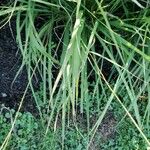
Sorghastrum nutans
Wood grass · Yellow Indian grass · Indian grass · Bushy bluestem · Indian Woodgrass
Description
Source: leafsnapSorghastrum nutans, commonly known as Indiangrass, is a warm-season perennial grass native to North America. Typically reaching heights of 3-6 feet, it features long, narrow leaves that are bluish-green in color. In late summer and early fall, the plant produces large panicles of golden-brown flowers. Indiangrass is a vital component of prairie ecosystems, offering food and habitat for various wildlife species. Additionally, it serves several practical purposes for humans, such as providing forage for livestock and aiding in erosion control on steep slopes. Beyond its ecological benefits, Indiangrass has been utilized in traditional medicine by Native American tribes to treat ailments including fever, coughs, and sore throats. Overall, Sorghastrum nutans is an important plant species, valued for both its ecological significance and practical applications.
🌳 Yellow indiangrass is more than an attractive feature of the prairie; it is important for ecosystem recovery and for supporting wildlife. Its large seed heads unexpectedly provide a significant food source for birds and act as forage for ungulates that live in the grassland biome. While these functions may seem evident, its capacity for restoring disturbed sites is frequently ignored. With a strong root system, yellow indiangrass can be essential in reclamation efforts, where its use can help stabilize and enrich the soil.
Care Guide
💧 Water Every 7 days
Yellow indiangrass is a drought-tolerant plant that needs minimal watering once it is established. However, during its active growth phase, it benefits from being watered twice a week to simulate natural rainfall patterns. Its deep root system allows it to access moisture during dry periods, making it an excellent choice as an outdoor herbaceous perennial.
What should I do if I give my Yellow indiangrass too much water or not enough water?
Proper watering is crucial for the successful growth of this beautiful ornamental grass. In the ground, watering issues can be resolved, but in a container, too much or too little water can quickly kill Yellow indiangrass. Insufficient watering can cause the grass to stop growing, with symptoms like drooping leaves, weak seed head production, and browned leaves. On the other hand, overwatering can lead to yellow leaves with brown tips. If you suspect watering problems, first determine if the grass is getting too much or too little water. If it's being overwatered, stop watering it immediately and allow the soil to dry out. Once new growth appears, test the soil moisture and decide if more water is needed. For Yellow indiangrass receiving inadequate water, simply give it a deep drink and observe if it perks up. It's important to note that longer, deeper watering is preferable to frequent and shallow watering. This encourages the grass to grow deep roots, making it more resistant to drought and less susceptible to watering-related issues.
How often do I need to water my Yellow indiangrass?
The watering needs of Yellow indiangrass depend on where it is planted. In general, watering once a week is recommended. In hot climates, watering once or twice a week in the summer may be necessary. In moderate climates, watering once every seven days or more may be enough. Grass in containers usually need more frequent watering than those in the ground. However, the location also matters, as shaded grasses require less watering than in-ground grasses. Yellow indiangrass should only be watered when the soil is dry. Some signs to look out for are dry soil when you press your finger a couple of inches into it, or a light weight of the potted grass indicating lack of water. The blades of the grass may also appear folded and thinner than usual when the roots lack sufficient water. Despite its drought tolerance, regular, deep waterings will result in a beautiful color. In the wild, Yellow indiangrass grows in open scrubland, subject to extreme heat, bright sun, and intermittent rain. While it is drought resistant, it still requires care and attention. Consistent water is recommended for best results. When first planted, Yellow indiangrass needs more frequent watering until it establishes deep roots. For potted grass, the soil tends to dry out quickly, especially if in direct sun for most of the day. Testing the soil every 3 to 4 days and watering when it feels dry is advisable. Yellow indiangrass in the ground generally needs less watering, but this depends on the soil type. Clay soil may feel dry at the surface while retaining moisture below, while sandy soils that drain quickly will require more frequent watering.
What should I watch out for when I water my Yellow Indiangrass in different seasons, climates, or during different stages of growth?
One way to gauge if you are watering enough is to observe the rate of growth of your grasses. For example, if your Yellow indiangrass typically doubles in size during the hottest months of the year but is not growing vigorously despite the hot weather, you may need to adjust your watering schedule. In the winter, you can likely water once a month, but it is still advisable to check the soil moisture by touching it. During the growth cycle in warm months, the grass will require more water than usual, whereas during winter and cooler months, the water demand will be significantly lower. It is crucial to remember that the soil for Yellow indiangrass should always be allowed to completely dry out before watering again.
☀️ Light Full sun
Yellow indiangrass does best when exposed to abundant sunlight throughout the day. While it can cope with lower light levels for extended periods, ample sun greatly encourages healthy growth. However, both excessive and insufficient light can impede its development.
What are the sunlight requirements for Yellow Indiangrass (Sorghastrum nutans)?
Yellow Indiangrass thrives in environments where it can receive an ample amount of sunlight throughout the day, with a preference for full sun, which is defined as above 6 hours of sunlight daily. It can also tolerate partial sun, meaning about 3-6 hours of sunlight each day. It's essential to observe the way sunlight moves through your garden to find spots that provide a balance of light and shade suitable for the plant, ensuring its growth and health.
How does artificial lighting support Yellow Indiangrass growth indoors?
When natural sunlight is insufficient, especially during the winter or in less sunny locations, artificial lighting can significantly support Yellow Indiangrass growth. Opt for LED lights as they offer customizable wavelengths needed by plants. Full sun plants require 30-50W/sq ft, partial sun plants need 20-30W/sq ft, and full shade plants benefit from 10-20W/sq ft of artificial light. The light source should be placed 12-36 inches above the plant to mimic natural sunlight, and the duration should replicate natural daylight hours, usually around 8-12 hours per day, ensuring optimal growth and health of the plant indoors.
What are the symptoms of insufficient or excessive light exposure in Yellow Indiangrass?
Symptoms of light deficiencies include smaller new leaves, leggy or sparse growth, faster leaf drop, slower or halted growth, and paler new leaves. On the other hand, excessive light can cause chlorosis (leaves turning yellow), sunscald (damaged leaves or stems), leaf curling (to minimize water loss), wilting (loss of turgor pressure), and leaf scorching (brown, dry edges on leaves). These symptoms indicate that the Yellow Indiangrass is not in an optimal light environment for its growth.
What are the recommended solutions for Yellow Indiangrass experiencing insufficient or excessive sunlight?
For indoor plants, adjust their location gradually each week until they receive at least 6 hours of direct sunlight daily, utilizing a south-facing window and keeping curtains open. If moving the plant isn't feasible, consider artificial lighting, keeping a lamp on for a minimum 8 hours daily or investing in professional grow lights. Outdoors, find the optimal sunlight spot by adapting the plant's location gradually to avoid sunburn. If sunlight is blocked by obstructions like trees, consider pruning to let sunlight through. For smaller plants, transplanting during the dormant period (late winter or early spring) to a location with ample sunlight and good drainage may be necessary. Note that while parts of the plant that suffered due to poor light may not recover, new growth should be healthy once light conditions improve.
🌡️ Temperature 5–35°C
The yellow indiangrass thrives in temperatures between 41 and 95 ℉ (5 to 35 ℃). It comes from areas that experience warm summers and cool winters. In colder months, guard the plant against frost by bringing it indoors or covering it with a protective layer. In warmer months, supply ample water to help the plant endure higher temperatures.
What are the ideal temperature conditions for Yellow Indiangrass?
Yellow indiangrass (Sorghastrum nutans) thrives in temperature ranges from 41 to 95°F (5 to 35°C), enjoying warm summers and cool winters. It exhibits strong cold resistance, so special frost protection measures are generally not necessary. However, in extreme cold where temperatures are expected to drop below -30°C, it's important to protect the plant by covering it with materials such as soil or straw. Additionally, to prepare for winter, it's recommended to water the plant abundantly before the first freeze, ensuring the soil stays moist and protecting the plant from drought and water scarcity during the colder months.
How should Yellow Indiangrass be cared for in low temperatures?
Yellow indiangrass is cold-tolerant and prefers temperatures above 5°C, requiring protection when temperatures fall below -25°C. In extreme cold below -30°C, the plant may not show immediate changes, but you could see a decrease or absence of sprouting in spring. If this happens, it is suggested to remove any parts of the plant that have failed to sprout as a solution to encourage new growth.
What should be done if Yellow Indiangrass is exposed to high temperatures?
During summer, it's advisable to keep Yellow indiangrass below 35°C. Exposure to temperatures above 38°C can cause leaves to lighten in color, curl, become prone to sunburn, and in severe cases, the entire plant may wilt and dry out. In such situations, trim away the sunburned and dried-up parts of the plant. Move the plant to a shaded location or use a shade cloth to protect it from midday and afternoon sun. Ensure the soil remains moist by watering in the morning and evening.
💨 Humidity dry (<40%)
This plant prefers dry conditions, so don't mist it. However, watering it less often can also thrive in higher humidity.
🪴 Soil 5-7
🌱 Fertilizer
Yellow indiangrass needs additional nutrients to encourage healthy new growth. In spring, putting compost around the base of the plant can effectively supply the nutrition it requires. Fertilizing helps support vigorous growth and improves the plant's resistance to diseases and pests.
Why should I add fertilizer to my Yellow indiangrass?
Fertilizing Yellow indiangrass is important because it provides extra nutrients for healthy new growth. These nutrients also support the health of existing growth and can help your plant defend against diseases and pests.
When should I fertilize my Yellow indiangrass?
To ensure the survival of Yellow indiangrass in your garden, it's important to know when to fertilize. This plant doesn't need a lot of nutrients when it's dying back, so there's no need to add more. It's generally not advisable to apply diluted fertilizer at the beginning of the growing season. Instead, consider placing mulch or compost around the base of the plant.
When is the best time to not use fertilizer on my Yellow indiangrass?
If you don't use packaged fertilizers, there's no need to worry about when to stop feeding Yellow indiangrass. To ensure its happiness all year round, simply apply a layer of compost or mulch in the spring. Don't stress about mulching or composting during the plant's dormant period in winter.
What fertilizer should I use for my Yellow indiangrass?
If you have yellow indiangrass in your garden, you don't have to hurry to buy fertilizer. This plant doesn't require extra nutrients. Instead, you can simply add a layer of compost in the spring, which will provide the necessary nutrients. Additionally, if you mulch your garden every year, the bark will help keep your plant well-nourished and content.
How can I give nutrients to my Yellow indiangrass?
For Yellow indiangrass, the steps are the same whether you are using mulch or compost. First, put down a layer of the material, making sure it covers the plant's base. If you want to use both mediums, reduce the amount of compost. Adding a layer of mulch has two purposes - it helps the soil retain moisture and it also feeds your plant.
🪴 Pot & Repot
✂️ Pruning
This tall perennial grass showcases vibrant yellow plumes. To maintain its health and prevent crowding, prune yellow Indiangrass in early spring by cutting old stems close to the ground. Avoid trimming it late in the season, as this can harm developing stems and expose them to winter damage. Taking these steps will ensure robust growth and enhance its ornamental value.
🌿 Propagating
🐛 Diseases & pets
☠️ Toxicity
Sorghastrum nutans, Indian grass, are generally non-toxic and may be a good source of protein and vitamin A once its leaves become green. However, it may not be easily digestible and cause gastrointestinal upset.
Characteristics
- Plant Type
- Grass
- Life Cycle
- Perennial
- Genus
- Sorghastrum
- Family
- Poaceae
- Hardiness Zone
- 4-9
- Mature Height
- 1.52 m to 2.13 m
- Mature Spread
- 30 cm to 61 cm
- Leaf Color
- Green, Blue
- Leaf Type
- Deciduous
- Flower Color
- Gold
- Flower Size
- 15.24 cm
- Bloom Time
- Mid summer
- Planting Time
- Spring
- Harvest Time
- Mid summer, Late summer, Early fall
- Native Area
- Honduras, Mexico, Bolivia, Georgia, Brazil, Ecuador