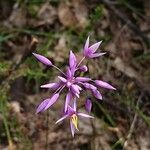
Sowerbaea laxiflora
Purple Tassels
Care Guide
💧 Water
☀️ Light Partial sun
Purple Tassels originates from habitats like forest understories and rocky areas, where it occurs in natural shade. It favors partial sun but can tolerate both full sun and full shade, illustrating its versatile and hardy nature.
🌡️ Temperature 20–37.8°C
Purple Tassels can tolerate a wide range of temperatures, but its distribution may still be restricted by different combinations of moisture and heat. It does best in warm summer climates with sufficient rainfall or regular watering. Long periods of cloudy, rainy weather or prolonged high temperatures can increase the chance of Purple Tassels dying. In winter, adequate protection from cold can improve the plant's survival rate.
💨 Humidity
🪴 Soil 6-7
🌱 Fertilizer
The best time to fertilize a Purple Tassels is in early spring, as it emerges from dormancy and starts active growth. Fertilization supplies essential nutrients for healthy growth. Although Purple Tassels has relatively low fertilizer requirements, annual feeding can improve its survival and encourage better, longer-lasting flowers.
🪴 Pot & Repot
✂️ Pruning
For optimal growth, Purple Tassels benefit from pruning in early spring. This involves trimming away spent blooms and removing dead stems. Such maintenance improves air circulation, encourages flowering, and prevents legginess. As a result, the plants experience robust growth and an extended blooming period, creating a vibrant seasonal display.
🌿 Propagating
🐛 Diseases & pets
☠️ Toxicity
Characteristics
- Plant Type
- Herb
- Life Cycle
- Perennial
- Genus
- Sowerbaea
- Family
- Asparagaceae
- Hardiness Zone
- 9-11
- Mature Height
- 30 cm to 61 cm
- Mature Spread
- 20 cm to 40 cm
- Leaf Color
- Dark Green
- Leaf Type
- Evergreen
- Flower Color
- Lavender, Pink
- Flower Size
- 1.02 cm to 1.52 cm
- Bloom Time
- Mid spring, Late spring
- Planting Time
- Spring, Summer, Autumn
- Harvest Time
- Early summer, Mid summer