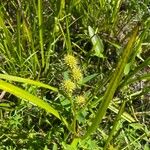
Sparganium americanum
American Burr-Reed · American bur-reed · American Burreed · Nuttall's Burrweed · Three-square Burreed
Description
Source: leafsnapSparganium americanum, American bur-reed, is a perennial plant found in the United States of America and Canada. Though this species resembles a grass, it is a type of bur-reed. This species is important for conservation purposes because it has the ability to remove nitrogen and phosphorus runoff from water, like many other wetland species. By doing this it protects waterways from excess nitrogen which can cause eutrophication. This increased nitrogen is especially a problem during the farmers’ growing season. During this same time frame the S. americanum is growing and taking up nitrogen.
Care Guide
💧 Water
American bur-reed thrives in wetland habitats, where it prefers consistently moist conditions and can tolerate brief periods of flooding. To replicate its natural environment, weekly watering is essential. Maintaining adequate moisture during the growing season is crucial for optimal growth, as this plant relies on damp soil to flourish.
☀️ Light Full sun
American bur-reed performs best in full sun and can tolerate sites with partial sun. Excessive shade will limit its growth. It is native to habitats that are typically sunny. Both too much and too little light can impede its healthy development.
What are the sunlight requirements for American bur-reed?
American bur-reed thrives best when it's fully exposed to the sun's rays but can also manage well in moderately sunny areas. It originates from environments where it can enjoy plenty of sunlight. The plant requires more than 6 hours of sunlight for full sun conditions and about 3-6 hours for partial sun. Insufficient or excessive exposure to sunlight could impede its growth. It's crucial to observe the movement of sunlight through your garden to find the ideal spots that offer a good balance of light and shade, ensuring your plants remain healthy and happy.
How does artificial lighting support American bur-reed's growth indoors?
Indoor plants like American bur-reed, especially when natural sunlight is lacking, benefit significantly from adequate artificial lighting, ensuring optimal growth. In conditions such as winter or less sunny spaces where natural light is insufficient, artificial lights play a crucial role. They can promote faster and healthier growth by providing essential wavelengths of light. Full sun plants typically need 30-50W/sq ft of artificial light, partial sun plants require 20-30W/sq ft, and full shade plants need about 10-20W/sq ft. The right type of artificial light, such as LED, can be customized to suit the specific needs of your plant. The light source should be placed 12-36 inches above the plant, mimicking natural sunlight, and it's recommended to keep the lights on for 8-12 hours per day to simulate natural daylight hours.
What are the symptoms of improper sunlight exposure in American bur-reed?
When American bur-reed doesn't get adequate sunlight, it may display various symptoms indicative of light deficiency. These include smaller new leaves compared to previous ones, leggy or sparse growth due to increased spacing between leaves or stems, and an accelerated leaf drop to conserve resources. Poor light conditions can also halt the plant's leaf production entirely, leading to delayed or stopped growth. New leaves may appear lighter in color or develop irregular patterns, indicating a lack of chlorophyll and essential nutrients. Additionally, excessive sunlight exposure can cause chlorosis, sunscald, leaf curling, wilting, and leaf scorching, all of which negatively affect the plant's ability to photosynthesize and maintain overall health.
How can I improve American bur-reed's exposure to sunlight?
To enhance your American bur-reed's sunlight exposure, consider these solutions: For indoor plants, gradually move them to sunnier locations each week until they receive at least 6 hours of direct sunlight daily. Utilize a south-facing window and keep curtains open to maximize sunlight exposure. If the plant is large or not easily movable, use artificial light such as desk or ceiling lamps for at least 8 hours daily, or invest in professional plant grow lights. Outdoors, move your plants to the sunniest spot gradually to prevent sunburn. If trees are blocking sunlight, prune them to allow more light through. For smaller plants, you might opt for transplanting during their dormant period, typically in late winter or early spring, to a location with ample sunlight and good drainage. Note, parts of the plant that suffered from insufficient sunlight may not recover, but new growth should be healthy after increasing light exposure.
🌡️ Temperature 0–35°C
American bur-reed is usually found in its native habitat where temperatures range from 32 to 95 °F (0 to 35 ℃). It favors this temperate climate, so monitoring and adjusting temperature settings through the seasons is important.
What is the ideal temperature range for American bur-reed?
American bur-reed thrives in a temperate climate, with an ideal temperature range from 32 to 95 °F (0 to 35 °C). It has strong cold resistance and doesn’t usually require special frost protection measures during winter. However, to prepare for winter, especially when temperatures are expected to drop below -35°C, it's essential to protect the plant using materials such as soil or straw and ensure the soil is moist before the first freeze.
How does low temperature affect American bur-reed and what are the solutions?
American bur-reed is cold-tolerant but performs best when the temperature remains above 0°C. It should ideally be kept above -30°C during winter. Exposure to temperatures below -35°C might not show immediate damage during winter, but can lead to decreased sprouting or a complete lack of sprouting in spring. To mitigate this, remove any parts of the plant that fail to sprout in spring.
How does high temperature affect American bur-reed and what are the solutions?
In the summer, it is important to ensure that the temperature does not exceed 35°C for American bur-reed. Temperatures above 38°C can cause the leaves to lighten in color, become prone to curling, suffer from sunburn, and, in severe cases, cause the entire plant to wilt and dry out. To counteract damage from high temperatures, trim away sunburned and dried parts of the plant. Move the plant to a shaded location or use a shade cloth to protect it from midday and afternoon sun. Additionally, water the plant in the morning and evening to keep the soil moist.
💨 Humidity
🪴 Soil
🌱 Fertilizer
🪴 Pot & Repot
✂️ Pruning
The American bur-reed, an aquatic perennial plant, is characterized by its stiff stems and spherical seed heads. To promote growth and improve air circulation, you should prune it from early to late spring. This involves removing dead stems and thinning out crowded areas. Be sure to use clean tools to prevent the spread of disease. Regular pruning also helps manage its spread in wetland areas.
🌿 Propagating
🐛 Diseases & pets
☠️ Toxicity
Characteristics
- Plant Type
- Herb
- Life Cycle
- Perennial
- Genus
- Sparganium
- Family
- Typhaceae
- Hardiness Zone
- 3-9
- Mature Height
- 61 cm to 91 cm
- Mature Spread
- 30 cm to 61 cm
- Leaf Color
- Green
- Leaf Type
- Deciduous
- Flower Color
- White, Yellow, Green
- Flower Size
- 2.54 cm
- Bloom Time
- Early summer, Mid summer
- Planting Time
- Spring, Summer, Autumn
- Harvest Time
- Late summer, Early fall, Mid fall
- Native Area
- Mexico