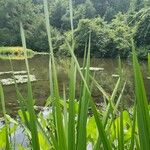
Sparganium eurycarpum
Broad-Fruit Burr-Reed · Broadfruit bur-reed · Big bur-reed · Great bur-reed · Broadfruit Burreed
Description
Source: leafsnapSparganium eurycarpum is a species of bur-reed known by the common names broadfruit bur-reed and giant bur-reed. It is native to wetlands in Eurasia and North America. It is a clonal perennial, spreading by below-ground rhizomes. The common name, bur-reed, arises from the distinctive round clusters of fruits that take the form of a mace. It can be distinguished from all other species of bur-reed by the presence of two stigmas. This species frequently occurs in areas with spring flooding, and may be emersed during periods of lower water. The buried rhizomes provide one method to survive periods of drought, fire, or ice scour. The flowers are wind pollinated, the male flower clusters being separate and more highly elevated than the female. It also produces large seeds, which can accumulate in the soil as buried reserves. It can form dense stands under the right conditions; for example, Sparganium is one of the four main vegetation types in the Ottawa River, Canada. Muskrats feed on the plant, particularly its rhizomes, while the seeds are an important food source for waterfowl.[1]
Care Guide
💧 Water
The broadfruit bur-reed thrives in wetlands, requiring consistent moisture and is highly sensitive to drought. To maintain its health, water it each week to ensure proper moisture levels. As an aquatic plant that commonly grows near ponds and streams, the broadfruit bur-reed plays a crucial role in supporting freshwater ecosystems. It provides essential habitats and helps purify the water.
How should I water my Broadfruit bur-reed plant?
When caring for the Broadfruit bur-reed plant, it is recommended to use filtered water at room temperature. Tap water may contain harmful particles, so filtered water is a better option. The plant is accustomed to a warm environment, so using cold water can be a shock to its system. It is also advisable to avoid overhead watering, as it can cause issues with the foliage. Instead, applying filtered room temperature water directly to the soil until it is completely soaked is the best method. This helps to moisten the roots and aids in their spread through the soil to absorb necessary nutrients.
What do I do if I give my Broadfruit bur-reed plant too much or too little water?
Both overwatering and underwatering can harm the health of your Broadfruit bur-reed, but overwatering is more common. When this plant gets too much water, its stems and leaves may wilt and turn yellow. Overwatering for a long time can also cause diseases like root rot, mold, and mildew, which can kill the plant. Underwatering is less common because the Broadfruit bur-reed can tolerate drought. However, it's still possible, and if it happens, the leaves may become brittle and brown. It's important to notice signs of overwatering early to prevent irreversible damage. If you see these signs, reduce watering immediately and check the soil's drainage. If the soil drains poorly, replace it with a loose, well-draining potting mix. If you notice signs of underwatering, water the plant more regularly until the signs go away.
How often should I water my Broadfruit bur-reed?
If your Broadfruit bur-reed is in a pot, the best way to check if it needs water is by sticking your finger into the soil. If the top two to three inches of soil feel dry, then it's time to water it. If you have the plant growing outdoors in the ground, you can use the same method to test the soil. If the top few inches of soil have dried out, it's time to water it. Typically, during the spring and early fall, you may need to water this plant about once a week using this method. However, in extremely hot weather, you may need to increase watering to about twice a week or more. It's worth noting that mature, well-established Broadfruit bur-reeds have a commendable ability to withstand drought.
How much water does my Broadfruit bur-reed plant need?
To properly water your Broadfruit bur-reed, make sure the top 2-3 inches of soil are dry. This plant needs a good, thorough watering, so soak the soil completely. The water you add should be enough to make excess water flow out of the pot through the drainage holes. If you don't see any excess water draining, you might not have watered enough. However, be careful not to let water accumulate in the soil, as this can harm the plant. On the other hand, if water is not draining properly from the pot, this could mean the soil doesn't drain well, which is bad for the plant's health. If the plant is outside, 1 inch of rain per week should be enough.
How do I water my Broadfruit bur-reed as it grows?
The water needs of the Broadfruit bur-reed can vary depending on its growth stages. In the first few years of its life or after transplanting, it requires more water than usual as it focuses on developing new roots for future growth. These young roots perform better with slightly more moisture. As the plant matures after a few seasons, it will require less water. Additionally, during the bloom period, the plant may need more water to support flower development.
☀️ Light Full sun
Broadfruit bur-reed is native to habitats with abundant sunlight, such as the shallow margins of ponds and lakes. It favors full sun but can also tolerate partial sun.
What are the sunlight requirements for Broadfruit bur-reed?
Broadfruit bur-reed is a perennial herbaceous plant that prefers full sun conditions, requiring above 6 hours of sunlight daily for optimal growth. It can also tolerate partial sun, which amounts to about 3-6 hours of sunlight. However, it's crucial to observe how sunlight moves through your garden to ensure your plants get a balance of light and shade, promoting their health and happiness.
How does artificial lighting support plant growth indoors?
Indoor plants, including Broadfruit bur-reed, require adequate lighting for optimal growth. When natural sunlight is insufficient, artificial lights offer a vital solution by promoting faster, healthier growth. It's recommended to use LED lights for indoor plants because they can be customized to provide specific wavelengths needed for plant growth. For plants requiring full sun, 30-50W/sq ft of artificial light is needed, 20-30W/sq ft for partial sun plants, and 10-20W/sq ft for full shade plants. The light source should be placed 12-36 inches above the plant to mimic natural sunlight and should remain on for 8-12 hours per day.
What are the common symptoms of light deficiency in Broadfruit bur-reed?
When Broadfruit bur-reed is subjected to inadequate lighting, it may exhibit symptoms such as smaller new leaves, leggy or sparse growth, faster leaf drop, slower or no new growth, lighter-colored new leaves, chlorosis, sunscald, leaf curling, wilting, and leaf scorching. These symptoms indicate the plant's struggle with the light conditions, affecting its growth and overall health.
How can I address light deficiency issues for my Broadfruit bur-reed?
To tackle light deficiency in Broadfruit bur-reed, gradually move your plants to a location with at least 6 hours of direct sunlight daily. For indoor plants, use south-facing windows and keep curtains open or employ artificial lighting like desk lamps or professional grow lights for at least 8 hours daily. For outdoor plants, gradually acclimatize them to sunnier spots to prevent sunburn. If natural light is obstructed by physical barriers like trees, consider pruning to allow more sunlight through. When necessary, transplant smaller plants during their dormant periods to better-lit areas with good drainage. Note that damaged parts of the plant may not recover, but new growth should be healthy with improved light exposure.
🌡️ Temperature 0–37.8°C
Broadfruit bur-reed occurs naturally in habitats where temperatures range from 32 to 100.4°F (0 to 38℃). The plant welcomes the arrival of each season and prefers moderate conditions. In extreme climates, consider altering temperatures to reproduce the conditions it favors.
What is the native environment for Broadfruit bur-reed?
Broadfruit bur-reed, botanically known as Sparganium eurycarpum, thrives in environments experiencing temperatures ranging from 32 to 100.4°F (0 to 38°C). This plant is adaptable to the changing seasons, favoring moderate conditions. In extreme climates, it's beneficial to adjust temperatures to align with its preferences, ensuring it experiences conditions similar to its native habitat.
Does Broadfruit bur-reed require special frost protection?
Broadfruit bur-reed exhibits strong resistance to cold temperatures, typically eliminating the need for special frost protection measures during winter. However, if temperatures are expected to plummet below -40°C, it's crucial to provide cold protection by covering the plant with soil or straw to safeguard it from extreme cold. Additionally, watering the plant abundantly before the first freeze in autumn is recommended. This ensures the soil remains moist when it freezes, preventing drought and water scarcity for the plant during the winter and early spring.
How does Broadfruit bur-reed react to low temperatures?
Broadfruit bur-reed is cold-tolerant, thriving best when temperatures stay above 0°C and should be kept above -35°C during winter. Exposure to temperatures below -40°C may not induce noticeable changes during winter, but could lead to decreased sprouting or lack of sprouting in spring. To address any issues that arise from extreme cold exposure, removing parts of the plant that have failed to sprout in spring is a suitable measure.
What should be done if Broadfruit bur-reed experiences high temperatures?
During the summer, it is ideal to keep Broadfruit bur-reed below 38°C. Temperatures exceeding 43°C can cause the leaves to lighten in color, become prone to curling, susceptible to sunburn, and in severe cases, lead to the entire plant wilting and drying. To combat such issues, trim away the sunburned and dried parts of the plant. Relocating the plant to a shaded area during midday and afternoon, or using a shade cloth, can protect it from excessive sunlight. Additionally, watering the plant in the morning and evening helps maintain soil moisture and supports its well-being during hot weather.
💨 Humidity
🪴 Soil
🌱 Fertilizer
🪴 Pot & Repot
✂️ Pruning
Broadfruit bur-reed benefits significantly from regular pruning, which is most effective when conducted between early and late spring. To promote better airflow and light penetration, trim any damaged or overcrowded stems. Pruning not only encourages blooming but also helps reduce the risk of disease. Additionally, keep an eye out for any water-related issues, as broadfruit bur-reed thrives in wetland conditions.
🌿 Propagating
🐛 Diseases & pets
☠️ Toxicity
Characteristics
- Plant Type
- Herb
- Life Cycle
- Perennial
- Genus
- Sparganium
- Family
- Typhaceae
- Hardiness Zone
- 2-11
- Mature Height
- 0.61 m to 1.83 m
- Mature Spread
- 91 cm
- Leaf Color
- Green
- Leaf Type
- Deciduous
- Flower Color
- Green
- Flower Size
- 2.03 cm to 3.30 cm
- Bloom Time
- Early summer, Mid summer
- Planting Time
- Spring, Summer, Autumn
- Harvest Time
- Late summer, Early fall, Mid fall
- Native Area
- Mexico