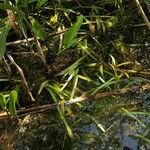
Sparganium natans
Arctic Burr-Reed · Small bur-reed · Least Bur-reed · Small Burreed · Slender Burreed
Description
Source: leafsnapSparganium natans, commonly known as floating bur-reed, is a perennial aquatic plant belonging to the family Typhaceae. Native to North America, it thrives in the shallow waters of lakes, ponds, and slow-moving streams. The plant features long, ribbon-like leaves that float on the water's surface, growing up to 3 meters in length. These dark green leaves have a glossy texture. The stem of Sparganium natans is long and slender, with small flowers arranged on spikes at its top. The flowers, which are small and inconspicuous, have greenish-yellow petals that bloom from June to August. Floating bur-reed plays a crucial role in aquatic ecosystems by providing shelter for fish, insects, birds, and other wildlife species. Additionally, it enhances water quality by absorbing excess nutrients. Indigenous peoples have used Sparganium natans for medicinal purposes for centuries, valuing its anti-inflammatory properties. Today, it remains a popular herbal remedy for ailments such as arthritis pain relief. Overall, Sparganium natans is a fascinating plant species that contributes significantly to the health of aquatic ecosystems and offers medicinal benefits. It should be used responsibly under medical supervision or the guidance of qualified herbalists or healthcare professionals specializing in natural remedies or alternative medicine practices such as Ayurveda or Traditional Chinese Medicine (TCM).
Care Guide
💧 Water Every 7 days
Least bur-reed flourishes in humid environments, such as wetlands and marshes. As an aquatic perennial herb, it requires moderate watering every one to two weeks for optimal growth. With adequate water supply, it can be cultivated both indoors and outdoors.
☀️ Light Full sun
Least bur-reed comes from habitats with abundant sunlight, such as the shallow margins of ponds and lakes. It prefers full sun but can also tolerate partial sun.
🌡️ Temperature 0–35°C
Least bur-reed can tolerate a wide range of temperatures, but its range may still be restricted by different combinations of moisture and heat. It does best in warm summer conditions with sufficient rainfall or irrigation. Extended periods of cloudy, rainy weather, as well as prolonged high temperatures, can increase the risk of Least bur-reed dying. In winter, adequate protection from cold can raise the plant's survival chances.
💨 Humidity
🪴 Soil
🌱 Fertilizer
To provide the best care for least bur-reed, fertilize once a month with a balanced fertilizer during the growing season. Use it at half strength to prevent nutrient burn. In winter, reduce the fertilization frequency. Regular feeding enhances the plant's resilience and encourages flowering. Always wear gloves and avoid direct contact with the roots when applying fertilizer. Afterward, be sure to wash your hands thoroughly.
🪴 Pot & Repot
✂️ Pruning
Least bur-reed is an aquatic perennial known for its slender leaves and round clusters of fruit. To promote healthy growth and improve water flow, prune any dead foliage from early to late spring. Thinning the plant helps enhance sunlight penetration and prevents overcrowding, which in turn benefits the overall health of the waterway.
🌿 Propagating
🐛 Diseases & pets
☠️ Toxicity
Characteristics
- Plant Type
- Herb
- Life Cycle
- Perennial
- Genus
- Sparganium
- Family
- Typhaceae
- Hardiness Zone
- 3-9
- Mature Height
- 10 cm to 61 cm
- Mature Spread
- 30 cm to 61 cm
- Leaf Color
- Green, Dark Green
- Leaf Type
- Semi-evergreen
- Flower Color
- White
- Flower Size
- 0.51 cm to 0.76 cm
- Bloom Time
- Early summer, Mid summer
- Planting Time
- Spring, Summer, Autumn, Winter
- Harvest Time
- Late summer, Early fall, Mid fall
- Native Area
- Turkey, Sweden, Austria, Slovenia, Croatia, Belarus, Russia, Germany, Iceland, Estonia, Romania, Latvia, Belgium, Netherlands, France, Bulgaria, Armenia, Poland, Greece, Ukraine, Serbia, China, Lithuania, Norway, Italy, Kazakhstan, Spain, Switzerland, Denmark, Mongolia, Finland, Ireland, United Kingdom, Hungary