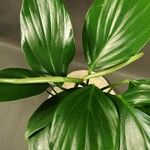
Spathiphyllum cannifolium
Spatheflower · Peace Lily
Description
Source: leafsnapSpathiphyllum cannifolium, commonly known as the Peace Lily, is a favored indoor plant native to the tropical regions of Central and South America. Belonging to the Araceae family, it is admired for its attractive foliage and stunning white flowers. The plant features long, dark green, lance-shaped leaves with pointed tips. These leaves can grow up to 30 cm in length and 5 cm in width. The white flowers, characterized by a yellow spadix at their center, can reach up to 10 cm in length. The Peace Lily thrives in bright, indirect light and moist soil conditions. While it can tolerate low light, it may not flower as abundantly under such conditions. It's crucial to avoid overwatering, as this can lead to root rot; therefore, ensure the soil is not waterlogged. In addition to its aesthetic appeal, this plant has air-purifying qualities, making it an excellent choice for indoor spaces like homes or offices where air quality may be compromised due to pollution or inadequate ventilation. Overall, Spathiphyllum cannifolium is a low-maintenance houseplant that enhances indoor beauty and freshness while offering health benefits through its air-purifying properties.
Care Guide
💧 Water Every 7 days
The peace lily thrives in tropical rainforests, where it prefers high humidity and consistently moist soil. To care for it, water the plant every 1-2 weeks, allowing the top layer of soil to dry out slightly between waterings. Additionally, misting the leaves occasionally can help replicate its humid natural habitat. This practice is especially beneficial in dry indoor conditions, as it promotes healthy, glossy leaves.
☀️ Light Partial sun
The peace lily originates from habitats such as forest understories and rocky areas, where it receives natural shade. It prefers partial sun but can adapt to both full sun and full shade, illustrating its versatile and hardy nature.
What are the sunlight requirements for a Peace Lily?
A Peace Lily (Spathiphyllum cannifolium) thrives in various lighting conditions. It requires partial sun, meaning about 3-6 hours of sunlight daily. However, it can also grow in full shade, which is defined as receiving less than 3 hours of sunlight per day. It's essential to observe how sunlight moves through your garden to find spots that offer the ideal balance of light and shade for your Peace Lily, ensuring its health and happiness.
🌡️ Temperature 20–37.8°C
Peace lily comes from tropical areas, where the weather is generally warm and humid. Consequently, it is well suited to high temperatures and humidity. It dislikes sudden shifts in temperature and prefers a steady thermal environment, so it's important to avoid temperature fluctuations indoors. It usually cannot tolerate cold conditions and requires warmer temperatures for growth. If the surrounding temperature falls too low, the plant may stop growing or even die.
💨 Humidity normal (40-60%)
This plant will thrive in moderate humidity, which is probably the level in your home. However, misting it a few times a week can be very beneficial. Make sure the room has good ventilation.
🪴 Soil 5-6
🌱 Fertilizer
Correct feeding is essential for a Peace lily's health and appearance. Feed the Peace lily in summer, applying fertilizer once a month throughout the season. The nutrients supply energy for growth and help maintain the plant's structures. Fertilizing improves the Peace lily's floral display, ensuring the best blooms.
🪴 Pot & Repot Once a year
Repot a Peace lily in spring or summer once it's warm enough, choosing a slightly larger pot with good drainage. Water thoroughly after repotting, and place it in a bright spot with indirect light. Consider adding a moss pole to support the plant as it grows.
✂️ Pruning
The peace lily is a popular houseplant known for its glossy leaves and distinctive white spathes. To keep it healthy and disease-free, it’s best to prune it in early spring. Use sterilized scissors to carefully remove any damaged leaves. Minimal maintenance during its growth phases helps improve air circulation, reduce pests, and enhance its appearance.
🌿 Propagating
🐛 Diseases & pets
☠️ Toxicity
Characteristics
- Plant Type
- Herb
- Life Cycle
- Perennial
- Genus
- Spathiphyllum
- Family
- Araceae
- Hardiness Zone
- 10-12
- Mature Height
- 61 cm to 91 cm
- Mature Spread
- 49 cm to 76 cm
- Leaf Color
- Dark Green
- Leaf Type
- Evergreen
- Flower Color
- White
- Flower Size
- 10.16 cm to 15.24 cm
- Bloom Time
- All year round
- Planting Time
- Spring, Summer
- Harvest Time
- All year round
- Native Area
- Colombia, Venezuela, Peru, Guyana, Brazil, Ecuador