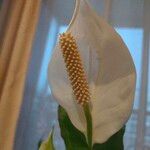
Spathiphyllum cochlearispathum
Peace lily · White flag · White peace lily
Description
Source: leafsnapSpathiphyllum cochlearispathum is a plant species in the family Araceae. It is native to southern Mexico and often cultivated. When cultivated as a houseplant, Spathiphyllum cochlearispathum is commonly called peace lily.
💡 The peace lily is an excellent indoor plant because it effectively purifies the air. Its leaves absorb toxins, mold spores, and radiation from the environment. Additionally, its flowers produce very little pollen, making it unlikely to trigger allergies.
🌳 The peace lily is well known for its capacity to clean indoor air while requiring little light, making it a common houseplant for enhancing indoor air quality. Its broad leaves absorb airborne chemicals like benzene, formaldehyde, and trichloroethylene, which are frequently present in household products. This both improves the appearance of indoor spaces and helps create a healthier atmosphere.
🎭 Harmony and prosperity
Care Guide
💧 Water Twice per week
The peace lily flourishes in the humid and consistently moist conditions found in tropical rainforests. To thrive, it needs to be watered twice a week and benefits from higher humidity levels, which improve its foliage and flowering. As a result, it is often grown indoors where moisture levels can be better controlled.
How should I water my Peace lily?
There are various ways to water your Peace lily effectively. If your plant is in a small pot indoors, you can simply take it to your kitchen sink and use the faucet to add water to the container. Hold the pot in your hands and stop watering when you see water coming out of the drainage holes. Avoid doing this in cold weather as it can harm the plant's roots. Normally, using your faucet to water the Peace lily is fine, but if your tap water has high amounts of fluorine, chlorine, or salts, consider using rainwater or lake water instead. Additionally, you can also water the Peace lily from above or directly into the soil using a watering can, hose, or whichever tool you prefer.
What should I do if I give my Peace lily too much or too little water?
If you have underwatered your Peace lily, start by giving it a good amount of water. Water the plant until excess water flows out of the drainage hole or until the soil is completely moist if you're growing it outside. If you notice that your Peace lily is getting too much water, reduce the frequency of watering. It's also important to consider the soil and container the plant is in. If they prevent proper drainage, your plant will likely be overwatered again. To fix this, transfer your plant to looser soil or a container with larger drainage holes or a more porous material. Additionally, check the location of the plant. If it's in a cramped space, moving it to a window or near a door can improve ventilation. Ensuring your plants are in a well-ventilated area can help prevent overwatering.
How frequently should I water my Peace lily?
The Peace lily doesn't need consistently moist soil. It's actually better to let the soil dry out between waterings. If you have Peace lilies in containers, you can tell when it's time to water by checking how dry the soil is. If about half of the soil in your container is dry, it's time to water. You can check by sticking your fingers or sticks into the soil or using a soil moisture meter. If you have Peace lilies growing outdoors, watering about once every other week should be sufficient, unless it has rained recently.
How much water does my Peace lily require?
To water your Peace lily, wait until the top half of the soil is dry. Then, add enough water to make the soil moist again. The amount of water needed depends on the size of your plant and container. For small Peace lilies in small to medium-sized containers, one to two cups of water may be enough. Larger plants will require more water. To check if the soil is moist enough, stick your finger or a trowel into it. You can also water until you see excess water draining from the bottom of the container.
How can I know if I'm watering my Peace lily enough?
Both overwatering and underwatering can negatively impact the health of your Peace lily, but they manifest differently. If your Peace lily is not getting enough water, it may develop yellow leaves, and the leaf margins may turn brown and brittle. On the other hand, if it is receiving too much water, you may notice yellow and brown marks on the leaves simultaneously. Overwatering can also lead to diseases like root rot, which may be visible on your plant. However, if you can identify the signs of overwatering and underwatering, you have a good chance of correcting both issues.
☀️ Light Partial sun
A peace lily does best with a moderate amount of sunlight each day, similar to the light it receives in its native forest understory. Too much sun can scorch the leaves, while too little light will often slow growth and reduce flowering. Its sunlight needs remain largely unchanged across different stages of growth.
What kind of sunlight does a Peace lily need?
To help your Peace lily thrive indoors, it requires full, indirect sunlight. This means the plant should be exposed to bright sunlight, but not from a window or other direct light source, such as a grow light. To shield it from direct sunlight, you can place a sheer curtain between the Peace lily and the window or position it behind a darker part of the window with a screen.
How do I make sure sunlight doesn't harm my new Peace lily?
If you're bringing home a Peace lily for the first time, it's a good idea to gradually introduce it to sunlight instead of immediately placing it in bright, indirect light. Take about two weeks to slowly move the plant towards sunlight, to prevent shock or leaf burn from sudden intense light. By easing it into the light, your Peace lily will have a better chance of adapting to your home environment.
How can I know if my Peace lily is getting too much light?
The Peace lily is sensitive to excessive sunlight and can get sunburned easily. In its natural habitat, it only receives mild, filtered light from tree canopies. Although it needs more light indoors to grow, too much can still be problematic. If your Peace lily is exposed to too much light, you'll see signs such as faded or washed out foliage, yellow or brown and crispy leaf tips, and excessive, weak growth.
What should I do if my Peace lily gets too much sunlight?
Plants experience sunburn differently than people. Although it may not look great, you can easily remove crispy, burnt leaves that are too damaged to recover or if over half of the leaf is affected. Alternatively, you can trim back the leaves to remove any sunburn damage and try to save them, as long as there isn't excessive discoloration. To prevent future light damage, simply move your Peace lily away from its light source.
Does the Peace lily require varying levels of light as it grows?
Peace lily requires time to acclimate to bright sunlight unlike other plants that can tolerate it immediately. Propagated cuttings should be exposed to moderate indirect light, and new leaves during the growing season should be protected to prevent sunburn since they are the most vulnerable.
🌡️ Temperature 20–37.8°C
Peace lily originates from regions with tropical-like temperatures. It prefers warmth, thriving between 68 and 100 °F (20 to 38 ℃). In colder seasons, consider increasing room temperature and avoiding draughts to maintain its health.
What temperature is best for a Peace lily?
To help your tropical plants thrive, it's best to maintain a temperature range of 75℉ to 90℉ (25-32℃). While different species can tolerate temperatures outside this range, sticking within a few degrees of these limits will ensure optimal growth. However, there are extreme temperature limits to be aware of. Anything below 50℉ (10℃) or above 95℉ (35℃) can hinder growth and cause issues with the leaves and stems. Low temperatures are particularly damaging, as even a light frost can lead to the death of your tropical plants. In fact, cellular death can occur rapidly, with some species dying within 12 to 24 hours.
Does the Peace lily need different temperatures for different stages of growth?
Peace lily does not require changes in temperature to go through different growing phases, but it is important to remain consistent. Fluctuations in temperature can slow down its growth, regardless of its current phase. Therefore, it is recommended to keep the plant in a controlled environment. The ideal temperature range to maintain is between 75℉ and 90℉ (25-32℃), with higher temperatures being more favorable. While going above 90℉ (32℃) is not ideal, as a tropical plant, it can handle it to some extent. However, temperatures dropping below 50℉ (10℃), particularly below 40℉ (5℃), will begin to cause direct damage to this heat-loving plant species.
Does the Peace lily require varying temperatures depending on the season?
Peace lilies are easy to take care of throughout the year because they do not require different temperatures for different seasons. The most important thing to remember when caring for them is to keep the environment at an optimal temperature range. That's why it's recommended to keep these plants indoors, as it allows you to control the temperature regardless of the weather outside. Light is also crucial for tropical plants like peace lilies. They prefer to have partial side-level sun exposure, which means they should receive dappled or filtered light. When growing them indoors, bright but indirect light is the best option. Too much direct sunlight can harm the plant's leaves and hinder its growth.
What temperatures should you keep your Peace lily in to keep it healthy?
Here are three tips to help you take care of your plants: 1. Keep your plants away from windows during colder months: Cold air can leak into your home through cracks in the windows, and any plants placed near them will be affected. Move tropical plants to an area with bright but indirect light, while avoiding potential drafts. 2. Watch out for dry patches, which may indicate too much sunlight or heat: If you notice white or scorched leaves, your plant may be getting too much heat or sunlight. This can lead to dehydration and hinder growth. Dry spots can spread and eventually cause your plants to die if left unaddressed. 3. Be cautious of frost: Colder temperatures and frost can damage plants by disrupting their water circulation. This can lead to a lack of moisture in the stems and leaves. Look out for signs of hydrosis (a water-soaked appearance) and if the issue persists, the plant may shrivel and turn dark brown or black, eventually leading to death.
How do I keep my Peace lily at the right temperature?
To maintain the right temperature for Peace lily, it's important to monitor the climate and humidity. It’s recommended to keep the plant in a room with climate control to mimic its natural habitat. Also, humidity levels affect temperature, so keep an eye on those as well. You can increase humidity by using a humidifier or misting the leaves. If you plan to grow the plant outside, maintaining the ideal temperature and humidity may be challenging. In such cases, it’s best to bring the plant indoors where you can have better control over the climate. This will help your plant thrive and reach its full potential.
💨 Humidity
🪴 Soil 5-6
🌱 Fertilizer
Correct feeding is essential for a Peace lily's health and appearance. Feed the Peace lily in summer, applying fertilizer once a month throughout the season. The nutrients supply energy for growth and help maintain the plant's structures. Fertilizing improves the Peace lily's floral display, ensuring the best blooms.
Why should I add fertilizer to my Peace lily?
Fertilizer and soil nutrients are like fuel for your Peace lily, helping it grow and stay healthy. Plants use these nutrients to develop new plant material and maintain their existing parts. Specifically for the Peace lily, fertilization is crucial for showcasing its beautiful flowers. Since the flowers are the main attraction, most gardeners want to ensure they look their best. Fertilization is a reliable way to help your Peace lily produce its most spectacular blooms.
When should I fertilize my Peace lily?
The Peace lily has two main phases throughout the year. The first phase is the dormant phase which happens in winter and during this time, there is minimal new growth. The other phase is the active growth phase, which occurs in spring and fall. This is when your Peace lily requires the most fertilization. For optimal results, it is advisable to start fertilizing your Peace lily in the spring months and continue feeding it once a month throughout the rest of spring and most of summer. As fall approaches, you can gradually decrease the frequency of fertilization.
When is it not a good idea to use fertilizer on my Peace lily?
To support Peace lily growth without causing root burn, it's important to fertilize your plant during its active growth in the spring and summer. These are the periods when extra nutrients are needed. However, when your plant enters its dormancy stage in the fall and winter, it's best to halt fertilization.
What kind of fertilizer does my Peace lily require?
The best fertilizer for a Peace lily is one with a balanced mix of the three main plant nutrients, slightly higher in phosphorus. Gardeners can also improve the plant's soil by adding organic materials like compost, worm castings, or manure. Fertilizers can come in different forms, and both liquid and powdered forms work well for Peace lilies. Whichever form you choose, make sure to dilute the fertilizer and apply it while watering the plant.
How should I feed my Peace lily with fertilizer?
To properly apply fertilizer to your Peace lily, start by finding the right fertilizer and determining the best fertilization schedule. Once you have that figured out, the easiest way to feed your plant is by mixing your liquid fertilizer with water. It's important to follow the manufacturer's instructions on how to use the specific fertilizer you have, including proper dilution to avoid overfertilizing. Once you've mixed the fertilizer with water, simply pour the mixture into the soil where your Peace lily is located.
🪴 Pot & Repot Once a year
Repot a Peace lily in spring or summer once it's warm enough, choosing a slightly larger pot with good drainage. Water thoroughly after repotting, and place it in a bright spot with indirect light. Consider adding a moss pole to support the plant as it grows.
✂️ Pruning
The Peace Lily boasts lush, dark green leaves and striking white spathe flowers. To keep it healthy and vibrant, it's important to prune regularly from early spring to late winter. This helps remove dead leaves and faded blooms, encouraging new growth, warding off diseases, and promoting a bushier appearance. As a result, the plant enjoys improved vigor and longevity.
🌿 Propagating
🐛 Diseases & pets
☠️ Toxicity
Characteristics
- Plant Type
- Herb
- Life Cycle
- Perennial
- Genus
- Spathiphyllum
- Family
- Araceae
- Hardiness Zone
- 10-11
- Mature Height
- 0.91 m to 1.83 m
- Mature Spread
- 0.61 m to 1.52 m
- Leaf Color
- Green
- Leaf Type
- Evergreen
- Flower Color
- White
- Flower Size
- 2.03 cm
- Bloom Time
- All year round
- Planting Time
- Spring, Autumn
- Harvest Time
- All year round
- Native Area
- El Salvador, Mexico, Costa Rica