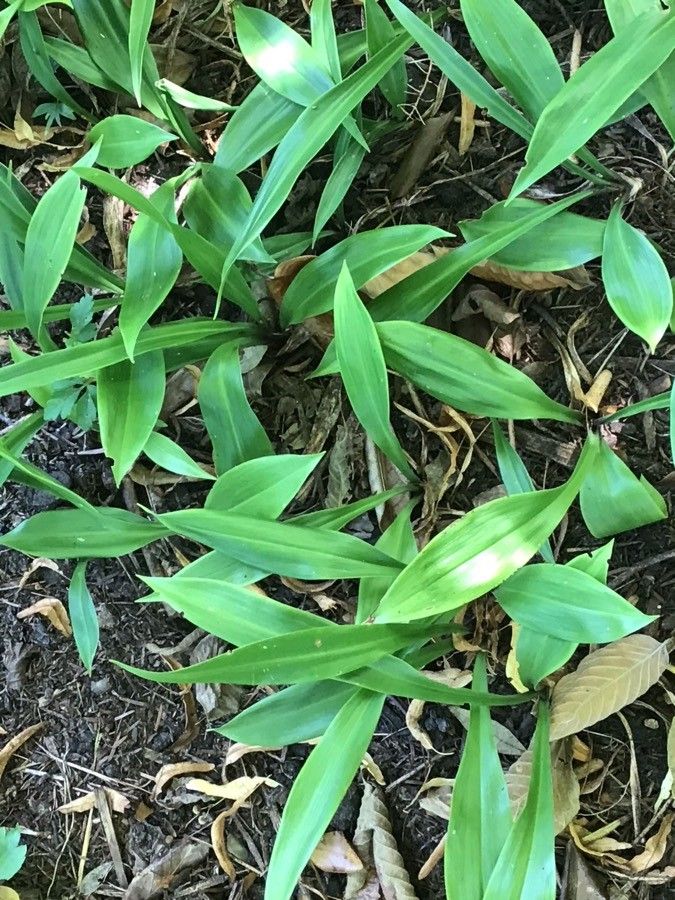
Speirantha is a genus of one known species of flowering plants found in south-east China. In the APG III classification system, it is placed in the family Asparagaceae, subfamily Nolinoideae (formerly the family Ruscaceae).The sole species is Speirantha gardenii, endemic to China (provinces of Anhui, Jiangsu, Jiangxi, and Zhejiang).
False lily of the valley is fairly disease-resistant and generally does not tend to develop illnesses. However, it can be vulnerable to pests and diseases present in its environment. These problems are typically not serious. Regarding care, the plant calls for moderate maintenance. Regular pruning is needed to keep a neat appearance and support healthy growth. Fertilizing can also help encourage flowering. False lily of the valley is a good choice for anyone with outdoor space, such as a garden or patio, and does not demand extensive care experience. It may need more attention if grown indoors.
How to keep Speirantha Gardenii.
Light
False lily of the valley does best in spots that receive moderate sunlight, neither too intense nor too little. The plant prefers filtered light, which encourages vigorous growth. Excessive sun can stress it, while insufficient light may impede its growth. It was originally adapted to habitats with dappled light.
Water
Native to East Asian forests, false lily of the valley thrives in consistently moist soil with balanced moisture levels. To promote lush growth, it should be watered weekly and kept in humid indoor conditions to maintain its evergreen foliage.
Temperature
False lily of the valley is native to areas with moderate climates. It prefers temperatures between 41 and 89.6 °F (5 to 32 ℃). Seasonal temperature shifts are not strictly required, although a cooler winter environment can help mimic its natural habitat.
Fertilizer
The best time to fertilize a False lily of the valley is in early spring, as it is coming out of dormancy and beginning active growth. Fertilization supplies essential nutrients for healthy growth. While False lily of the valley has relatively low fertilizer requirements, applying fertilizer annually can improve its survival and encourage better, longer-lasting flowers.
Pruning
To promote healthy growth, the false lily of the valley benefits from pruning in late winter to early spring. This removes old or diseased leaves. Regular deadheading encourages blooms and prevents the plant from self-seeding. Be sure to use clean, sharp tools to prevent infections, which will enhance the plant's vigor and appearance.
Botanical profile.
- Plant Type
- Herb
- Life Cycle
- Perennial
- Genus
- Speirantha
- Family
- Asparagaceae
- Hardiness Zone
- 5-8
- Mature Height
- 30 cm
- Mature Spread
- 49 cm
- Leaf Color
- Green
- Leaf Type
- Evergreen
- Flower Color
- White
- Flower Size
- 2.54 cm
- Bloom Time
- Early spring, Mid spring
- Planting Time
- Spring, Summer, Autumn
- Harvest Time
- Late spring, Early summer
- Native Area
- China
Other names.
Reader questions.
What are the sunlight requirements for False Lily of the Valley?
False Lily of the Valley requires partial sun, meaning about 3-6 hours of sunlight daily. It's essential to observe the movement of sunlight through your garden to find an area that offers a balance of light and shade suitable for the plant. This helps ensure the plant's health and happiness.
What is the ideal temperature range for growing False lily of the valley?
False lily of the valley thrives in moderate climates, preferring temperatures ranging between 41 to 89.6 °F (5 to 32 °C). Although annual temperature adjustments are not strictly necessary, maintaining a cooler environment during the winter months can benefit the plant by mimicking its natural habitat. This species exhibits strong cold resistance, thus special frost protection measures are generally unnecessary. However, in regions where winter temperatures may plummet below -25°C, it's crucial to safeguard the plant with insulating materials such as soil or straw, and ensure the soil is moist before the onset of freezing temperatures to help prevent drought conditions throughout winter and early spring.
How should False Lily of the Valley be cared for in terms of sunlight?
The plant thrives in moderate sun exposure and prefers locations with filtered sunlight. This condition fosters a robust growth cycle. Too much sun can stress the plant, while too little can impair its growth. Adapting to habitats with dappled light, it's also beneficial to provide artificial lighting when natural sunlight is insufficient, especially for indoor plants in winter or in less sunny spaces. LED lights are recommended for their customizable wavelengths, with light requirements varying based on the type of plant (full sun, partial sun, full shade). The proper distance for artificial light is 12-36 inches above the plant, and the duration should mimic natural daylight hours, which is usually 8-12 hours per day.
How does False lily of the valley react to low temperatures?
False lily of the valley is notably resistant to cold and performs optimally when temperatures stay above 5°C. Although the plant can withstand winter temperatures down to -20°C, exposure to conditions colder than -25°C might not present immediate visible damage but can lead to reduced sprouting or a complete failure to sprout in the following spring. For plants that show no signs of sprouting as temperatures warm, it is advised to remove these unresponsive parts in spring.
What are the symptoms of insufficient light for False Lily of the Valley?
When False Lily of the Valley grows under insufficient light conditions, it may exhibit symptoms such as smaller new leaves, leggy or sparse growth, faster leaf drop, slowed or ceased growth, lighter-colored new leaves, chlorosis, sunscald, leaf curling, wilting, and leaf scorching. These symptoms indicate the plant's struggle with inadequate light, either from being too shaded indoors or from receiving excessive sunlight which can cause distinct damages.
How should False lily of the valley be cared for during high temperatures?
During the summer, it is imperative to keep the False lily of the valley in temperatures below 32°C as excessive heat can lead to the leaves becoming lighter, prone to curling, susceptible to sunburn, and, in severe cases, the plant may wilt and dry out entirely. To combat this, any sunburned or dried parts of the plant should be pruned away. Relocating the plant to a shaded area or utilizing a shade cloth can offer protection from the harsh midday and afternoon sun. Adequate watering in the early morning and evening hours will help maintain soil moisture and support the plant’s health during hotter periods.
How can you address insufficient light for False Lily of the Valley?
To address insufficient light, you can gradually acclimate the plant to brighter conditions by moving it to sunnier spots weekly until it receives the ideal 3-6 hours of sunlight. For large or immobile indoor plants, consider using artificial lighting such as a desk or ceiling lamp for at least 8 hours daily or invest in professional plant grow lights. Outdoors, you should also gradually increase light exposure to prevent sunburn. Reducing obstructions, like pruning trees that block sunlight, and transplanting smaller plants during their dormant period to sunnier locations can also help improve light exposure. Note that parts of the plant damaged by previous insufficient light may not recover, but new growth should be healthy post-adjustment.