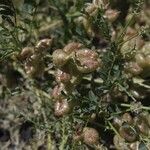
Sphaerophysa salsula
Austrian peaweed · Salt globe-pea · Swainson-pea · Red Bladder-Vetch · Alkali swainsonpea
Description
Source: leafsnapSphaerophysa salsula, commonly known as the salt globe or saltwort, is a small succulent plant belonging to the Amaranthaceae family. Native to arid regions of North Africa and the Middle East, it has also been introduced worldwide as an ornamental plant. This plant exhibits a prostrate growth habit, with fleshy stems that can extend up to 30 cm in length. The leaves are small, cylindrical or conical, and are alternately arranged along the stem. Its flowers are tiny and inconspicuous, clustered together in spherical inflorescences at the tips of the stems. Sphaerophysa salsula is well adapted to saline soils and can tolerate high levels of salt concentration in its environment. Traditionally, it has been used for medicinal purposes, including the treatment of skin diseases, digestive disorders, and respiratory ailments. Beyond its medicinal properties, Sphaerophysa salsula plays significant ecological roles, such as stabilizing soil in sandy environments where it naturally grows. In summary, Sphaerophysa salsula is a fascinating succulent with unique adaptations for surviving harsh environments, making it valuable both ecologically and medicinally.
Care Guide
💧 Water Every 7 days
The alkali swainsonpea is well-suited for arid environments due to its impressive drought tolerance, which is achieved by storing moisture. To mimic its natural conditions, this plant needs to be watered weekly. As an outdoor species, the alkali swainsonpea is resilient to changes in precipitation and soil moisture levels, making it an ideal choice for xeriscaping.
☀️ Light Full sun
Alkali swainsonpea is a sun-loving, perennial herbaceous plant native to open habitats and commonly found in meadows and grasslands. It prefers full sun but can also tolerate partial sun.
What are the sunlight requirements for Alkali swainsonpea?
Alkali swainsonpea thrives in conditions of full sunlight, requiring more than 6 hours of sunlight daily, but it can also tolerate partial sun conditions, which involve about 3-6 hours of sunlight. Ensuring that these plants receive the adequate amount of sunlight they need is crucial for their growth and development. Observing the movement of sunlight through your garden and choosing spots that provide a harmonious balance of light and shade will significantly contribute to the plants' well-being.
What are the essentials for growing Alkali swainsonpea?
Alkali swainsonpea is a sun-loving perennial herb that flourishes in open habitats like meadows and grasslands. It has a preference for full sun but can endure partial sun environments. When natural sunlight isn't sufficient, especially in less sunny spaces or during winter, artificial lighting can be an invaluable alternative. It's suggested to utilize LED lights because they can be adapted to provide the specific wavelengths necessary for plant growth. Depending on the plant's sunlight needs, the amount of artificial light required can vary with full sun plants needing 30-50W/sq ft, partial sun plants 20-30W/sq ft, and full shade plants 10-20W/sq ft. Additionally, the artificial light source should be placed 12-36 inches above the plant to imitate natural sunlight conditions, ensuring that most plants receive 8-12 hours of light each day.
What are the key symptoms of light deficiency in Alkali swainsonpea?
Symptoms of light deficiency in Alkali swainsonpea may include smaller new leaves, leggy or sparse growth, faster leaf drop, slower or ceased new growth, paler new leaves, and chlorosis. Conversely, symptoms of excessive sunlight exposure include sunscald, leaf curling, wilting, and leaf scorching. These symptoms help in identifying whether the plant is receiving adequate light or if adjustments are needed to either increase or decrease sunlight exposure. Ensuring the Alkali swainsonpea receives the correct amount of sunlight is essential for maintaining its health and vitality.
How can I manage sunlight exposure for Alkali swainsonpea to ensure optimal growth?
Managing sunlight exposure for Alkali swainsonpea involves both recognizing symptoms of light deficiency or excess and adopting strategies to adjust light conditions as necessary. For indoor plants, gradually moving them to sunnier locations to receive at least 6 hours of direct sunlight daily is recommended, utilizing south-facing windows for maximum natural light. If moving the plant is not feasible, supplementing with artificial light like desk or grow lights for a minimum of 8 hours a day can be beneficial. Outdoors, gradually acclimating your plants to brighter locations by moving them weekly helps prevent sunburn. Addressing obstructions that block sunlight, such as pruning branches of trees, can also improve light access. If plants are severely light-deprived, transplanting them during their dormancy period to a sunnier spot can be effective. Following these measures can improve the plant's health and encourage robust growth.
🌡️ Temperature 5–35°C
Alkali swainsonpea can adjust to a broad range of temperatures, but its range may still be constrained by different combinations of moisture and heat. It performs best in warm summer climates with sufficient rainfall or irrigation. Extended stretches of cloudy, rainy weather or sustained high temperatures can raise the risk of Alkali swainsonpea dying. In winter, adequate protection from cold can increase the plant's survival rate.
💨 Humidity
🪴 Soil 6-7
🌱 Fertilizer
A single fertilizer application in spring is typically enough for Alkali swainsonpea, though multiple feedings can maximize growth. Feed every month to every month and a half. Fertilization improves the appearance and function of the leaves, helping them retain even color and a healthy texture. It also encourages root development and nutrient uptake for long-term plant health.
🪴 Pot & Repot
✂️ Pruning
To enhance the growth and flowering of alkali swainsonpea, prune the plants from early to late spring. Begin by trimming any dead branches and thinning out dense areas to improve air circulation. Also, manage the plant's tendency to spread. Always use clean, sharp tools to prevent the spread of diseases. Proper pruning not only improves the plant's overall structure but also enhances bloom quality, making it a valuable addition to any garden.
🌿 Propagating
🐛 Diseases & pets
☠️ Toxicity
Characteristics
- Plant Type
- Herb, Shrub
- Life Cycle
- Perennial
- Genus
- Sphaerophysa
- Family
- Fabaceae
- Hardiness Zone
- 5-9
- Mature Height
- 0.3 m to 1.22 m
- Mature Spread
- 30 cm to 61 cm
- Leaf Color
- Green
- Leaf Type
- Semi-evergreen
- Flower Color
- Red, Orange
- Flower Size
- 1.27 cm to 1.52 cm
- Bloom Time
- Summer
- Planting Time
- Spring, Summer, Autumn
- Harvest Time
- Late summer, Early fall, Mid fall
- Native Area
- Uzbekistan, Afghanistan, Iraq, Tajikistan, Kyrgyzstan, Kazakhstan, Iran, Armenia, Azerbaijan, Turkmenistan, China