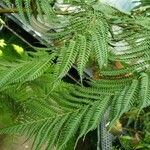
Sphaeropteris cooperi
Australian tree fern · Lacy tree fern · Scaly tree fern · Cooper's tree fern · Cooper's cyathea
Description
Source: leafsnapSphaeropteris cooperi, synonym Cyathea cooperi, also known as lacy tree fern, scaly tree fern, or Cooper's tree fern, is a tree fern native to Australia, in New South Wales and Queensland.
Care Guide
💧 Water Every week
The Australian tree fern flourishes in humid environments, requiring consistent moisture to thrive. To mimic its natural habitat, it needs to be watered weekly. While it is usually grown outdoors, it's important to take climate zones into account, as its water needs can vary depending on local rainfall patterns.
What should I do if I give my Australian tree fern too much or too little water?
Newly planted outdoor plants and seedlings, particularly the Australian tree fern, are at risk of not receiving enough water. It's important to provide adequate watering for the first few months, especially for smaller or recently planted trees. Once the roots are established, the Australian tree fern can rely on rainfall for moisture. However, when the Australian tree fern is in pots, there is a higher chance of overwatering. If you accidentally overwater your Australian tree fern, take immediate action to resolve the issue. Stop watering the plant to minimize the effects of overwatering, then check the roots by removing the fern from its pot. If there is no root rot, you can place the plant back in its container. In the case of root rot, trim affected roots and use a fungicide to prevent further damage. Finally, repot the Australian tree fern in well-draining soil. On the other hand, if you notice underwatering, simply increase the frequency of watering. Leaves may droop, dry out, and fall off due to underwatering, but they should regain fullness after receiving sufficient water. Adjust your watering schedule promptly when underwatering occurs.
How should I water my Australian tree fern?
Your Australian tree fern is not too particular about how you water it. You can use any common watering tool, such as watering cans, hoses, or cups. When watering, it is best to apply the water directly to the soil and make sure to evenly moisten all areas of the soil to provide water to every part of the root system. It is recommended to use filtered water to avoid harmful particles that may be present in tap water. Additionally, using water at or slightly above room temperature is beneficial, as extremely hot or cold water can be a bit shocking for the Australian tree fern. However, this plant usually responds well to any water you give it.
How often should I give water to my Australian tree fern?
Most outdoor plants can grow normally with rainfall. However, if your area lacks rainfall, it's important to water your plants adequately. During the spring and fall, watering every 2 weeks should be sufficient. In the summer, plants require more frequent watering. In the winter, when growth is slower, plants need less water and should be watered sparingly. Young or newly planted Australian tree ferns may require more frequent watering to help them establish and grow. For potted plants, there are two main methods to determine watering frequency for Australian tree ferns. One method is to follow a predetermined watering schedule, such as watering once a week or once every other week. However, this approach may not always work as it doesn't consider the specific conditions of the plant's environment. Watering frequency can also vary depending on the season. During the summer, when water needs are highest, relying solely on a predetermined schedule may not be enough. Another approach is to water based on soil moisture. It's generally recommended to wait until the top two to four inches of soil have dried out completely before watering again, which is usually around one-third to one-half the depth of the pot.
How much water does my Australian tree fern require?
To water your Australian tree fern effectively, it's important to understand its water requirements. Contrary to expectations, this plant doesn't always need a lot of water. If only a few inches of soil have dried since your last watering, providing around five to ten ounces of water each time should be sufficient for healthy growth. To determine the appropriate amount of water, consider the moisture levels in the soil. Monitoring how many inches of soil have dried between waterings can guide you. To ensure your Australian tree fern receives adequate moisture, water until all the soil layers that have become dry since the last watering are moistened. If over half of the soil has dried out, it may be necessary to increase the amount of water. In such cases, continue watering until there is excess water draining from the pot's drainage holes. However, if your Australian tree fern is planted in an area that receives ample rainfall outdoors, it may not require additional watering. When the tree fern is young or establishing itself, it's important to provide 1-2 inches of rain per week. Once it has grown and become established, it can rely solely on rainwater. Only during hot weather and prolonged periods without rainfall for 2-3 weeks should you consider giving your Australian tree fern a thorough watering to prevent stress.
How can I know if I am giving my Australian tree fern enough water?
The Australian tree fern is often overwatered, and there are specific signs to watch for. An overwatered fern will have yellowing leaves and may lose some of them. It can also cause the plant to shrink and encourage root rot. Conversely, an underwatered fern will start to droop and have brown or fragile leaves. If you notice signs of either, take action to revive your Australian tree fern.
☀️ Light Partial sun
The Australian tree fern thrives with plenty of light, provided it is not overly strong. Originally adapted to the dappled light beneath forest canopies, this fern can tolerate poorly lit conditions. Its growth may be impeded by insufficient light or by exposure to intense sunlight, which can cause leaf burn.
What are the sunlight requirements for an Australian tree fern?
The Australian tree fern requires about 3-6 hours of sunlight a day, thriving under partial sun. It's important to watch the sunlight's movement through your garden to ensure plants receive the ideal balance of light and shade. This fern originally evolved under the filtered sun of forest canopies and can tolerate low-light conditions, but insufficient light or intense sunlight exposure can hinder its growth or cause leaf burn.
How can artificial lighting benefit indoor Australian tree ferns?
Indoor Australian tree ferns benefit significantly from adequate lighting, especially when natural sunlight is insufficient. Artificial lights, like LED lights, can mimic the necessary wavelengths of light for optimal growth. The recommended artificial light intensity varies depending on the plant's sunlight needs: full sun plants require 30-50W/sq ft, partial sun plants 20-30W/sq ft, and full shade plants 10-20W/sq ft. Placing the light source 12-36 inches above the plant and ensuring 8-12 hours of light per day can promote healthier, faster growth.
What are common symptoms of light deficiency in an Australian tree fern?
Symptoms of light deficiency in an Australian tree fern include smaller new leaves, leggy or sparse growth, faster leaf drop, delayed or a stop in new growth, pale new leaves indicating a lack of chlorophyll, and conditions like chlorosis, sunscald, leaf curling, wilting, and leaf scorching. Each of these symptoms can indicate different issues related to light exposure, whether it is too little or too much.
What solutions can address an Australian tree fern's light deficiency?
To address light deficiency in an Australian tree fern, gradually increase its sunlight exposure to 3-6 hours daily by shifting it to sunnier spots each week. For plants that are large or hard to move, using artificial light such as desk or ceiling lamps for at least 8 hours daily can offer additional light. When dealing with outdoor plants, moving them gradually to avoid sudden light intensity changes helps prevent sunburn. Reducing obstructions like pruning branches or transplanting smaller plants during their dormant period to a sunnier location with good drainage can also improve sunlight access.
🌡️ Temperature 20–37.8°C
The Australian tree fern comes from tropical areas, where the climate is generally warm and humid. Therefore, it is suited to high temperatures and humidity. It does not tolerate abrupt temperature changes and prefers a steady temperature, so avoiding indoor temperature fluctuations is important. It typically cannot endure cold and needs warmer conditions to grow. If the surrounding temperature falls too low, the plant may stop growing or even die.
💨 Humidity normal (40-60%)
This plant will thrive in moderate humidity, which is probably the level in your home. However, misting it a few times a week can be very beneficial. Make sure the room has good ventilation.
🪴 Soil 5-6
🌱 Fertilizer Every 25 days
Fertilization is essential for the care of Australian tree ferns. Regular feeding during the growing season helps maintain the energy needed for their showy leaves and supports overall growth. If fertilization is neglected, leaves can become unhealthy, ornamental appeal may decline, and growth may be stunted or weak and prone to breaking.
Why should I put fertilizer on my Australian tree fern?
No matter which type of Australian tree fern you own, regular fertilization is crucial for promoting its overall health. Providing the proper nutrients will encourage vigorous growth and enhance its resistance to challenging growing conditions, diseases, and pests. The foliage of your Australian tree fern is highly appealing, so it's essential to maintain it. To achieve this, establish and follow a consistent fertilization schedule tailored to your specific Australian tree fern. This will result in lush and deeply colored leaves.
When should I put fertilizer on my Australian tree fern?
To keep your Australian tree fern thriving, start by fertilizing it in late winter or early spring. This gives the fern the necessary nutrients for healthy growth once the weather warms up. Additionally, in warm climate regions, it's recommended to provide another fertilizer feeding in early fall. This not only adds nutrients to the soil for the following growing season but also helps the fern withstand cold winters without foliage damage. Early fertilization ensures that new branches have enough time to grow and withstand winter conditions.
When should I not add fertilizer to my Australian tree fern?
There are a few times throughout the year when you shouldn't fertilize your Australian tree fern. The first time is during the early and mid-winter months when the fern is dormant and doesn't need any nutrients. It's also not a good idea to fertilize this plant in late spring and all of summer because the weather is usually hotter and drier, which can have a negative impact on the fern if it's given fertilizer. To avoid any problems, it's best to only fertilize in early spring and early fall.
What kind of fertilizer does my tree fern from Australia need?
The most important nutrient for an Australian tree fern is usually nitrogen, but that doesn't mean phosphorus and potassium aren't important. In fact, your Australian tree fern probably needs a decent amount of all three nutrients, so using a balanced fertilizer like a 10-10-10 is a good idea. However, a more specific ratio of nutrients can often lead to even better growth. Fertilizers with a slightly higher nitrogen content, like a 10-6-4 ratio, tend to work well. You can choose between granular or liquid-based fertilizers for your tree fern.
How should I give nutrients to my Australian tree fern?
To fertilize your Australian tree fern, you have two options: granular fertilizer or liquid fertilizer. If you choose to use granular fertilizer, simply sprinkle it on the soil at the right time. The nutrients in the granules will be released slowly over time, benefiting the fern. Before applying the granular fertilizer, it is recommended to lightly water your Australian tree fern. Alternatively, you can use liquid fertilizer, but this method is less commonly used. To do this, mix the liquid fertilizer with water and pour the mixture onto the soil around the base of your fern. In some cases, it is advisable to perform a soil test before fertilizing. This will help determine if any adjustments to the pH levels are necessary.
🪴 Pot & Repot 2-3 years
To support the vigorous summer growth of the Australian tree fern, it is recommended to repot the plant every 2-3 years. Use a large, deep container to accommodate its root ball. After repotting, ensure the environment is both moist and well-drained, along with consistent watering. This attentive care will help the Australian tree fern recover and thrive.
✂️ Pruning
The Australian tree fern benefits from careful pruning between early and late winter. This helps manage its size and remove any damaged fronds, promoting healthy growth and improving air circulation. Be sure to use clean, sharp tools, and avoid cutting too much from the crown to prevent stress. This approach ensures lush and vigorous development.
🌿 Propagating
🐛 Diseases & pets
☠️ Toxicity
Characteristics
- Plant Type
- Tree
- Life Cycle
- Perennial
- Genus
- Sphaeropteris
- Family
- Cyatheaceae
- Hardiness Zone
- 9-11
- Mature Height
- 4.57 m to 15.24 m
- Mature Spread
- 3.05 m to 6.1 m
- Leaf Color
- Green
- Leaf Type
- Evergreen
- Planting Time
- Spring
- Native Area
- Australia