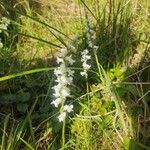
Spiranthes tuberosa
Little ladies'-tresses · Little lady's tresses
Description
Source: leafsnapSpiranthes tuberosa, commonly called little lady's tresses, little pearl-twist and slender ladies'-tresses is an Orchid species. It is a perennial plant native to North America.The basal leaves are short-lived, blooming plants having pure white flowers spirally arranged around the single-stemmed inflorescence; the plants grow in grasslands and open woods.
Care Guide
💧 Water
Little lady's tresses, which naturally comes from moist environments, needs regular watering but should not be waterlogged. It thrives with a weekly watering routine. Typically grown outdoors, this plant adapts well to temperate climates and seasonal rainfall. This makes it ideal for gardens where the rain cycles naturally support its growth.
☀️ Light Partial sun
Little lady's tresses is native to habitats such as forest understories and rocky areas, where it grows in natural shade. It prefers partial sun but can tolerate both full sun and full shade, illustrating its adaptable, hardy nature.
🌡️ Temperature 10–35°C
Little lady's tresses comes from regions with mild temperatures and flourishes in a range of 50 to 95 °F (10 to 35 ℃). In colder months, regulating indoor heat or a similar adjustment is recommended to maintain this preferred temperature.
What is the optimal temperature range for 'Little lady's tresses' (Spiranthes tuberosa)?
Little lady's tresses, or Spiranthes tuberosa, thrives best in regions with mild temperatures, favoring a temperature range of 50 to 95°F (10 to 35°C). To ensure the plant remains healthy and vibrant, it is recommended to regulate indoor heating or make similar adjustments during colder seasons to maintain this preferred temperature range.
How should 'Little lady's tresses' be protected during winter?
Despite its strong cold resistance, 'Little lady's tresses' may need special care when winter temperatures are expected to drop below -25°C. To protect the plant in such conditions, you can cover it with materials like soil or straw. Additionally, it's advisable to water the plant abundantly before the first freeze of autumn, ensuring the soil is moist and ready to freeze. This preparation helps to prevent drought and water scarcity for the plant during the winter and the early spring months.
What are the signs of temperature stress in 'Little lady's tresses' and how can they be addressed?
Temperature stress in 'Little lady's tresses' manifest differently under low and high temperatures. When temperatures fall below -25°C, the plant may show delayed sprouting or fail to sprout at all come spring. The recommended solution is to remove any non-sprouting parts in spring. On the other hand, when temperatures climb above 35°C, especially exceeding 41°C, you might notice the leaves turning lighter, curling, getting sunburnt, or the plant wilting and drying out. Mitigating this involves trimming sunburnt or dried parts, relocating the plant for shade during peak sun or using a shade cloth, and ensuring the soil remains moist with morning and evening watering.
💨 Humidity
🪴 Soil 6-7
🌱 Fertilizer
For Little lady's tresses, the best time to apply fertilizer is in early spring when the flowers are beginning to form. The appropriate fertilizer promotes improved blooms and helps Little lady's tresses produce attractive flowers. Fertilizing at that time guarantees strong flowers during the season and supplies energy for dormant growth phases.
🪴 Pot & Repot
✂️ Pruning
Little lady's tresses thrive with minimal pruning, which is best done in early to late spring before new growth begins. Trim any dead stems to promote the plant's health, but avoid over-pruning to prevent weakening the plant. Regular, gentle pruning encourages flowering and vigor. For the best practices, consult horticultural guides.
🌿 Propagating
🐛 Diseases & pets
☠️ Toxicity
Characteristics
- Plant Type
- Herb
- Life Cycle
- Perennial
- Genus
- Spiranthes
- Family
- Orchidaceae
- Hardiness Zone
- 6-10
- Mature Height
- 30 cm to 61 cm
- Mature Spread
- 5 cm to 10 cm
- Leaf Color
- Dark Green
- Leaf Type
- Deciduous
- Flower Color
- White
- Flower Size
- 0.25 cm to 0.51 cm
- Bloom Time
- Late summer, Early fall, Mid fall
- Planting Time
- Spring, Summer, Autumn
- Harvest Time
- Mid fall, Late fall, Early winter