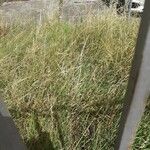
Sporobolus airoides
Alkali sacaton · Hairgrass dropseed
Description
Source: leafsnapSporobolus airoides, commonly known as alkali sacaton, is a perennial grass native to the western United States and northern Mexico. It thrives in alkaline soils and is well-adapted to withstand drought conditions, thanks to its deep root system that reaches water from deeper soil layers. Alkali sacaton can grow up to 3 feet tall, featuring narrow leaves approximately 1/8 inch wide. During the summer, it produces dense seed heads that serve as a vital food source for wildlife, including birds and small mammals. This grass species is often utilized for erosion control on slopes and disturbed areas because its deep root system helps stabilize the soil. Additionally, it provides grazing opportunities for livestock in arid regions where other vegetation may struggle to grow. Overall, Sporobolus airoides is crucial for maintaining ecological balance. It offers food and habitat for wildlife while also helping to prevent the erosion of fragile soils.
Care Guide
💧 Water Every 7 days
Alkali sacaton flourishes in arid environments due to its high drought tolerance and minimal moisture requirements. It should be watered approximately twice a week and prefers well-draining soil. This plant is well-suited for outdoor cultivation, making it an excellent choice for xeriscaping or rock gardens that mimic its natural habitat.
☀️ Light Full sun
Alkali sacaton performs best in areas where it receives plentiful sunlight all day. It can also adapt to places with less sunlight, though those conditions may somewhat impair its healthy growth. Excessive sun exposure can cause dehydration, while insufficient light may lead to weak growth.
What are the sunlight requirements for Alkali sacaton?
Alkali sacaton requires full sun, meaning it thrives best with above 6 hours of sunlight daily. It can also grow in partial sun, which is about 3-6 hours of sunlight. It's essential to observe your garden's sun patterns to find the ideal balance of light and shade that ensures the plants' well-being. Alkali sacaton does particularly well in abundant sun but can adapt to less sunlight, albeit with potential impacts on its growth.
What should I know about using artificial lighting for plants?
Indoor plants benefit significantly from adequate lighting, especially when natural sunlight is scarce. Artificial lights, such as LED, can compensate by providing the necessary wavelengths of light. Full sun plants require 30-50W per square foot of artificial light, partial sun plants need 20-30W, and full shade plants need 10-20W. The light source should be placed 12-36 inches above the plant, and the duration should mimic natural daylight conditions, usually 8-12 hours daily.
How can I recognize symptoms of inadequate lighting in Alkali sacaton?
Symptoms of light deficiency in Alkali sacaton include smaller new leaves, leggy or sparse growth, premature leaf drop, slower or halted growth, lighter-colored new leaves, and symptoms of too much light, such as chlorosis, sunscald, leaf curling, wilting, and leaf scorching. These issues indicate the plant's struggle with inappropriate lighting conditions.
What solutions can help Alkali sacaton with inadequate sunlight?
To alleviate light deficiencies, gradually increase sunlight exposure by moving plants to sunnier locations each week until they get at least 6 hours of direct sunlight. For indoor plants, use south-facing windows or artificial lighting, such as desk lamps or grow lights, for at least 8 hours daily. For outdoor plants, ensure the location changes are gradual to prevent sunburn. Removing obstructions and transplanting during dormant periods can also help maximize sunlight exposure. Note that while new growth can be healthy with better light conditions, parts of the plant affected by previous low light may not recover.
🌡️ Temperature 5–35°C
Alkali sacaton naturally grows within a temperature range of 41 to 95 °F (5 to 35 ℃). These temperature requirements make it suited to cooler to moderate climates. Seasonal care involves protecting it when temperatures rise above that range.
What is the native growth temperature range for Alkali sacaton?
Alkali sacaton, also known by its botanical name Sporobolus airoides, is accustomed to a native growth temperature range of 41 to 95 °F (5 to 35 °C). This range suggests that the plant prefers cooler to moderate climates. In seasonal adjustments, it is important to provide protection when temperatures exceed this preferred range. Although Alkali sacaton possesses strong cold resistance and special frost protection measures are not usually necessary during winter, additional cold protection should be considered if winter temperatures are expected to drop below -30°C. This can be achieved by covering the plant with soil or straw and ensuring abundant watering before the first freeze in autumn, to keep the soil moist and prevent drought and water scarcity during the colder months.
How does Alkali sacaton react to low temperatures?
Alkali sacaton is cold-tolerant and thrives best when temperatures are above 5°C. During the winter season, it should be kept above -25°C to avoid damage. If the temperature falls below -30°C, you might not notice immediate changes during winter; however, this could lead to a decrease in sprouting or possibly no sprouting at all come springtime. To mitigate any potential damage from low temperatures, remove any parts of the plant that have failed to sprout in spring.
What are the effects of high temperatures on Alkali sacaton and how can they be mitigated?
During the summer, Alkali sacaton should ideally be kept below 35°C. Exposing the plant to temperatures above 38°C can cause its leaves to lighten in color, become prone to curling, susceptible to sunburn, and in severe cases, lead to wilting and drying out of the entire plant. To mitigate these high temperature effects, trim away the sunburned and dried-up parts of the plant. Moving the plant to a location that provides shade during the midday and afternoon sun or using a shade cloth can offer protection. Additionally, watering the plant in the morning and evening helps keep the soil moist and can prevent temperature stress.
💨 Humidity
🪴 Soil 7-8
🌱 Fertilizer
Alkali sacaton is a warm-season grass that does well in summer and becomes dormant in winter. Applying fertilizer is essential for promoting thick growth, a bright green color, and resistance to stresses like heat, drought, and cold. Lawns that are neglected grow weak and thin, making them vulnerable to invasion by unwanted grasses, weeds, insects, and diseases.
🪴 Pot & Repot
✂️ Pruning
Alkali sacaton flourishes in alkaline soil and benefits from being pruned between early and late spring. Pruning during this time encourages vigorous growth and prevents the plant from becoming woody. This process improves air circulation, lowers the risk of disease, and promotes dense foliage. To ensure healthy recovery, use clean, sharp tools for precise cuts.
🌿 Propagating
🐛 Diseases & pets
☠️ Toxicity
Characteristics
- Plant Type
- Grass
- Life Cycle
- Perennial
- Genus
- Sporobolus
- Family
- Poaceae
- Hardiness Zone
- 4-9
- Mature Height
- 30 cm to 91 cm
- Mature Spread
- 61 cm to 91 cm
- Leaf Color
- Green, Gray
- Leaf Type
- Deciduous
- Flower Color
- Yellow, Pink
- Flower Size
- 2.54 cm
- Bloom Time
- Summer
- Planting Time
- Spring, Summer, Autumn
- Harvest Time
- Late summer, Early fall, Mid fall
- Native Area
- Mexico