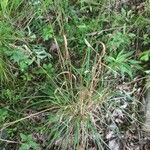
Sporobolus indicus
Smut Grass · West Indian dropseed · Rat tail grass · Parramatta grass · Giant Parramatta grass
Description
Source: leafsnapSporobolus indicus, commonly known as Indian dropseed, is a perennial grass species native to Asia and Australia. This plant belongs to the Poaceae family and can grow up to 1 meter in height. Its deep root system allows it to thrive in dry and arid conditions. The leaves of Sporobolus indicus are narrow, long, and pointed, with a bluish-green color. The plant's inflorescence consists of spikelets arranged in panicles at the top of the stem, each containing small flowers with bristly awns. Sporobolus indicus is a valuable forage grass for livestock due to its high nutritional value and its ability to grow well even in poor soil conditions. It also plays a crucial role in soil conservation, as its deep roots help prevent soil erosion. In traditional medicine, Sporobolus indicus has been used for its anti-inflammatory properties to treat various ailments such as fever, coughs, colds, and headaches. Overall, Sporobolus indicus is an important plant species due to its ecological significance and medicinal properties, making it valuable both economically and environmentally.
Care Guide
💧 Water Every 7 days
Smut grass thrives in tropical savannas and demonstrates moderate drought tolerance. It needs regular moisture but should not be overwatered, as twice a week is ideal. This outdoor variety can endure heavy rain followed by sunshine, which boosts its resilience and helps maintain a lush green appearance.
What should I do if I give my Smut grass too much water or too little?
Smut grass can be affected by overwatering. If your grass is turning yellow or pale green, it may be getting too much water. While Smut grass can tolerate different soil types, it does not do well in soil that does not drain well. Avoid planting this grass in marshy areas or where the ground feels spongy. It's best to err on the side of too little water when irrigating your lawn, as Smut grass does better when allowed to dry out between waterings. Wet soil can lead to fungus growth, insect pests, and weeds. Long-term overwatering can cause the plant to suffer and even die off. On the other hand, Smut grass has adaptations that help it conserve water, so it can survive with minimal water. It has a deep root system that allows it to use groundwater when it hasn't been watered for a while. During drought conditions, the grass may turn yellow and become brittle, but it can recover once the dry spell is over. This ability to bounce back from various conditions is one of the reasons why Smut grass is a popular choice.
How do I water Smut grass?
In most places where grass is used in landscaping, it typically receives enough rainfall to stay healthy without extra watering. However, if you live in a very dry climate or are experiencing a drought, Smut grass may not survive without additional water. Even during the winter months when it appears dormant or dead, it still requires some moisture to avoid dehydration. It will start growing again in the spring when the weather warms up. To keep Smut grass well-watered, it is recommended to provide about an inch of water every week. It is better to give it a thorough soaking in a short period of time rather than a slow drip, as this promotes a stronger and deeper root system. When you first plant Smut grass, it has specific watering requirements. It should be kept moist for the first 3 to 4 weeks to allow it to establish itself. The best time to plant this grass is in late spring to early summer, as there is usually sufficient rainfall during this period. However, if your area experiences a dry spell after planting, it's a good idea to cover the grass or water the lawn to maintain soil moisture.
What things should I think about when watering my Smut grass?
The frequency of watering for Smut grass is influenced by environmental conditions, soil type, and drainage. If your lawn has sandy soil that doesn't hold much moisture, you might have to irrigate to keep the grass looking healthy. However, clay soils, which drain slowly and retain a lot of water, usually don't require extra watering. Nonetheless, excessive water around the roots can be detrimental for Smut grass as it is sensitive to moisture.
☀️ Light Full sun
Smut grass, deriving from a habitat that flourishes with generous solar light, tends to favor areas bathed in sunlight all day long. This behavior is critical for the plant's development and vitality. Constant exposure to light through all its stages of growth proves advantageous, while a lack or excess of it can have unfavorable impacts on its health.
What are the sunlight requirements for Smut grass?
Smut grass requires above 6 hours of sunlight to thrive, making full sun conditions essential for its growth. It's important to observe how sunlight moves through your garden to find spots that provide a balance of light and shade. Originating from environments with abundant solar exposure, Smut grass needs persistent exposure to light at all stages of its growth. Both scarcity and over-exposure to sunlight can negatively impact its health.
How can artificial lighting benefit indoor Smut grass plants?
Indoor Smut grass plants require adequate lighting for optimal growth, especially when natural sunlight is insufficient. Artificial lights, such as LED lights, provide a viable solution by offering the specific wavelengths of light that the plants need. For full sun plants, 30-50W/sq ft of artificial light is needed, partial sun plants require 20-30W/sq ft, and full shade plants need 10-20W/sq ft. The light source should be placed 12-36 inches above the plant to mimic natural sunlight, and most plants benefit from 8-12 hours of light per day.
What are the key symptoms of light deficiency in Smut grass?
Smut grass shows several symptoms when it suffers from light deficiency, including smaller new leaves, leggy or sparse growth, faster leaf drop, slower or halted new growth, lighter-colored new leaves, chlorosis, sunscald, leaf curling, wilting, and leaf scorching. These symptoms reflect the plant's struggle with inadequate lighting conditions, either due to insufficient light exposure or overexposure to sunlight.
What solutions can help Smut grass recover from light deficiency?
To address light deficiency in indoor Smut grass, gradually move plants to a sunnier location to ensure they receive at least 6 hours of direct sunlight daily. Use south-facing windows and consider artificial lighting if necessary. For outdoor plants, it's crucial to adapt them to sunnier spots gradually to avoid sunburn. Removing obstructions that block sunlight and transplanting smaller plants to brighter locations can also help improve sunlight exposure. It's important to note that parts of the plant affected by insufficient sunlight may not recover, but new growth will be healthy.
🌡️ Temperature 15–37.8°C
Smut grass is a flora that thrives in a native habitat with temperatures ranging from 68 to 100.4 °F (20 to 38 ℃). Its optimal growth occurs in temperate climates. Adjustments in temperature based on the region are critical to suit the yearly needs of this plant.
What is Smut Grass and where does it thrive?
Smut grass, scientifically known as Sporobolus indicus, is a plant that flourishes in temperate climates with temperatures ranging from 68 to 100.4 °F (20 to 38 °C). It is native to regions where such temperatures are prevalent year-round, emphasizing the importance of regional temperature adjustments to cater to the plant's needs throughout the year. Smut grass possesses some level of cold tolerance and usually does not require additional cold protection measures if temperatures stay above 0°C. However, if temperatures are expected to drop below freezing, temporary protective actions such as wrapping the plant with plastic film or fabric should be considered, with these protections removed once warmer temperatures return.
How does Smut Grass respond to low temperatures?
Smut grass exhibits moderate tolerance to low temperatures, thriving optimally when the thermometer reads above 20°C. During the colder months, it's crucial to maintain the temperature above freezing (0°C) to prevent damage. If the temperature plunges below -10°C, the plant's leaves may begin to droop. While leaves might recover from mild frostbite, severe cold will cause wilting and eventual leaf drop. To safeguard Smut grass against frost, trimming frost-damaged parts and wrapping the plant with non-woven fabric or cloth, along with constructing a wind barrier, are effective solutions to protect it from cold winds and low temperatures.
What should be done if Smut Grass is exposed to high temperatures?
In the summer, care should be taken to ensure that Smut grass does not endure temperatures above 38°C. Exposure to temperatures exceeding 43°C can result in lighter leaf color, dry and withered leaf tips, curling leaves, and increased susceptibility to sunburn. To mitigate these symptoms, affected areas of the plant should be trimmed away. Relocating the plant to a shaded spot or employing shade cloth can offer protection from the harsh midday and afternoon sun. Additionally, watering the plant during the cooler morning and evening hours helps keep the soil adequately moist, further alleviating stress from high temperatures.
💨 Humidity
🪴 Soil 6-7
🌱 Fertilizer
Smut grass is a type of grass that flourishes in the summer season and becomes dormant in winter. For it to grow thickly, maintain its bright green hue, and withstand pressure factors like intense heat, dry spells, and chills, fertilization is very important. Undeveloped grass areas deteriorate, become sparse, and attract undesired grass varieties, weeds, bugs, and diseases.
Why should I use fertilizer on my Smut grass?
To promote vibrant and thick growth, it is crucial to fertilize Smut grass. A lawn that is well-nourished and healthy maintains its density, stays green, and recovers effectively from damage caused by insects or mechanical factors. Additionally, it is better able to withstand seasonal stressors such as heat, drought, and cold temperatures. Conversely, lawns that are under-fertilized and unhealthy gradually lose their density, leading to thinning over time. This makes them susceptible to unwanted grasses and weeds taking over. Malnourished lawns are also more likely to experience issues with insects and diseases.
What is the ideal time to add fertilizer to my Smut grass?
Smut grass is a warm-season grass that thrives during the hottest part of summer and goes dormant during the cooler winter season. To best support its growth, fertilization should match its pattern. Start fertilizing when it comes out of dormancy and continue throughout the growing season, stopping just before it goes dormant in the fall.
When is it not a good idea to fertilize my Smut grass?
Sometimes, fertilizer can actually harm Smut grass instead of helping it, especially when the plant is already stressed for other reasons. If the grass is struggling with diseases like leaf spot, pythium, large patch, brown patch, or fairy rings, or if it has insect problems such as grubs, chinch bugs, or armyworms, it's best to avoid fertilizing. This is because fertilizing weakens the plant's defenses and makes it more susceptible to other pest and disease issues. Additionally, it's important to never fertilize Smut grass during its dormant period in the winter. Instead, wait until the grass is actively growing. In the summer, when it's hot outside, it's advisable to avoid fertilizing during the hottest part of the day to prevent fertilizer burn. It's also worth noting that fertilizing immediately after a rainstorm should be avoided. Give the soil a day or two to dry out before applying fertilizer. This helps minimize runoff and lowers the risk of contaminating ground and surface waters.
What kind of fertilizer does my Smut grass need?
To properly fertilize Smut grass, it is recommended to use targeted lawn or turf fertilizers rather than general garden fertilizers like a 12-12-12 blend. Turf blends usually have higher levels of nitrogen and lower levels of phosphorus and potassium. This nutrient ratio provides what lawns need while minimizing potential damage. Lawn fertilizers often contain nutrients that are slowly released over time, providing continuous nourishment. Among these nutrients, nitrogen is the most crucial for established lawns as it promotes overall growth and green color. Phosphorus and potassium are essential for Smut grass to develop strong stems and roots, withstand drought and extreme temperatures, and naturally fend off pests and diseases.
How should I fertilize my Smut grass?
To maintain a healthy and vibrant lawn, it is best to fertilize right after it comes out of winter dormancy and regains its green color, usually in early spring, considering your local climate. Throughout the spring, summer, and early fall, applying fertilizer every four to eight weeks is recommended. As the Smut grass begins to go dormant in the fall or about four weeks before the first autumn frost, it is advisable to stop fertilizing. For the best results, always follow the labeled directions for the recommended rates when applying fertilizers, or you may also base it on soil test recommendations. After fertilizing, make sure to water the product into the soil thoroughly.
🪴 Pot & Repot
✂️ Pruning
To control the invasive growth of smut grass, it is important to prune it from early to late spring. Cut the grass back to its basal foliage to encourage healthy regrowth during its active growth period. This practice improves airflow, reduces the risk of fungal infections, and should be performed using clean, sharp tools to prevent damage and disease.
🌿 Propagating
🐛 Diseases & pets
☠️ Toxicity
Characteristics
- Plant Type
- Grass
- Life Cycle
- Perennial, Annual
- Genus
- Sporobolus
- Family
- Poaceae
- Hardiness Zone
- 8-11
- Mature Height
- 91 cm
- Mature Spread
- 20 cm to 40 cm
- Leaf Color
- Green
- Leaf Type
- Semi-evergreen
- Flower Color
- Yellow, Green, Brown
- Flower Size
- 1.52 cm
- Bloom Time
- Summer, Early fall, Mid fall
- Planting Time
- Spring
- Harvest Time
- Late summer, Fall, Early winter
- Native Area
- Belize, India, Malaysia, Mexico, Guatemala, Dominican Republic, Fiji, Jamaica, Uruguay, Paraguay, Indonesia, Haiti, Argentina, Venezuela, Brazil, Chile, Honduras, Georgia, Peru, Philippines, Panama, Colombia, Bahamas, Bolivia, Japan, El Salvador, Nicaragua, Singapore, Ecuador, Costa Rica, Gabon