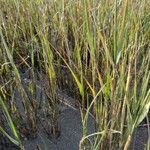
Sporobolus maritimus
Small Cord-grass · Small cordgras · Cape cordgrass · Small cordgrass
Care Guide
💧 Water
☀️ Light Full sun
Cape cordgrass is a perennial, herbaceous, sun-loving plant that comes from open habitats and commonly grows in meadows and grasslands. It prefers full sun but can also tolerate partial sun.
🌡️ Temperature 15–35°C
Cape cordgrass can tolerate a wide range of temperatures, yet its distribution may still be restricted by particular combinations of moisture and heat. It performs best in warm summer conditions with adequate rainfall or watering. Long stretches of cloudy, rainy weather and sustained high temperatures can increase the chance of Cape cordgrass dying. During winter, protecting it from cold can enhance its survival.
💨 Humidity
🪴 Soil 6-8
🌱 Fertilizer
Cape cordgrass needs extra nutrients to encourage healthy new growth. In spring, placing some compost around the base of the plant can effectively supply the necessary nourishment. Fertilizing helps support vigorous growth and improves the plant’s resistance to diseases and pests.
🪴 Pot & Repot
✂️ Pruning
Cape cordgrass is a hardy coastal plant. To encourage growth and maintain its shape, prune any dead or damaged leaves in early spring. This regular pruning helps improve air circulation and reduces the risk of disease. Make sure to use sterilized tools to prevent infections.
🌿 Propagating
🐛 Diseases & pets
☠️ Toxicity
Characteristics
- Plant Type
- Grass
- Life Cycle
- Perennial
- Genus
- Sporobolus
- Family
- Poaceae
- Hardiness Zone
- 7-10
- Mature Height
- 30 cm to 91 cm
- Mature Spread
- 20 cm to 49 cm
- Leaf Color
- Green, Dark Green
- Leaf Type
- Evergreen
- Flower Size
- 0.20 cm to 0.51 cm
- Bloom Time
- Summer
- Planting Time
- Spring, Summer
- Harvest Time
- Late summer, Early fall, Mid fall
- Native Area
- Morocco, Italy, Spain, Netherlands, South Africa, Namibia, Mauritania, France, United Kingdom, Greece, Croatia, Slovenia, Belgium, Portugal