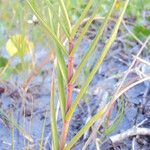
Sporobolus virginicus
Water couch · Marine couch · Sand couch · Beach dropseed · Seashore dropseed
Description
Source: leafsnapSporobolus virginicus, known by numerous common names including seashore dropseed, marine couch, sand couch, salt couch grass, saltwater couch, coastal rat-tail grass, and nioaka, is a species of grass with a wide distribution.
Care Guide
💧 Water
Seashore dropseed is well-suited to dry coastal areas due to its remarkable drought tolerance. It only requires watering once a week. As an evergreen plant, it keeps its leaves throughout the year, which helps reduce water loss through transpiration and enhances its resilience in dry conditions.
☀️ Light Full sun
Seashore dropseed performs best in very bright conditions and prefers plentiful light. Its native coastal environment, which is continually sunlit, has led to adaptations that maximize its ability to capture light. When light is inadequate, its growth is significantly reduced. In contrast, excessive exposure does not harm it, demonstrating a high tolerance for light.
What are the sunlight requirements for Seashore dropseed?
Seashore dropseed requires full sun, which consists of more than 6 hours of sunlight daily to thrive optimally. Its growth is significantly stunted without sufficient light, although it exhibits a high tolerance for intense illumination, a trait acquired from its native coastal habitat. It's important to observe your garden's sunlight patterns carefully to ensure you find a location that offers the ideal balance of light and shade, ensuring the well-being of your plants.
How can I use artificial lighting for Seashore dropseed?
In conditions where natural sunlight is insufficient, artificial lighting becomes crucial for the optimal growth of indoor plants, including Seashore dropseed. LED lights are recommended due to their ability to be customized to specific wavelengths needed by plants. For full sun plants like Seashore dropseed, 30-50W/sq ft of artificial light is necessary. The light source should be placed 12-36 inches above the plant, mimicking natural sunlight conditions, and kept on for 8-12 hours per day to replicate the natural daylight hours required for the species.
What are the symptoms of inadequate lighting for Seashore dropseed?
Symptoms of inadequate lighting in Seashore dropseed include smaller new leaves, leggy or sparse growth, premature leaf drop, and halted or slow new growth. These signs indicate a light deficiency, with the plant trying to conserve resources. Other symptoms can be a result of too much sunlight, such as chlorosis (leaves turning yellow), sunscald, leaf curling, wilting, and leaf scorching, which showcase the plant's struggle with excessive light exposure.
What solutions exist for lighting issues with Seashore dropseed?
Solutions for addressing lighting issues with Seashore dropseed vary based on the setting. Indoors, gradually increase the plant's sunlight exposure each week or utilize artificial lighting, such as desk or ceiling lamps for at least 8 hours a day. For outdoor plants, similarly, increase sun exposure gradually and avoid abrupt changes to prevent sunburn. If plants are struggling with obstructions in the ground, observe and minimize these obstructions, or consider transplanting smaller plants to sunnier locations during their dormant periods, ensuring adequate sunlight and good drainage for optimal health.
🌡️ Temperature 10–37.8°C
Seashore dropseed is usually encountered in habitats with temperatures between 50 and 100.4 °F (10 to 38 ℃). Its thermal preferences mirror those of its native climate. Seasonal adjustments may be necessary, particularly if temperatures fall below its favored range.
What is the preferred temperature range for Seashore dropseed?
Seashore dropseed thrives in environments where temperatures range from 50 to 100.4 °F (10 to 38 °C). This temperature range is ideal for its growth, reflecting its adaptation to its native climate. Seasonal adjustments might be necessary to keep the plant within this temperature range, especially if temperatures fall below its preferred conditions.
Does Seashore dropseed require special frost protection measures during winter?
Seashore dropseed has a strong resistance to cold and usually does not require special frost protection during the winter. However, if winter temperatures are expected to drop below -25°C, it is important to take steps to protect the plant from the cold. This can include covering the plant with soil or straw and ensuring the soil is moist before the first freeze in autumn. These measures help to prevent drought and water scarcity for the plant during winter and early spring.
What are the symptoms and solutions for Seashore dropseed when exposed to temperatures below its preferred range?
When Seashore dropseed is exposed to low temperatures, specifically below -25°C, there might not be noticeable changes during winter. However, there could be a decrease in sprouting or even a failure to sprout during spring. The solution for this issue is to remove any parts of the plant that have failed to sprout in spring.
How does high temperature affect Seashore dropseed and what are the solutions?
When exposed to high temperatures, especially above 43°C, the leaves of the Seashore dropseed may become lighter in color, prone to curling, susceptible to sunburn, and in severe cases, the entire plant may wilt and become dry. The solutions include trimming away sunburned and dried-up parts, moving the plant to a shaded location during the midday and afternoon sun, or using a shade cloth to provide shade. Additionally, watering the plant in the morning and evening to keep the soil moist can help mitigate these issues.
💨 Humidity
🪴 Soil 6-7
🌱 Fertilizer
Seashore dropseed needs extra nutrients to encourage healthy new growth. In spring, putting compost around the base of the plant can effectively supply the necessary nutrients it needs. Fertilizing helps support vigorous growth and enables the plant to resist diseases and pests.
🪴 Pot & Repot
✂️ Pruning
Seashore dropseed thrives in coastal areas, forming dense, mat-like growths. To keep the plant healthy and looking neat, it's best to prune it in early spring. This helps remove dead stems, encourages new growth, and reduces thatch buildup, which improves water absorption. Make sure to use clean tools for effective and healthy maintenance.
🌿 Propagating
🐛 Diseases & pets
☠️ Toxicity
Characteristics
- Plant Type
- Grass
- Life Cycle
- Perennial
- Genus
- Sporobolus
- Family
- Poaceae
- Hardiness Zone
- 6-11
- Mature Height
- 46 cm
- Mature Spread
- 0.61 m to 3.05 m
- Leaf Color
- Green
- Leaf Type
- Evergreen
- Flower Color
- Yellow, Brown, Green, Purple
- Flower Size
- 2.54 cm
- Bloom Time
- Summer, Early fall, Mid fall
- Planting Time
- Spring, Summer, Autumn
- Harvest Time
- Late summer, Fall, Early winter
- Native Area
- Sri Lanka, Belize, Turkey, India, Mexico, Guatemala, Madagascar, Pakistan, Dominican Republic, Guinea-Bissau, Fiji, Tanzania, Benin, Sierra Leone, Indonesia, Haiti, Mozambique, Suriname, Honduras, Peru, Philippines, Cyprus, Bangladesh, Panama, Lebanon, China, Colombia, Syria, Japan, Togo, El Salvador, Senegal, Iran, Côte d'Ivoire, Ecuador, Costa Rica, Somalia, Egypt, Angola, Malaysia, Namibia, Yemen, Kenya, Jamaica, Zimbabwe, Cuba, Cambodia, Liberia, Venezuela, Brazil, Oman, Ghana, Congo, Chile, Georgia, South Africa, Mauritania, Guinea, Bahamas, Bolivia, Vietnam, Guyana, Nicaragua, Singapore, Thailand, Gabon