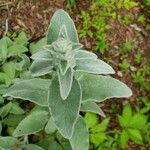
Stachys byzantina
گوشبره · وکا گوشک(اطراف چالوس) · Lamb's-ear · Lamb's-ears · Lamb's-lugs
Description
Source: leafsnapStachys byzantina, commonly known as lamb's ear, is a perennial herbaceous plant native to Turkey and Iran. This member of the Lamiaceae family can reach a height of 30-45 cm. The plant features soft, velvety, silver-gray leaves that resemble the texture of a lamb's ear and grow in a basal rosette pattern, extending up to 15 cm long. During the summer, lamb's ear produces spikes of small pink or purple flowers that attract bees and other pollinators. The plant thrives in well-drained soil with full sun exposure but can also tolerate partial shade. Stachys byzantina has been valued for centuries for its antibacterial properties and medicinal uses. Additionally, it is popular in gardens as an ornamental plant due to its unique texture and coloration. Overall, Stachys byzantina is an attractive perennial herb whose soft, velvety leaves add texture and interest to any garden or landscape design while also offering medicinal benefits.
💡 Lamb's-ear, with its soft, fuzzy leaves, is a joy for children of all ages. In the summer, it produces tall spikes of pale purple flowers that attract bees and hummingbirds. This non-toxic plant is often grown in children's gardens. Once established, lamb's-ear is drought-tolerant and requires minimal care, making it an excellent choice for ground cover due to its dense mats.
🌳 Lamb's-ear is typically recognized for its fuzzy foliage and ornamental appeal, but it also has other interesting uses beyond what is commonly known. These include the potential for extracting essential oils and its use as an ecological indicator. The plant has been examined for its capacity to signal certain soil conditions, since it prefers well-drained sites and thus can indicate good soil drainage. In addition, its characteristic dense mat can help prevent soil erosion, making it a practical ground cover with environmental benefits.
🎭 Recovery
Care Guide
💧 Water Every 7 days
Lamb's-ear, native to the arid regions of Turkey, Armenia, and Iran, thrives in dry conditions. To keep its soft, plush leaves healthy, it requires weekly watering. As an outdoor perennial, it benefits from mulching, which helps retain soil moisture. It prefers well-drained soils and demonstrates excellent drought tolerance.
How should I water my Lamb's-ear plant?
To properly water the Lamb's-ear plant, it is recommended to use filtered water at room temperature. Tap water contains harmful particles that can affect the plant's health. The water should be at room temperature or slightly warmer because the Lamb's-ear is accustomed to warm environments and cold water can be a shock to its system. Avoid watering from above as it can cause problems with the foliage. Instead, apply filtered room temperature water directly to the soil until it becomes fully soaked. This helps moisten the roots and aids in their spread through the soil for nutrient absorption.
What should I do if I give my Lamb's-ear plant too much or too little water?
Overwatering and underwatering can harm your Lamb's-ear, but overwatering is more common. When overwatered, the plant may wilt, turn yellow, and be susceptible to diseases like root rot, mold, and mildew, which can be fatal. Lamb's-ear is fairly drought-tolerant, so underwatering is less likely but can cause brittle, brown leaves. It's important to spot signs of overwatering early to avoid irreversible damage. Reduce watering if you notice these signs and check the soil's drainage. If it's poor, replace it with well-draining potting mix. If signs indicate underwatering, increase watering until the symptoms improve.
How much should I water my Lamb's-ear?
If your Lamb's-ear is in a pot, you should check if it needs water by sticking your finger in the soil. If the top two to three inches of soil feel dry, it's time to water it. If you are growing Lamb's-ear outdoors in the ground, you can use the same method to test the soil. If the top few inches of soil are dry, it's also time to water it. Usually, during spring and early fall, you will need to water the plant about once a week using this method. However, in very hot weather, you may need to water it twice a week or more. Despite this, mature Lamb's-ear plants have a good ability to withstand drought.
How much water does my Lamb's-ear plant need?
When it's time to water your Lamb's-ear, be generous with the amount of water you give. Wait until the top few inches of soil are dry, and then give a deep and thorough watering. Make sure the water soaks the entire soil. Add enough water so that it overflows through the drainage holes at the bottom of the pot. If you don't see excess water draining, you may have not given enough water. However, be careful not to let the water accumulate inside the soil, as it can be harmful to the plant. Similarly, if the water doesn't drain properly, it could indicate poor soil drainage, which is not good for the plant. If the plant is outside, about 1 inch of rain per week should be enough.
How do I water my Lamb's-ear plant as it grows?
The water needs of the Lamb's-ear can vary depending on its growth stages. In the first few years of its life or after transplanting, it requires more water. This is because the plant is focused on developing new roots, which need extra moisture to support future growth. As the Lamb's-ear matures over a few seasons, it will need less water. Another stage that requires more water is during the bloom period, as the flowers require additional moisture for development.
☀️ Light Full sun
Lamb's-ear thrives with abundant, sunlit exposure, promoting healthy growth. Although it tolerates somewhat lower light levels, it performs best in extensive sunny conditions. Very low light can limit its development. Its native habitat reflects a preference for sunlit environments.
What are the sunlight requirements for lamb's-ear?
Lamb's-ear, or Stachys byzantina, thrives under different sunlight conditions, requiring full sun exposure of above 6 hours of sunlight per day for healthy growth. It can also tolerate partial sun, with about 3-6 hours of sunlight. It's important to observe the movement of sunlight through your garden to choose locations that provide the right balance of light and shade, ensuring the plant's happiness and health.
How does lamb's-ear respond to different levels of sunlight?
Lamb's-ear flourishes best under generous, sun-drenched environments, which ensures its healthy growth and helps it to reach its fullest potential. The plant originates from habitats that are exposed to ample sunlight, indicating its preference for such conditions. Although it can survive in lower light levels, its growth may be impeded in excessively low-light conditions.
Can artificial lighting be used for lamb's-ear and how?
Yes, artificial lighting can be beneficial for lamb's-ear, especially when natural sunlight is insufficient, such as in winter or in less sunny spaces indoors. Adequate lighting is crucial for optimal growth. LED lights are popular because they can be customized to provide specific wavelengths of light needed by plants. Full sun plants require 30-50W per square foot of artificial light, partial sun plants need 20-30W per square foot, and full shade plants need 10-20W per square foot. The light source should be placed 12-36 inches above the plant, and most plants need 8-12 hours of light per day.
What are the signs of insufficient light in lamb's-ear?
Signs of insufficient light in lamb's-ear include smaller new leaves, leggy or sparse growth, faster leaf drop, slower or no new growth, lighter-colored new leaves, chlorosis (leaves turning yellow due to loss of green pigment), sunscald, leaf curling, wilting, and leaf scorching. These symptoms indicate the plant is not receiving enough light and is struggling to perform photosynthesis effectively.
What solutions can help lamb's-ear receiving insufficient light?
To address insufficient light, gradually move lamb's-ear plants to sunnier locations, ensuring they receive at least 6 hours of direct sunlight daily. For indoor plants not easily moved, consider using artificial light such as desk lamps or professional grow lights for at least 8 hours daily. For outdoor plants, avoid sudden changes in light intensity to prevent sunburn. If sunlight is obstructed, consider pruning or transplanting small plants to sunnier areas. Note that parts of the plant affected by low light may not recover, but new growth should be healthy after increasing light exposure.
🌡️ Temperature 15–35°C
Lamb's-ear is a temperate woody plant that prefers temperatures between 59 and 95 ℉ (15 to 35 ℃). It is native to Mediterranean regions, where summer temperatures can exceed 100 ℉ (38 ℃). Because of this, the plant can tolerate higher temperatures but may benefit from some shade during periods of extreme heat.
What is the optimal temperature range for Lamb's-ear?
Lamb's-ear thrives in a temperature range of 59 to 95°F (15 to 35°C), reflecting its native Mediterranean origins where summers can exceed 100°F (38°C). While it can adapt to higher temperatures, providing some shade during the peak of extreme heat can be beneficial. The plant exhibits strong cold resistance, negating the need for special frost protection measures in winter. However, if temperatures are expected to fall below -15°C, it is advised to protect the plant by covering it with soil or straw. Additionally, ensuring the soil is moist before the first freeze in autumn helps prevent drought and water scarcity throughout winter and into early spring.
How does Lamb's-ear react to temperatures below -15°C?
Lamb's-ear is notably cold-tolerant, thriving best when temperatures stay above 15°C. In winter, it should be kept above -10°C. When temperatures dip below -15°C, while the plant may not show immediate changes, there's a risk of decreased or absent sprouting in spring. To mitigate this, it is recommended to remove any parts in spring that have failed to sprout, helping the plant to recover and grow effectively.
What should be done if Lamb's-ear experiences high temperatures above 41°C?
During summer, it is crucial to keep Lamb's-ear below 35°C to prevent stress from high heat. If temperatures soar above 41°C, the plant's leaves may lighten in color, curl, become susceptible to sunburn, or in severe cases, the whole plant may wilt and dry out. To combat this, trim away any sunburned or dried-up parts of the plant. Relocating the plant to a shaded area or using a shade cloth during the midday and afternoon sun is advisable. Watering the plant in the morning and evening to maintain soil moisture is also beneficial in mitigating the effects of extreme heat.
💨 Humidity dry (<40%)
This plant prefers dry conditions, so don't mist it. However, watering it less often can also thrive in higher humidity.
🪴 Soil 6-7
🌱 Fertilizer
One fertilizer application in spring is generally enough for Lamb's-ear, though additional feedings can enhance growth. Feed every four to six weeks. Fertilization improves the leaves' appearance and function, helping maintain even color and a healthy texture. It also promotes root development and nutrient uptake for the plant's long-term health.
Why should I put plant food on my Lamb's-ear plant?
The main structure of a Lamb's-ear is composed mostly of its leaves. Fertilization plays a critical role in promoting healthy and vibrant leaves that serve their purpose effectively. Proper fertilization ensures consistent leaf color and a texture that indicates good health. Additionally, fertilization works beneath the soil's surface to support root growth and maintenance. By fertilizing your Lamb's-ear, you not only keep it healthy in the present but also enhance its ability to absorb soil nutrients in the future.
What is the best time to add fertilizer to my Lamb's-ear?
If you grow your Lamb's-ear outdoors, it will start growing new leaves in early spring. This is the signal that it's time to fertilize the plant for the year. Usually, one application of fertilizer in the spring is enough for your Lamb's-ear to grow well. However, if you want to maximize its growth, you can fertilize it multiple times during the spring and early summer. In this case, you can feed your Lamb's-ear every month to a month and a half.
When is the best time to not fertilize my Lamb's-ear plant?
During the late fall and winter, your Lamb's-ear goes into a dormant phase where it stops producing new growth. It's best to avoid fertilizing during this time. In the spring and summer, if you do choose to fertilize, start reducing the amount as summer gets closer because the growth rate of your Lamb's-ear will slow down. Avoid fertilizing when the weather is unusually hot or the soil is extremely dry, as it can stress and potentially harm your Lamb's-ear.
What kind of fertilizer should I use for my Lamb's-ear?
Choosing the best fertilizer for a Lamb's-ear is straightforward. These plants thrive on a general-purpose garden fertilizer with equal amounts of nitrogen, phosphorus, and potassium, like a 10-10-10 ratio. Avoid fertilizers with high nitrogen content if unsure. Granular fertilizers are most recommended for Lamb's-ear, particularly slow-release ones that are easy to apply. Additionally, it's beneficial to use organic soil amendments, such as compost, to feed your Lamb's-ear.
How should I fertilize my Lamb's-ear plant?
To care for your Lamb's-ear, wait until early spring when you see the first leaves poking through the soil. Then, apply a granular slow-release fertilizer with a balanced formula to the soil around the base of the plant. You can repeat this process later in the season if desired. When applying fertilizer, make sure it goes to the soil at the base of the plant, not on the leaves. You may need to move some leaves aside to reach the soil above the roots. It's a good idea to water your Lamb's-ear before and after fertilizing.
🪴 Pot & Repot 2-3 years
When repotting Lamb's-ear, select a pot 1–2 inches (2.5–5.1 cm) larger with ample drainage. Use a well-draining potting mix. Repot in spring or fall, ensuring that the root ball is slightly lower than the rim of the flower pot. Water thoroughly after repotting and place in a warm spot with indirect sunlight.
✂️ Pruning
Lamb's-ear is known for its soft, silver-gray leaves. To encourage healthy growth, remove dead leaves and maintain its shape, prune the plant in early spring. Every few years, rejuvenate the plant by cutting it back to ground level. This practice promotes fuller growth, reduces the risk of disease, and enhances the plant's ornamental appeal.
🌿 Propagating
🐛 Diseases & pets
☠️ Toxicity
Lamb’s ear is not toxic to humans and animals. Although, it may cause digestive irritation if eaten in large amounts.
Characteristics
- Plant Type
- Herb
- Life Cycle
- Perennial
- Genus
- Stachys
- Family
- Lamiaceae
- Hardiness Zone
- 7-10
- Mature Height
- 61 cm to 76 cm
- Mature Spread
- 30 cm to 91 cm
- Leaf Color
- Green, Silver, Gray, White
- Leaf Type
- Evergreen
- Flower Color
- Pink, Lavender
- Flower Size
- 2.54 cm
- Bloom Time
- Late spring, Early summer, Mid summer
- Planting Time
- Spring
- Harvest Time
- Mid summer
- Native Area
- Russia, Iran, Turkey