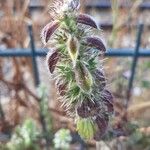
Stachys ocymastrum
Hairy Woundwort · Italian hedgenettle
Description
Source: leafsnapStachys ocymastrum, the Italian hedgenettle, is a species of annual herb in the family Lamiaceae. They have a self-supporting growth form. Flowers are visited by Green-striped White. Individuals can grow to 0.4 m.
Care Guide
💧 Water
The Italian hedgenettle thrives in Mediterranean habitats, where it adapts to seasonal rainfall. While it has moderate drought tolerance, it prefers balanced moisture and requires weekly watering. As an herbaceous perennial, the growth and dormancy cycles of the Italian hedgenettle are influenced by water availability.
How should I water my Italian hedgenettle?
Italian hedgenettle can be watered using various methods such as a garden hose with a spray nozzle, a watering can, or any other common watering tool. This plant is not too particular about the type of water it receives, as it can survive with rainwater, tap water, or filtered water. However, it is best to avoid watering it from overhead as this can harm the leaves and flowers and potentially cause disease. Setting up a drip irrigation system is often the most effective way to water Italian hedgenettle, as it ensures even and direct watering to the soil. When watering a container-grown Italian hedgenettle, you can use a cup, watering can, or tap water to directly water the soil.
What should I do if I give too much or too little water to my Italian hedgenettle plant?
To remedy underwatering Italian hedgenettle, simply water it more regularly when you notice it lacks moisture. Overwatering, on the other hand, can lead to serious issues and even death if not addressed early. To prevent overwatering, choose a sunny location with good drainage to avoid waterlogged soil. If you overwater your potted Italian hedgenettle, consider changing it to a new pot with proper drainage and loose soil during repotting.
How frequently do I need to water my Italian hedgenettle?
Italian hedgenettle requires regular watering throughout the growing season. In spring, water the plant once a week. As the season progresses and temperatures rise, water two to three times a week. However, do not exceed this frequency as it can harm the plant. Regardless of the watering rate, ensure that the soil remains moist but not wet. For Italian hedgenettle in a pot, water more frequently compared to plants in the ground. Potted plants may dry out faster due to the heat, so water them a few times a week instead of just once.
How much water does my Italian hedgenettle plant require?
Determining the appropriate amount of water for your Italian hedgenettle can be done in a few different ways. Some gardeners prefer to assess the moisture level of the soil by feeling it with their hands. This method suggests watering until the top six inches of soil feel moist. Alternatively, you can use a specific measurement to determine the water requirement. Typically, about two gallons of water per week is suitable for your Italian hedgenettle, considering factors such as temperature and how quickly the soil dries out. However, following strict guidelines like this may result in overwatering if your plant needs less water. If you are growing your Italian hedgenettle in a container, the approach to watering is slightly different. It is recommended to moisten all layers of dry soil, which can be tested by inserting your finger into the soil and checking for moisture. Another indicator is when you observe a small amount of excess water draining from the pot's holes after watering.
How can I know if I am giving enough water to my Italian hedgenettle?
Avoiding overwatering your Italian hedgenettle can be a bit challenging because it has deep roots that need to be watered regularly. However, it is important to be cautious because Italian hedgenettle is highly prone to root rot and browning if overwatered. Underwatering is less of a concern as Italian hedgenettle can survive without excessive watering for a period of time. However, if you neglect to water it for too long, it may start to wilt and develop dry leaves.
☀️ Light Full sun
Italian hedgenettle comes from bright, open habitats and does best in full sun. It can tolerate some partial shade but prefers direct sunlight for optimal growth. This plant, which may be annual or biennial, is noted for its sun-loving nature.
What are the sunlight requirements for Italian hedgenettle?
Italian hedgenettle thrives in environments with full sunlight, requiring more than 6 hours of sunlight daily for optimal growth. It can also tolerate partial sun, defined as about 3-6 hours of sunlight. The plant's health and growth are contingent on receiving the right balance of light and shade. For indoor plants, artificial lighting can compensate for insufficient natural light, with the requirement varying based on the plant's sunlight needs. Full sun plants need 30-50W/sq ft, partial sun plants 20-30W/sq ft, and full shade plants 10-20W/sq ft of artificial light.
What are some of the symptoms of light deficiency in plants?
When Italian hedgenettle is grown indoors or under inadequate light, it may display several symptoms indicating light deficiency. These include smaller new leaves, leggy or sparse growth, faster leaf drop, slower or halted growth, and lighter-colored or yellow leaves (chlorosis). Excessive sunlight can also cause issues such as sunscald, leaf curling, wilting, and leaf scorching, indicating the importance of finding a proper light balance.
How can I address and improve my Italian hedgenettle's light exposure?
To optimize your Italian hedgenettle's growth by improving light exposure, consider gradually moving it to a location with at least 6 hours of direct sunlight daily. For indoor plants that are large or not easily movable, supplementing with artificial light such as desk or ceiling lamps for at least 8 hours a day can be beneficial. Outdoors, adapt your plants to sunnier spots gradually to prevent sunburn. If certain areas block sunlight, reducing obstructions by pruning or relocating plants can help. Remember, while you can encourage new healthy growth by increasing light exposure, parts of the plant that have been severely affected by insufficient light may not recover.
🌡️ Temperature 15–37.8°C
Italian hedgenettle can tolerate a broad range of temperatures, but its distribution may still be restricted by various combinations of water and heat conditions. It performs best in warm summer climates with sufficient rainfall or irrigation. Long stretches of cloudy, rainy weather or prolonged high temperatures can raise the chance of the plant dying. In winter, adequate protection from cold can increase its survival rate.
💨 Humidity
🪴 Soil 6-7
🌱 Fertilizer
When most of the Italian hedgenettle's flowers have opened to full size, resume fertilizing. During the peak bloom period, fertilize every three to four weeks, weather permitting. After the plant begins to produce fewer new blooms, stop fertilizing; there is no need to fertilize when it can no longer produce more blooms.
🪴 Pot & Repot
✂️ Pruning
Italian hedgenettle is a resilient perennial plant known for its upright growth and aromatic leaves. To encourage fresh growth and maintain its shape, prune the plant from early to late spring. Regular pruning helps increase foliage density and flowering. However, avoid heavy trimming to prevent stressing the plant.
🌿 Propagating
🐛 Diseases & pets
☠️ Toxicity
Characteristics
- Plant Type
- Herb
- Life Cycle
- Annual
- Genus
- Stachys
- Family
- Lamiaceae
- Hardiness Zone
- 8-11
- Mature Height
- 11 cm to 61 cm
- Mature Spread
- 30 cm to 61 cm
- Leaf Color
- Green
- Leaf Type
- Semi-evergreen
- Flower Color
- Pink, White
- Flower Size
- 1.02 cm to 1.52 cm
- Bloom Time
- Mid spring, Late spring, Early summer
- Planting Time
- Spring, Summer, Autumn
- Harvest Time
- Summer
- Native Area
- Libya, Tunisia, Italy, Spain, France, Algeria, Greece, Lebanon, Morocco, Portugal