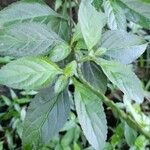
Stachytarpheta cayennensis
Cayenne snakeweed · Dark-blue snakeweed · Rattail · Nettle-leaf porterweed · Rough-leaf false vervain
Description
Source: leafsnapStachytarpheta cayennensis, commonly known as Cayenne porterweed, is a perennial plant in the Verbenaceae family. Native to tropical regions of the Americas, it is found in countries such as Brazil, Colombia, and Venezuela. The plant typically reaches a height of 1 to 2 meters and features a woody stem with numerous branches. The leaves of Stachytarpheta cayennensis are simple, opposite, and lanceolate with serrated edges. Its small yet abundant flowers grow on long spikes that can extend up to 30 cm. These blossoms are typically blue or purple, but they can also be pink or white. Traditionally, indigenous peoples have used this plant for medicinal purposes, treating ailments such as fever, diarrhea, dysentery, and respiratory infections. It contains several bioactive compounds, including flavonoids, which have demonstrated anti-inflammatory properties. Stachytarpheta cayennensis is also popular among gardeners due to its attractive flowers, which draw butterflies and other pollinators. This makes it an excellent addition to butterfly or pollinator gardens. Overall, Stachytarpheta cayennensis is a versatile plant that offers both medicinal benefits and aesthetic appeal. Whether you're a gardener seeking beautiful, ecologically beneficial plants or someone interested in natural remedies from traditional medicine, this plant is an excellent choice.
🌳 Cayenne porterweed is more than an ornamental plant; it plays an important ecological role in attracting pollinators. A diverse range of insects, including bees, butterflies, and hummingbirds, are attracted to its vibrant blue to violet, nectar-rich flowers. This not only helps the plant reproduce but also supports the lives of these pollinating species, thereby contributing to the biodiversity of ecosystems where cayenne porterweed is found. Although it is not widely known for other uses, this characteristic highlights its potential for pollinator garden designs and biodiversity conservation efforts.
Care Guide
💧 Water Every 7 days
Cayenne porterweed thrives in the high humidity and regular rainfall typical of tropical regions. Although it is drought-tolerant, consistent soil moisture is beneficial, so it requires watering every 2-3 weeks. To mimic its humid environment indoors, misting can be helpful. Outdoor plants will need more frequent watering during their active growth periods.
How should I water my Cayenne porterweed?
Your Cayenne porterweed is not very particular about how you water it, so you can use any common watering tool like watering cans, hoses, or even cups. It's important to water it directly on the soil and make sure you moisten all areas equally to give the entire root system the water it needs. Using filtered water is helpful because tap water may have harmful particles. It's also best to use water that is at or slightly above room temperature, as extremely cold or hot water can be a bit of a shock to the Cayenne porterweed. However, overall this plant responds well to any type of water you give it.
What should I do if I give my Cayenne porterweed too much or too little water?
Outdoor plants, especially newly planted ones or seedlings, can suffer from a lack of watering. It is important to water them regularly for a few months while they are small or newly planted. Once the roots are established, Cayenne porterweed can usually rely on rain for hydration. If your Cayenne porterweed is in a pot, overwatering can be a common issue. If you accidentally overwater, there are steps you can take to fix it. Firstly, stop watering the plant immediately to minimize the effect of overwatering. Then, check the plant's roots by removing it from the pot. If there is no root rot, you can return the plant to its container. However, if you find any signs of root rot, trim away the affected roots and apply a fungicide to prevent further damage. Lastly, repot the Cayenne porterweed in well-draining soil. In the case of underwatered plants, simply water them more frequently. Underwatering is usually easy to fix, as the leaves will droop, dry out, and fall off. The leaves will quickly regain their fullness after sufficient watering. It is important to adjust your watering frequency once you notice underwatering.
How often do I need to water my Cayenne porterweed plant?
Most outdoor plants can rely on rainfall for their watering needs. However, if you live in an area with low rainfall, you should water your plants every 2 weeks in spring and fall, and more often in summer. In winter, since plants grow slower and require less water, you can water them less frequently or not at all. If your Cayenne porterweed is young or newly planted, it needs more water to establish and become drought-tolerant. For potted plants, there are two ways to determine watering frequency. You can either stick to a set schedule, watering once a week or every other week, but this may not account for your plant's unique environment. Alternatively, you can check the soil moisture and wait until the top two to four inches have dried out before watering again. This is especially important during summer when the plant requires more water.
How often should I water my Cayenne porterweed?
To water your Cayenne porterweed effectively, you don't always need to give it a large amount of water. Instead, if only a few inches of soil have dried since the last watering, you can promote healthy growth by providing around five to ten ounces of water each time. You can also adjust the amount of water based on the moisture of the soil. Take note of how many inches of soil have dried between waterings. To ensure your Cayenne porterweed receives adequate moisture, water enough to moisten all the dry soil layers since the last watering. If over half of the soil has dried, consider giving more water than usual. In such cases, keep adding water until you see excess water draining from the pot's holes. If your Cayenne porterweed is located in an area that receives ample outdoor rainfall, it may not require additional watering. When the plant is young or establishing itself, aim for 1-2 inches of rain per week. As it grows and becomes established, it can rely solely on rainwater. Only when there is hot weather and no rainfall for 2-3 weeks should you consider providing a thorough watering to prevent stress.
How do I know if I'm giving enough water to my Cayenne porterweed?
The Cayenne porterweed is often overwatered, and there are clear signs to watch out for. If you overwater, your plant's leaves will turn yellow and may even fall off. Overwatering can also make the plant shrivel and lead to root rot. On the other hand, if you underwater, the plant will start to wilt and the leaves may become brown or brittle. In either case, it's important to take action and revive the health of your Cayenne porterweed.
☀️ Light Full sun
The cayenne porterweed does well under a canopy of filtered light, so it is suited to situations where full sunlight is limited. It can tolerate having no light exposure; however, too little light can impede its healthy development, indicating it requires at least some sunlight to grow optimally.
What are the sunlight requirements for Cayenne Porterweed?
Cayenne Porterweed thrives best under filtered light conditions, receiving partial sun of about 3-6 hours of sunlight daily. It's important to watch how the sunlight moves through your garden, ensuring to choose spots that offer a perfect balance of light and shade. This balance keeps your plants happy, promoting a healthy growth environment despite potential constraints from full sunlight exposure.
How can artificial lighting supplement natural sunlight for Cayenne Porterweed?
When natural sunlight is insufficient, especially during winter or in less sunny spaces, artificial lighting becomes crucial for the growth of Cayenne Porterweed. Using LED lights is advised as they can be customized to provide specific wavelengths needed by plants. Depending on the plant's sunlight needs, you'll require 10-50W/sq ft of artificial light. The correct positioning involves placing the light source 12-36 inches above the plant, mimicking natural sunlight, with an exposure of 8-12 hours per day.
What symptoms indicate Cayenne Porterweed is not receiving enough light?
Symptoms of insufficient light exposure in Cayenne Porterweed include smaller new leaves, leggy or sparse growth, faster leaf drop, slower or halted growth, and lighter-colored or chlorotic leaves. Leaf curling, wilting, leaf scorching, and damage such as sunscald also indicate inappropriate light exposure. These symptoms suggest the plant is struggling with its current light conditions, either needing more sunlight or suffering from excessive exposure.
What solutions can address light-related issues in Cayenne Porterweed?
To address light-related issues in Cayenne Porterweed, one can optimize growth by gradually adapting the plant to more sunlight, moving it to sunnier spots each week until it achieves 3-6 hours of direct sunlight. For plants that are large or not easily movable, supplementing with artificial light for at least 8 hours daily is beneficial. Outdoors, ensure gradual changes in light exposure to prevent sunburn. Indoors, consider using desks or ceiling lamps, or invest in professional grow lights. Additionally, reducing light obstructions or transplanting to sunnier locations can significantly improve conditions for growth. Remember, parts of the plant affected by poor light may not recover, but new growth will be healthy with proper light adjustments.
🌡️ Temperature 20–37.8°C
Cayenne porterweed is native to environments where temperatures typically fall between 68 to 100 °F (20 to 38 ℃). The plant prefers warm conditions and is capable of adjusting to seasonal temperature fluctuations within that preferred range.
What is the ideal temperature range for Cayenne porterweed?
Cayenne porterweed thrives in environments where temperatures are generally between 68 to 100 °F (20 to 38 °C). This plant loves warmth and can adapt to seasonal temperature fluctuations within its preferred range. It is vital to maintain temperatures above 20°C (68°F) during winter to ensure the plant's growth. Exposure to temperatures approaching 0°C (32°F) or lower is harmful to the Cayenne porterweed.
How should Cayenne porterweed be cared for during cold seasons?
During cold seasons, particularly in autumn, it is advisable to bring outdoor-grown Cayenne porterweed indoors to protect it from the cold. The plant should be placed near a bright window to ensure it receives enough light. However, care should be taken to keep it at a certain distance from heaters to avoid damage. Maintaining indoor temperatures above 20°C (68°F) during winter is beneficial for the plant's health.
What are the symptoms of low temperature exposure in Cayenne porterweed, and how can they be addressed?
Exposure to low temperatures can cause Cayenne porterweed leaves to lighten in color and, following frost damage, gradually turn brown or black. Other symptoms include wilting and drooping. To address this, frost-damaged parts should be trimmed off, and the plant should be moved to a warm indoor environment for protection. Positioning the plant near a south-facing window will ensure it gets ample sunlight. Additionally, avoid placing it near heaters or air conditioning vents to prevent air dryness.
How does high temperature affect Cayenne porterweed, and what solutions are recommended?
When temperatures exceed 38°C (100°F) during summer, Cayenne porterweed becomes susceptible to high temperature stress. Leaves can lighten in color and the plant may experience sunburn if temperatures surpass 43°C (109°F). It is recommended to trim away sunburned and dried-up parts of the plant. Moving the plant to a shaded location during the midday and afternoon sun, along with watering it in the morning and evening, will help keep the soil moist and protect the plant from excessive heat.
💨 Humidity
🪴 Soil 6-7
🌱 Fertilizer
The best time to fertilize a Cayenne porterweed is in early spring when it breaks dormancy. This encourages overall growth and flower formation. Fertilization improves the foliage, stems, and branches, while encouraging flowers that are large, vibrant, and long-lasting. It also helps move nutrients from the roots to the flowers and boosts the plant’s health and resistance to disease.
Why do I have to add fertilizer to my Cayenne porterweed?
Fertilization plays a crucial role in maintaining the overall health and well-being of a Cayenne porterweed. It ensures the plant receives the necessary energy and nutrients to develop abundant foliage and strong stems and branches. Additionally, fertilization greatly benefits gardeners who grow this plant because it enhances the production of large, vibrant, and long-lasting flowers. This is because the right fertilizer aids in the efficient transfer of fuel from the roots to the stems and flowers. Moreover, proper fertilization boosts the plant's overall health, making it more resilient against diseases.
When should I fertilize my Cayenne porterweed to get the best results?
The best time to fertilize a Cayenne porterweed is in early spring when it is coming out of dormancy and getting ready to bloom. This will give the plant plenty of energy for growth and flowering. However, it is also beneficial to fertilize it again in the fall, although this feeding can be smaller than the spring one. Some gardeners choose to fertilize the plant when they are planting it, but this is not always required.
When should I not put fertilizer on my Cayenne porterweed?
During the winter, Cayenne porterweed enters a dormant phase like many other plants. Consequently, it does not require fertilization to fuel new growth. In fact, fertilizing during this period can lead to the harmful consequences of overfertilization. The optimal times to feed a Cayenne porterweed are in early spring and fall. Therefore, for the majority of spring and summer, fertilization is unnecessary. Additionally, it is advisable to refrain from feeding if the plant is subjected to extreme heat or dryness.
Which fertilizer should I use for my Cayenne porterweed?
Cayenne porterweed plants have specific fertilizer needs. While general-purpose fertilizers with equal amounts of nitrogen, phosphorus, and potassium are usually fine, Cayenne porterweed plants do best with a fertilizer that has higher levels of nitrogen and phosphorus compared to potassium. A fertilizer with an N-P-K ratio of 10-10-8 or something similar is recommended. Additionally, adding organic materials like compost for at least one feeding can be beneficial. If using fertilizer, granular fertilizer is commonly used for Cayenne porterweed plants.
How can I add fertilizer to my Cayenne porterweed?
Applying fertilizer to your Cayenne porterweed is an easy task that any gardener can do, even if they have minimal experience. To feed your plant with granular fertilizer, simply sprinkle it on the soil after moistening it with water. You can also improve the soil by adding organic material like compost or manure. To do this, place the material on top of the soil and gently work it into the top few inches using a hand rake, being careful not to disturb the roots.
🪴 Pot & Repot Every 12 months
✂️ Pruning
Cayenne porterweed is known for its vibrant blue flowers and rapid growth. To encourage bushier growth and increase flowering, it is important to prune regularly, especially in late spring. Effective pruning techniques include removing dead stems and cutting the plant back after it blooms. Be sure to use clean, sharp tools to prevent the spread of disease.
🌿 Propagating
🐛 Diseases & pets
☠️ Toxicity
Characteristics
- Plant Type
- Shrub
- Life Cycle
- Perennial
- Genus
- Stachytarpheta
- Family
- Verbenaceae
- Hardiness Zone
- 9-11
- Mature Height
- 2.13 m
- Mature Spread
- 91 cm
- Leaf Color
- Green
- Leaf Type
- Evergreen
- Flower Color
- Purple, Blue
- Flower Size
- 2.54 cm
- Bloom Time
- All year round
- Planting Time
- Spring, Summer, Autumn
- Harvest Time
- All year round
- Native Area
- Belize, Honduras, Mexico, Guatemala, Peru, Madagascar, Dominican Republic, Trinidad and Tobago, Panama, Jamaica, Colombia, Cuba, Paraguay, Argentina, Haiti, Bolivia, Myanmar, Venezuela, Brazil, Guyana, El Salvador, Nicaragua, Suriname, Costa Rica