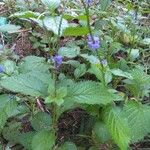
Stachytarpheta jamaicensis
Light-blue snakeweed · Blue porterweed · Trinidad and Tobago Vervain · Brazilian-tea · Pale blue snakeweed
Description
Source: leafsnapStachytarpheta jamaicensis is a species of plant in the family Verbenaceae, native throughout the Caribbean. It has many common names including blue porterweed, blue snake weed, bastard vervain, Brazilian tea, Jamaica vervain, and light-blue snakeweed. It is unclear whether S. indica is a separate species. It usually is found along country roadsides and it also grows well as a ruderal plant on disturbed terrain. It is an invasive species in some places. This species is evergreen and blooms throughout the year in Florida, where it often is planted as a butterfly plant even though there is a native porterweed that is overlooked by many gardeners and with which it hybridizes, to the detriment of the native species. This plant also can be found on St. Croix, where it is locally known as "worryvine".
🌳 Blue porterweed is more than an ornamental; it serves an important function in gardens and ecosystems by drawing in various butterflies, such as the Long-tailed Skipper and the Dorantes Longtail, which feed on its nectar. Because of this trait, blue porterweed is valuable to pollinator gardeners and helps sustain local biodiversity.
🎭 Spiritual elevation of the life force
Care Guide
💧 Water Every week
Blue porterweed thrives in consistent moisture and high humidity, benefiting from weekly watering. Although it can tolerate short dry spells, mulching during hot periods helps retain moisture and supports lush growth in warm outdoor climates.
How should I water my Blue porterweed plant?
When watering the Blue porterweed, it's best to use filtered water at room temperature. Tap water can have harmful particles for this plant, so filtered water is preferred. Because the Blue porterweed comes from a warm environment, the water should be room temperature or slightly warmer to avoid shocking the plant. Additionally, overhead watering should be avoided to prevent foliage issues. Instead, drench the soil with your filtered room temperature water until it's completely soaked. This helps moisten the roots and supports their spread in the soil to collect necessary nutrients.
What should I do if I give too much or too little water to my Blue porterweed?
Overwatering is a common issue for Blue porterweed and can cause wilting, yellowing of the stems and leaves, and diseases like root rot, mold, and mildew. Underwatering is less likely, but can result in brittle, brown leaves. To prevent the harmful effects of overwatering, it's important to recognize the signs early and reduce watering immediately. If the soil drains poorly, replace it with a well-draining potting mix. If underwatering is noticed, simply increase watering until the signs subside.
How frequently should I water my Blue porterweed?
If your Blue porterweed is in a pot, the best way to know if it needs water is to stick your finger in the soil. If the top two to three inches of soil are dry, it's time to water it. If you're growing it outside in the ground, you can use the same method to check the soil. When the top few inches of soil are dry, it needs water. In the spring and early fall, watering about once a week should be enough. However, during extremely hot weather, you may need to water it two or more times a week. It's important to note that mature, well-established Blue porterweed can handle drought well.
How much water does my Blue porterweed require?
When watering your Blue porterweed, don't be shy about giving it water. Make sure the first two to three inches of soil are dry before watering. It's best to give it a thorough watering that completely soaks the soil. You should add enough water to cause excess water to flow through the drainage holes at the bottom of the pot. If you don't see excess water draining, you may have underwatered your plant. Be careful not to let water accumulate in the soil, as this can be dangerous for the plant. If you notice that water isn't draining well through the pot, it could indicate poorly draining soils, which can harm the plant's health. If the plant is outside, it should receive about 1 inch of rain per week, which is sufficient.
How should I water my Blue porterweed as it grows?
The water requirements of the Blue porterweed vary depending on its growth stages. In the first few years of its life or when newly transplanted, it needs more water. During these stages, the plant focuses on developing new roots to support future growth, which requires additional moisture. As the plant matures, it requires less water. Additionally, during the bloom period, when the flowers are developing, the Blue porterweed may also need more water due to increased moisture needs.
☀️ Light Full sun
Blue porterweed prospers in full sun yet can also adjust to lower light levels, not necessarily of full intensity. This adaptable tolerance to sunlight enhances its growth potential. However, overly intense sunlight or inadequate light can result in reduced growth. The plant’s origin in sunny conditions reflects this flexibility.
How much sunlight does Blue porterweed need to grow?
Blue porterweed requires six to eight hours of direct sunlight daily. When growing outdoors, choose a spot that receives full sunlight all day. When growing indoors, place the plant near a south-facing window or another well-lit location. While full sunlight is necessary for Blue porterweed's growth, avoid exposing it to direct sunlight during high temperatures, such as over 35°C (95℉) or hot summer afternoons, as it can harm the leaves. To prevent this, use sheer curtains or blinds to filter sunlight or move the plant to a shadier area.
What will happen if Blue porterweed doesn't receive sufficient sunlight?
Insufficient sunlight can be detrimental to your Blue porterweed's growth. It may become weak and leggy, with yellowing leaves that point to a lack of chlorophyll production. In severe instances, the plant might not survive.
If Blue porterweed gets too much sunlight, what will happen?
To ensure the healthy growth of Blue porterweed, provide it with full sunlight but be cautious of excessive direct exposure. Prolonged intense sunlight can result in sunburn-like symptoms such as brown or scorched leaves. To prevent this, regularly monitor the plant and relocate it to a more shaded area if needed.
🌡️ Temperature 20–37.8°C
Blue porterweed thrives at temperatures of 68 to 100 ℉ (20 to 38 ℃). It is native to warm tropical areas and cannot withstand frost. In colder periods, it is advisable to protect the plant with mulch or bring it indoors to keep it within its preferred temperature range.
What is the optimal temperature range for Blue porterweed?
The Blue porterweed, also known by its botanical name Stachytarpheta jamaicensis, thrives in a temperature range of 68 to 100°F (20 to 38°C). This plant is native to warm, tropical environments and does not fare well in cold weather, showing a particular sensitivity to frost. To ensure its health during the colder months, it's advisable to use mulch for protection or to bring it indoors, aiming to keep the temperature above 20°C. Especially during winter, maintaining a warm environment is crucial for its growth, and exposure to temperatures near 0°C can significantly harm the plant.
What should I do if my Blue porterweed has been exposed to low temperatures?
If your Blue porterweed experiences low temperatures, particularly falling below -5°C, it may show symptoms like color lightening in leaves, wilting, drooping, and eventual browning or blackening after frost damage. Immediate actions should include trimming the frost-damaged parts and moving the plant to a warmer, indoor environment. A south-facing window is ideal for providing sufficient sunlight while avoiding the placement near heaters or air conditioning vents to prevent further stress from excessive dryness. The goal is to keep the temperature consistently above 20°C during winter to avoid any cold damage.
How to care for Blue porterweed in high temperature conditions?
While Blue porterweed is a heat-loving plant, temperatures above 38°C can pose risks, such as lighter leaf coloration and increased susceptibility to sunburn once temperatures exceed 43°C. To mitigate high temperature stress, affected parts of the plant should be trimmed away. Relocating the plant to a shaded area that avoids the midday and afternoon sun can also help. Additionally, to manage soil moisture and support the plant in high temperatures, watering in the morning and evening is recommended, ensuring the soil remains moist but not saturated.
💨 Humidity
🪴 Soil 6-7
🌱 Fertilizer
Blue porterweed has its highest fertilizer needs during the active growth period, which falls mainly in spring, summer, and early fall. Fertilizing supplies vital nutrients the soil may lack, supporting healthy root and stem growth and the attractive foliage that is an important characteristic of this plant.
🪴 Pot & Repot 2-3 years
When repotting Blue porterweed, select a pot 1–2 inches (2.5–5.1 cm) larger with ample drainage. Use a well-draining potting mix. Repot in spring or fall, making sure the root ball sits slightly below the rim of the flower pot. Water thoroughly after repotting and place in a warm spot with indirect sunlight.
✂️ Pruning
🌿 Propagating
🐛 Diseases & pets
☠️ Toxicity
Characteristics
- Plant Type
- Herb
- Life Cycle
- Perennial, Annual
- Genus
- Stachytarpheta
- Family
- Verbenaceae
- Hardiness Zone
- 9-11
- Mature Height
- 0.61 m to 2.13 m
- Mature Spread
- 1.22 m to 2.44 m
- Leaf Color
- Green, Blue
- Leaf Type
- Evergreen
- Flower Color
- Blue, Purple
- Flower Size
- 2.54 cm
- Bloom Time
- All year round
- Planting Time
- Autumn
- Harvest Time
- All year round
- Native Area
- Colombia, Bahamas, Belize, Cuba, Honduras, Mexico, Guatemala, Venezuela, Nicaragua, Costa Rica, Panama, Jamaica