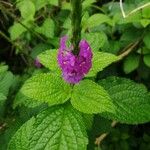
Stachytarpheta mutabilis
Coral porterweed · Red snakeweed · Pink snakeweed · Changeable velvetberry · Changeable false vervain
Description
Source: leafsnapStachytarpheta mutabilis, commonly known as Porterweed or Pink Snakeweed, is a flowering plant belonging to the Verbenaceae family. Native to Central and South America, it has been introduced to other parts of the world as an ornamental plant. This species can grow to a height of 1-2 meters and features lance-shaped leaves arranged oppositely along its stem. Its flowers, which are pink or purple, appear in clusters at the ends of its branches. Stachytarpheta mutabilis is a popular garden plant thanks to its attractive, year-round blooms. It thrives in well-drained soil and full sun but can also tolerate partial shade. The plant requires regular watering during dry periods. In traditional medicine, Stachytarpheta mutabilis has been used to treat various ailments such as fever, coughs, colds, headaches, and stomach problems due to its anti-inflammatory properties. Additionally, its leaves are known for their antiseptic qualities and have been used to treat wounds. Overall, Stachytarpheta mutabilis is an appealing ornamental garden species with medicinal properties, making it a valuable addition not only for its aesthetic appeal but also for its health benefits.
Care Guide
💧 Water Every 7 days
Changeable velvetberry thrives in conditions of high humidity and regular rainfall, needing to be watered every 1-2 weeks to maintain adequate moisture levels. Although it prefers consistently moist conditions, it can tolerate short periods of dryness. Being an evergreen plant, changeable velvetberry requires consistent watering throughout the year. Ideally, it should be grown outdoors to take full advantage of natural rainfall.
☀️ Light Full sun
Changeable velvetberry is a sun-loving herbaceous perennial native to open habitats, often thriving in meadows and grasslands. It prefers full sun but can also tolerate partial sun.
🌡️ Temperature 20–37.8°C
Changeable velvetberry comes from tropical areas, where the climate is generally warm and humid. As a result, it is well suited to high temperatures and moisture. It does not tolerate sudden temperature shifts and prefers a steady temperature, so avoiding indoor fluctuations is important. It usually cannot endure cold conditions and needs higher temperatures to grow. If the surrounding temperature falls too low, the plant may stop growing or even die.
💨 Humidity
🪴 Soil 6-7
🌱 Fertilizer
Proper fertilization is essential for the health and appearance of Changeable velvetberry. Fertilize Changeable velvetberry during summer, repeating the treatment monthly throughout the season. Nutrients fuel growth and help maintain the plant's components. Fertilization improves Changeable velvetberry's flower display, ensuring the best blooms.
🪴 Pot & Repot
✂️ Pruning
To ensure your changeable velvetberry thrives, focus on pruning from early to late spring. Start by removing dead stems to encourage new growth and improve the plant's shape. Light annual pruning will enhance the plant's overall health and increase blooms. Additionally, removing spent flowers can promote more flowering. For the best results, be sure to align your pruning efforts with the plant's natural growth cycles.
🌿 Propagating
🐛 Diseases & pets
☠️ Toxicity
Characteristics
- Plant Type
- Herb
- Life Cycle
- Perennial
- Genus
- Stachytarpheta
- Family
- Verbenaceae
- Hardiness Zone
- 9-11
- Mature Height
- 0.91 m to 2.13 m
- Mature Spread
- 61 cm to 91 cm
- Leaf Color
- Green, Dark Green
- Leaf Type
- Semi-evergreen
- Flower Size
- 1.02 cm to 1.52 cm
- Bloom Time
- All year round
- Planting Time
- Spring, Summer, Autumn
- Harvest Time
- All year round
- Native Area
- Colombia, Cuba, Honduras, Mexico, Venezuela, Guyana, Costa Rica, Jamaica