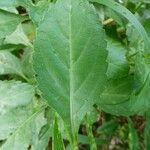
Stachytarpheta urticifolia
Nettleleaf velvetberry · Blue rat's-tail · Nettleleaf vervain · Dark blue snakeweed
Description
Source: leafsnapStachytarpheta urticifolia, commonly known as nettle-leaved velvetberry, is a perennial plant species in the Verbenaceae family. Native to tropical regions of the Americas, it is found in countries such as Mexico, Brazil, and Venezuela. The plant typically reaches a height of 1 to 2 meters and features a woody stem with opposite leaves that are ovate or lanceolate in shape. The leaves are covered with fine hairs that can cause skin irritation similar to that caused by stinging nettles. The flowers of Stachytarpheta urticifolia are small, tubular, and blue or purple in color. They bloom throughout the year, with a peak during the summer months. The plant thrives in well-drained soils and full sun exposure but can also tolerate partial shade. Traditionally, indigenous communities have used Stachytarpheta urticifolia for its anti-inflammatory properties. It contains compounds such as flavonoids, alkaloids, and tannins, which have demonstrated anti-inflammatory effects on various conditions, including arthritis. Beyond its medicinal uses, Stachytarpheta urticifolia is also valued for its ornamental appeal, as its attractive flowers attract pollinators like bees and butterflies. In summary, Stachytarpheta urticifolia is a notable plant species with both medicinal value and ornamental appeal, making it an important component of tropical ecosystems worldwide.
Care Guide
💧 Water Every 7 days
Nettleleaf velvetberry thrives in the humid environment of tropical rainforests, needing moderate watering each week to stay healthy. As an evergreen plant, it maintains its vibrant foliage throughout the year, emphasizing its requirement for consistent moisture.
☀️ Light Partial sun
Nettleleaf velvetberry is native to habitats like forest understories or rocky areas, where it grows in natural shade. It prefers partial sun but can tolerate both full sun and full shade, reflecting its adaptable, hardy character.
What are the sunlight requirements for Nettleleaf velvetberry?
Nettleleaf velvetberry thrives in partial sun, requiring about 3-6 hours of sunlight daily. It can also tolerate full sun, which involves more than 6 hours of sunlight each day. For garden enthusiasts, it's important to observe how sunlight moves through your garden to identify spots that offer a good balance of light and shade, ensuring the plants' well-being.
What are the essential growing conditions for Nettleleaf velvetberry?
Nettleleaf velvetberry is naturally found in environments like forest understories or rocky areas that provide natural shade. It prefers partial sun but can adapt to full shade, making it a versatile plant. When indoor lighting is needed, especially in less sunny spaces or during winter, artificial lighting is a practical solution. LED lights are recommended because they can be tailored to provide specific wavelengths needed by the plant. Full sun plants typically require 30-50 watts per square foot, partial sun plants need 20-30 watts per square foot, and full shade plants require 10-20 watts per square foot of artificial light.
What are the common symptoms of insufficient light for Nettleleaf velvetberry when grown indoors?
When Nettleleaf velvetberry is grown indoors with insufficient light, several symptoms may appear, including smaller new leaves, leggy or sparse growth, faster leaf drop, slower or no new growth, and lighter-colored new leaves. Other symptoms include chlorosis, where leaves lose their green color and turn yellow, sunscald, resulting from intense light exposure, leaf curling as a defense mechanism against excessive sunlight, wilting due to increased water loss, and leaf scorching characterized by brown, dry edges on leaves.
How can I address insufficient light issues for my Nettleleaf velvetberry?
To address insufficient light for Nettleleaf velvetberry, gradually adapt your plant to more sunlight by shifting it to sunnier spots each week until it gets 3-6 hours of direct sunlight daily. For large or immovable plants, using artificial light, like keeping a desk or ceiling lamp on for at least 8 hours daily or investing in plant grow lights, can provide the necessary light. Outdoors, move your plants to better-lit areas gradually to prevent sunburn. If light obstruction is an issue, reduce it by pruning blocking trees or transplanting smaller plants during their dormant period to locations with more sunlight and proper drainage. It's important to note that parts of the plant already affected by low light may not recover, but new growth should be healthy with adequate light exposure.
🌡️ Temperature 15–37.8°C
Nettleleaf velvetberry comes from tropical areas, where the climate is generally warm and humid. As a result, it is adapted to high temperatures and humidity. It does not tolerate sudden temperature shifts and prefers a steady temperature environment, so avoiding indoor temperature fluctuations is important. It usually cannot withstand cold and needs higher temperatures for growth. If the surrounding temperature falls too low, the plant may stop growing or even die.
What is Nettleleaf velvetberry?
Nettleleaf velvetberry, known botanically as Stachytarpheta urticifolia, is a plant species recognized by its unique name. However, specific details regarding its characteristics, uses, or habitat were not provided in the available information.
💨 Humidity
🪴 Soil 6-7
🌱 Fertilizer
Proper fertilization is vital for the health and appearance of Nettleleaf velvetberry. Feed Nettleleaf velvetberry in the summer, repeating the application every month during the summer months. Nutrients power growth and support the plant’s tissues. Fertilizing improves Nettleleaf velvetberry’s floral display, ensuring the best blooms.
🪴 Pot & Repot
✂️ Pruning
To improve the growth and blooming of nettleleaf velvetberry, it's best to prune the plant from early to late spring. Begin by removing any dead or weak stems to improve air circulation. Pinching the tips can also encourage a bushier growth. Careful pruning helps maintain the plant's shape, control its spread, and reduce the risk of disease, all of which contribute to the overall health of the plant.
🌿 Propagating
🐛 Diseases & pets
☠️ Toxicity
Characteristics
- Plant Type
- Herb, Shrub
- Life Cycle
- Perennial
- Genus
- Stachytarpheta
- Family
- Verbenaceae
- Hardiness Zone
- 8-11
- Mature Height
- 0.91 m to 1.83 m
- Mature Spread
- 30 cm to 91 cm
- Leaf Color
- Green
- Leaf Type
- Semi-evergreen
- Flower Color
- Blue, Purple
- Flower Size
- 2.54 cm
- Bloom Time
- All year round
- Planting Time
- Spring, Summer, Autumn
- Harvest Time
- All year round
- Native Area
- Sri Lanka, Burkina Faso, India, Malaysia, Angola, Vanuatu, South Africa, Sudan, Madagascar, Guinea, Guinea-Bissau, Kenya, Tanzania, Fiji, Benin, Chad, China, Gabon, Indonesia, Cameroon, Vietnam, Myanmar, Japan, Togo, Congo (DRC), Thailand, Central African Republic