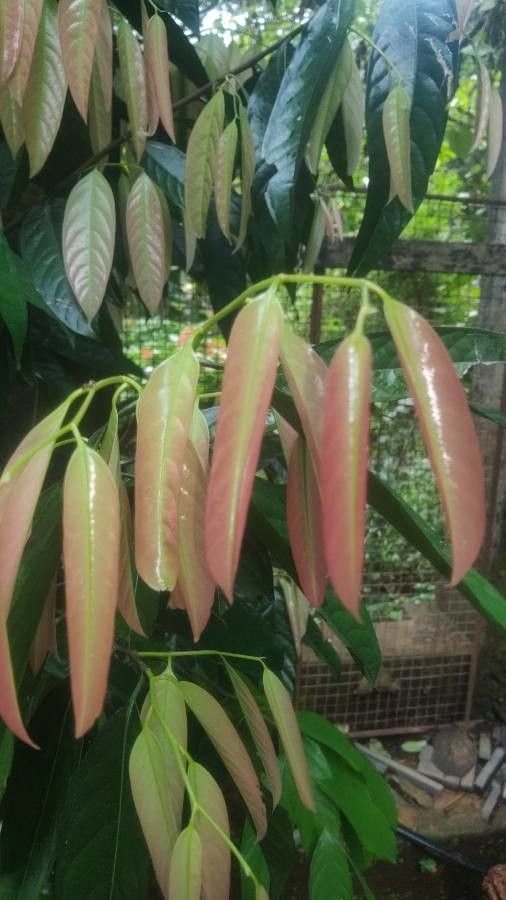
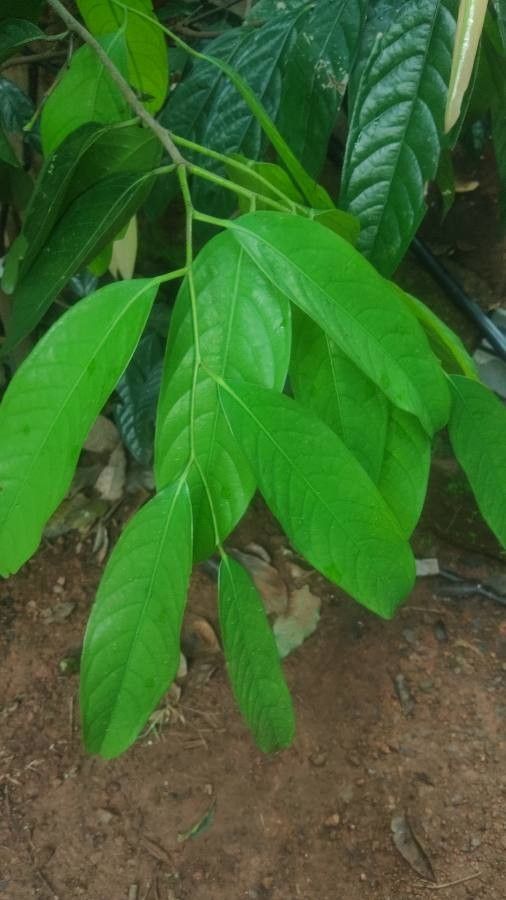
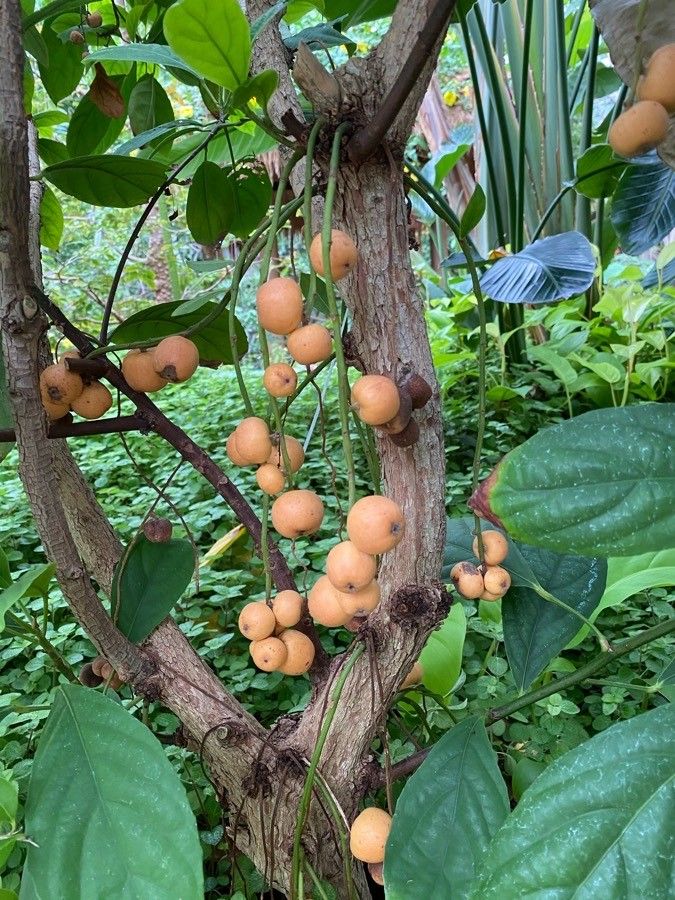
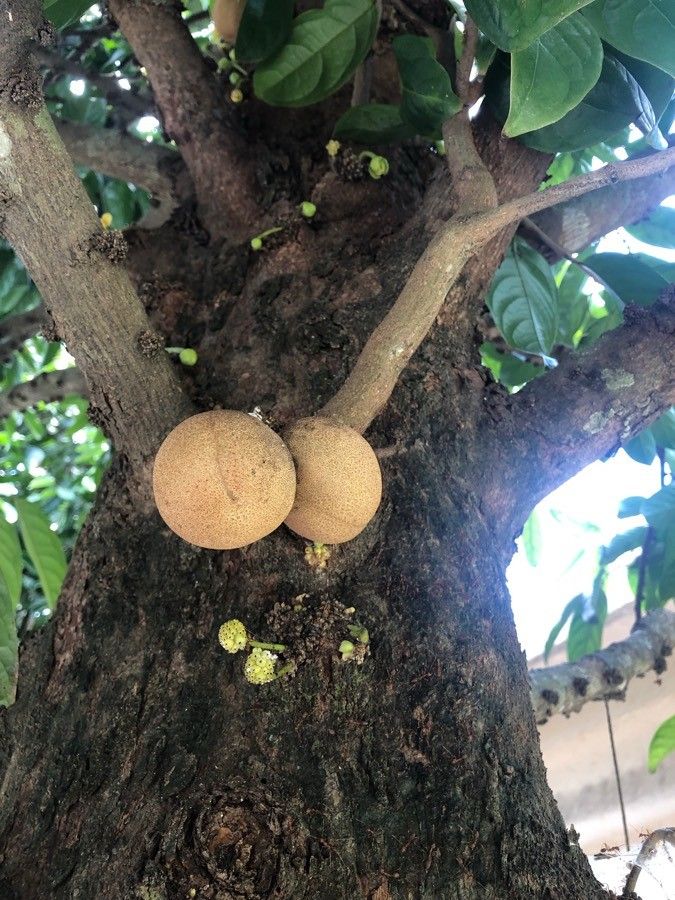
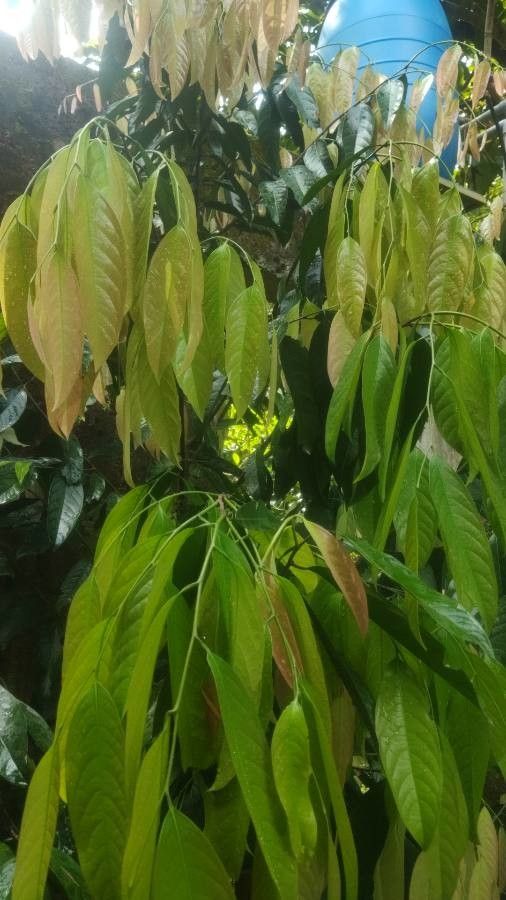
Stelechocarpus burahol, known as the burahol (loanword from Sundanese), kepel, kepel fruit, keppel fruit, or kepel apple, is an annonaceous plant from the humid evergreen forests of Southeast Asia, known for producing an edible fruit. The fruit is grown only in central Java, Indonesia.The plant is an evergreen, with stiff, elliptical, glossy leaves.The fruits of S. burahol grow on the lower part of the trunk, on the larger branches. They have a spicy flavor akin to that of the mango. They are greenish-yellow and oval, 3–4 centimetres (1.2–1.6 in) long. The new growth is bright pink or burgundy, known for producing an edible fruit. One can propagate S. burahol from the seeds of ripe fruit.The fruit of this species has traditionally been known in Java to have value as an oral deodorant. Out of the pulp, seed and peel, the peel has the best adsorbent ability. A 2012 study showed that it reduced the odor of feces by activating the probiotic bacteria Bifidobacterium bifidum. Stelechocarpus burahol is also an antihyperuricemic, and has traditionally been used to treat gout.This fruit is an identity flora of Daerah Istimewa Jogjakarta. Stelechocarpus burahol was loved by Javanese princesses because it was a symbol of unity and mental and physical integrity. Because it functioned as a deodorant, many common people did not have this tree planted because they believed they would get cursed. That made this tree rare.This fruit was also believed to be used by Javanese princesses as contraception. The fruit is believed to have the function of preventing kidney inflammation. The wood can be made into house tools, the leaves used to lower cholesterol.This rare fruit can be found at Keraton Jogjakarta area, Taman Mini Indonesia Indah, Taman Kiai Langgeng Magelang and Kebun Raya Bogor.
Burahol displays good disease resistance and is generally not prone to disease. Regarding care, this plant is fairly low-maintenance. When grown outdoors it needs minimal watering, and larger plants usually do not require pruning. Smaller plants, however, should be pruned after they have bloomed. Buraholt is appropriate for anyone with an outdoor area, such as a garden or deck, and does not demand much care experience.
How to keep Stelechocarpus Burahol.
Light
Burahol is native to habitats like forest understories or rocky areas, where it grows in natural shade. It prefers partial sun but can tolerate full sun or deep shade, reflecting its adaptable and hardy character.
Temperature
Burahol comes from tropical regions, where the climate is normally warm and humid. Consequently, it is well adapted to high temperatures and humidity. It does not tolerate sudden temperature changes and prefers a stable temperature environment, so it's important to avoid temperature fluctuations indoors. It usually cannot withstand cold and requires higher temperatures for growth. If the environmental temperature drops too low, the plant may stop growing or even die.
Fertilizer
Use organic fertilizers (e.g., fish emulsion, compost) instead of chemical fertilizers for Burahol. Supply higher nitrogen and phosphorus to young plants in spring. Incorporate compost or fertilizer into the soil before or after planting. For mature plants, supplement in spring with a balanced fertilizer or one targeted to specific deficiencies. Nutrient deficiency causes small leaves, short branches, yellow/bronze leaves, acidic fruits, premature fruit fall, and splitting.
Botanical profile.
- Plant Type
- Tree
- Life Cycle
- Perennial
- Genus
- Stelechocarpus
- Family
- Annonaceae
- Hardiness Zone
- 9-11
- Mature Height
- 25 m
- Mature Spread
- 4.88 m to 7.92 m
- Leaf Color
- Green
- Leaf Type
- Evergreen
- Flower Color
- Green, Brown
- Flower Size
- 1.02 cm to 2.03 cm
- Bloom Time
- All year round
- Planting Time
- Spring, Summer, Autumn
- Harvest Time
- All year round
- Native Area
- Indonesia, Malaysia
Other names.